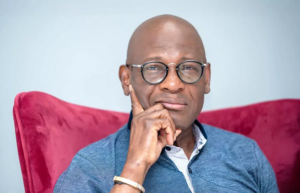
Senegal’s democracy at a crossroads as Sokoma challenges electoral status quo
Senegal’s political landscape is poised for a seismic shift as Khalidou dit Mbaye Sokoma, leader of the Patriotic Movement for Sustainable Development (MPPD), launches a bold electoral reform initiative. The proposal targets the very foundation of legislative and local elections, aiming to align political representation with citizen expectations and territorial realities.
What’s broken in Senegal’s current electoral system
Senegal’s legislative elections currently operate under a mixed system: 112 out of 165 National Assembly seats are filled through single-round majority voting, while the remaining 53 are allocated proportionally on a national list. Municipal elections follow a similar pattern, with 45% of seats awarded through majority voting and 55% through proportional representation.
For Khalidou dit Mbaye Sokoma, these mechanisms fail to capture the true political will of Senegalese voters, creating disconnects between elected officials and their constituencies.
Five key reforms to transform Senegal’s elections
1. Moving toward full proportional representation
Sokoma’s flagship proposal eliminates the majority voting component entirely, replacing it with a 100% proportional representation system for both legislative and local elections. This shift would ensure parliamentary seats reflect vote share with mathematical precision, eliminating the distortions of winner-takes-all dynamics.
Crucially, the reform opens candidate selection beyond traditional party structures. Independent candidates, grassroots movements, and civil society representatives would gain pathways to political office, reducing the stranglehold of party machines on representation.
2. From party delegates to citizen representatives
The reform redefines the relationship between voters and their parliamentary representatives. Instead of being seen as party emissaries, deputies would operate as territorially anchored officials directly accountable to local constituents. Parties would retain organizational roles but lose their monopoly on political representation, fostering a new breed of accountable leadership.
3. Second-round voting for stable local governments
Local elections would adopt a two-round system: if no municipal list secures an absolute majority (over 50%) in the first round, a runoff would occur between the top contenders. Sokoma emphasizes this would create clearer political mandates while requiring careful impact assessments on legal and fiscal implications.
4. Decentralized electoral administration
To strengthen credibility, Sokoma proposes empowering Senegal’s prefects and sub-prefects—under strict national oversight—to manage local election operations within their jurisdictions. This territorial approach aims to enhance transparency and accessibility while preserving national impartiality standards.
5. A tailored solution for Kaolack’s rapid urbanization
With over 1.3 million residents and 45 neighborhoods, Kaolack faces unique challenges. Sokoma recommends subdividing the city into three or four self-governing municipal districts, using demographic density, infrastructure capacity, and fiscal resources as key criteria. This would decentralize governance while maintaining coherent urban planning.
Why these changes matter for Senegalese voters
The proposed reforms share a singular goal: ensuring every vote translates into meaningful representation. By dismantling the distortions of majority voting and strengthening territorial accountability, Sokoma’s plan aims to rebuild trust in Senegal’s democratic institutions—one where citizens see their voices reflected in government.
As the debate intensifies, the question remains: Can Senegal’s political class embrace a system where democracy isn’t just a process, but a tangible reflection of its people’s will?