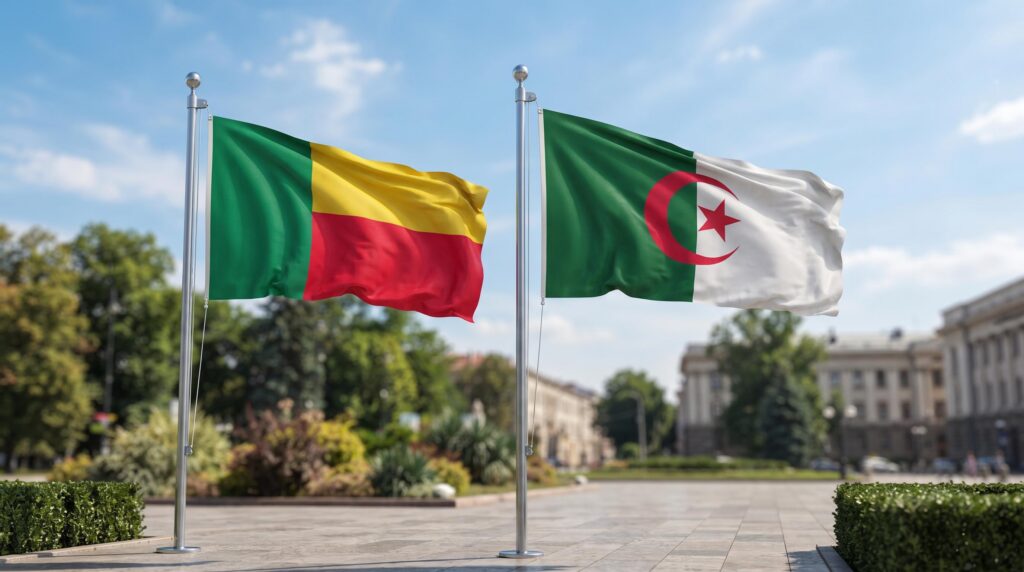
Benin has taken a decisive step toward reshaping its security architecture by formalizing a bilateral defense partnership with Algeria. The agreement, discussed during a high-level meeting at the Ministry of National Defense in Cotonou, brings together Beninese authorities and a senior diplomatic and military delegation from the People’s Democratic Republic of Algeria.
Why Cotonou chose Algiers
The talks come amid mounting pressure from armed terrorist groups in northern Benin and an urgent need to strengthen the anticipation and response capabilities of the Beninese Armed Forces (FAB). For Cotonou, turning to Algeria is a calculated move:
- Proven counterterrorism expertise: The Algerian military has internationally recognized experience in combating insurgent strongholds, controlling land borders, and conducting surveillance in semi-arid and Sahelian environments.
- Diversification of partnerships: True to its pragmatic strategic line, Benin seeks to multiply its military cooperation channels—from logistics training to intelligence technology—without relying exclusively on traditional Western partners or strict alignment schemes.
- Military training stakes: Access to Algeria’s prestigious military academies and tactical training centers is a major lever for upgrading the leadership and elite units of the FAB.
Concrete outcomes: toward a formal framework and joint actions
Beyond diplomatic courtesy, the exchanges produced concrete guidelines to structure this inter-state cooperation over the long term:
- Formalization of a defense framework agreement: Both parties laid the groundwork for a legal agreement establishing enhanced technical cooperation, continuous training for Beninese military officers, and experience transfer in crisis management and tactical electromagnetic and intelligence gathering.
- Permanent operational consultation: Benin and Algeria agreed to set up a direct and regular communication channel to coordinate the assessment of cross-border threats destabilizing the Sahelo-Saharan region and endangering the Gulf of Guinea.
- Support for collective stability: Algiers confirms through this handshake its willingness to reinvest in diplomatic and security engagement in sub-Saharan Africa, while Cotonou consolidates its position as a strategic lock protecting the West African coast.
By sealing this strategic rapprochement with Algeria, Benin demonstrates its intent to address the regional security crisis through a proactive strategy: training its personnel, diversifying its support, and leaning on the expertise of major continental players.