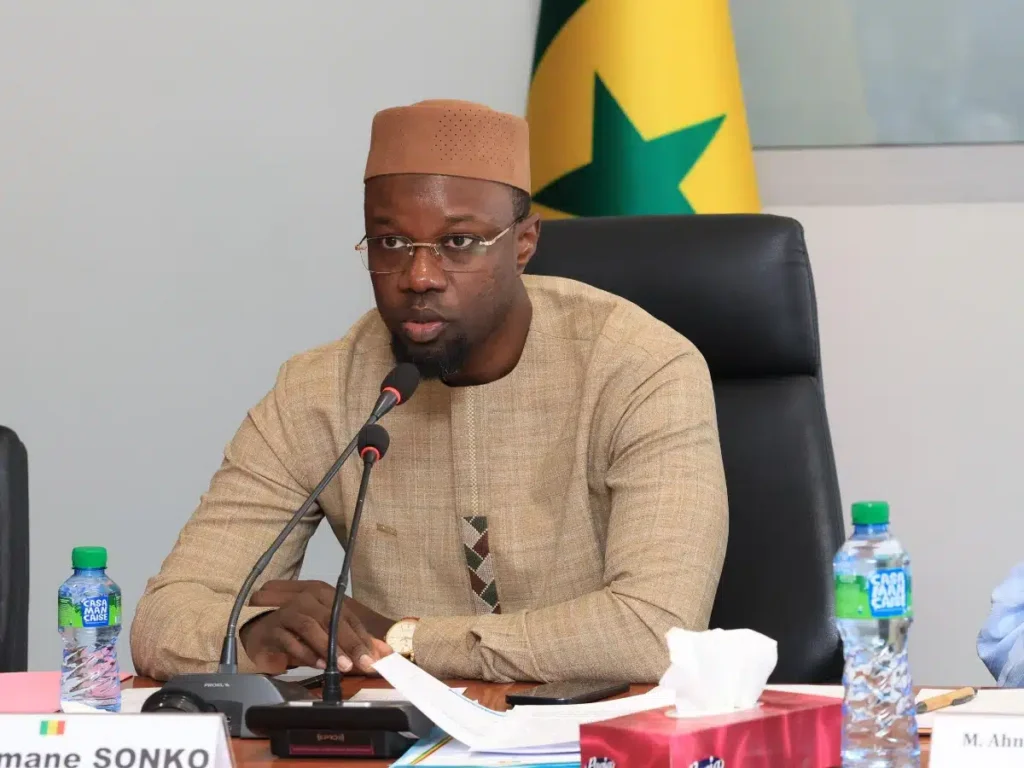
Dakar — The Senegalese government has taken a decisive stance on legislation that toughens penalties for same-sex relations, with Prime Minister Ousmane Sonko vowing to enforce the new law without compromise. Speaking before lawmakers in the National Assembly, Sonko addressed mounting criticism from Western nations opposing the legal amendments.
“Senegal is a sovereign nation, and its people have the right to protect their values against practices that do not align with our societal norms,” Sonko declared. “The Senegalese people are sovereign. The vast majority reject certain behaviors being imposed on our society.”
defending national sovereignty against foreign pressure
In response to backlash from both international observers and local advocates, Sonko framed the debate as a clash between Senegalese autonomy and what he described as an aggressive push by Western elites to normalize LGBTQ+ rights across Africa.
“There exists a form of tyranny. This world has eight billion people, yet a small Western nucleus—despite internal divisions—uses its economic and media dominance to force its agenda on the rest of the globe. But on what authority?” he questioned. “No moratorium will be considered after this law is enacted. It will be applied in full.”
key provisions of the controversial legislation
The newly adopted law, officially designated as Law No. 2026-08 (March 27, 2026), modifies Article 319 of the 1965 Penal Code to broaden the definition of “unnatural acts” and escalate penalties. Under the revised statute:
- Definition: Any sexual act between individuals of the same sex is classified as an “unnatural act.” Additionally, sexual acts involving corpses or animals are also criminalized.
- Penalties: Offenders face imprisonment ranging from five to ten years and fines between 2 million and 10 million West African CFA francs (approximately $3,400–$17,000). These penalties apply irrespective of additional charges related to rape or pedophilia.
- Expanded scope: The law now criminalizes advocacy and financial support for such acts.
The government’s unyielding position underscores a broader trend in West Africa, where conservative social values increasingly shape legal frameworks despite international condemnation. As debates over human rights and sovereignty intensify, Senegal’s leadership has made it clear that cultural preservation takes precedence over external demands.