Senegal eyes the stars to secure its future
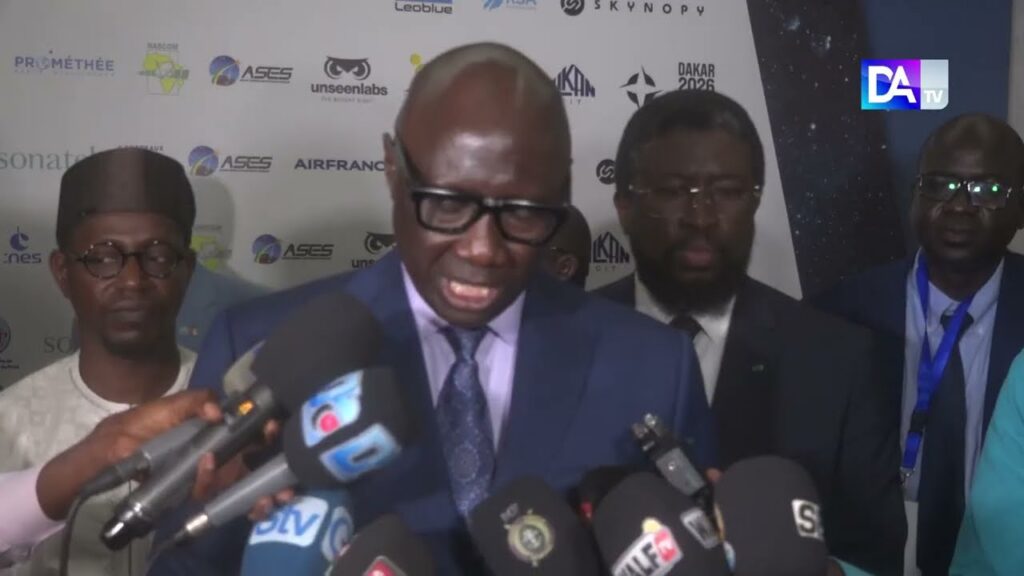
Dakar — As the Senegal Space Week 2026 kicked off in Dakar, the nation took a bold step toward securing its sovereignty—not just on land, but beyond it. Speaking on behalf of President Bassirou Diomaye Faye, General Birame Diop, Minister of Armed Forces, delivered a powerful message: “The battles of tomorrow will be won not only on Earth, but in the skies and digital realms.”
Addressing a gathering of international experts, diplomats, and tech innovators, General Diop underscored how space technology has become a linchpin in modern defense strategies. He emphasized that mastering satellite surveillance, geospatial intelligence, and real-time data analytics is no longer optional—it is essential for safeguarding Senegal’s borders and countering emerging threats.
From piracy to terror: how space technology strengthens security
The Minister outlined concrete ways space mastery can transform Senegal’s security landscape:
- Maritime surveillance: Satellite imagery enables authorities to monitor illegal fishing, arms smuggling, and piracy along Senegal’s 700-kilometer coastline—a critical economic and strategic zone.
- Border monitoring: Advanced cartography and remote sensing help track movements across porous borders, reducing the risk of insurgent infiltration and human trafficking.
- Counter-terrorism: High-resolution data supports intelligence operations, allowing security forces to disrupt terrorist networks before they strike.
General Diop also highlighted the role of the Senegalese Space Studies Agency, which is pioneering projects in satellite imaging, drone surveillance, and AI-driven threat detection. These tools are already being integrated into the national defense framework, marking a paradigm shift in how Senegal approaches security.
A new era for Senegal’s youth: investing in the space economy
Beyond defense, the Minister called for a national commitment to nurturing the next generation of Senegalese innovators. He stressed that investing in space science, coding, and engineering isn’t just about security—it’s about economic empowerment. By equipping young Senegalese with skills in data science, robotics, and aerospace technology, the country can reduce its reliance on foreign expertise and foster homegrown talent.
During the event, General Diop announced plans to expand STEM education programs in schools and universities, with partnerships from leading tech firms and research institutions. The goal? To position Senegal as a regional leader in space technology by 2030.
A tribute to a pioneer
The opening ceremony also paid homage to General Mansour Seck, a trailblazer in Senegal’s aviation history, whose legacy continues to inspire young pilots and engineers. His contributions to aerospace innovation were celebrated as a foundation for the nation’s future ambitions in space.
As Senegal Space Week 2026 unfolds, one message is clear: the country is not just looking up—it’s building the infrastructure, partnerships, and talent to claim its place among Africa’s space-faring nations.