The Malian junta’s decision to invite Russian mercenaries in 2021, shifting focus from counterterrorism to suppressing Tuareg rebels in the North, has backfired spectacularly. Analysts warn this misplaced priority allowed jihadist factions like the Support Group for Islam and Muslims (GSIM) and the Islamic State in the Greater Sahara (ISGS) to expand their reach, disrupting trade routes and strangling the nation’s economy with crippling blockades.
Military brutality fuels radicalization
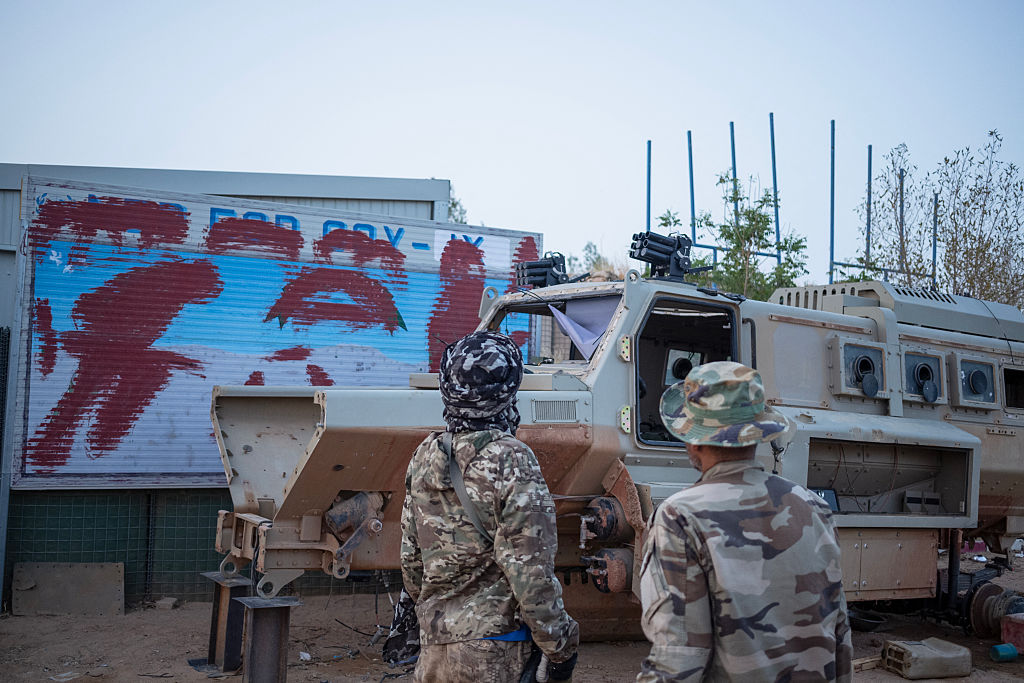
Relying on the Africa Corps—the successor to the notorious Wagner Group—the Malian armed forces have waged a ruthless campaign against suspected rebels and terrorists, often targeting civilians based on ethnicity. Reports indicate thousands perished in summary executions, inadvertently driving recruitment for extremist groups. The cycle of violence has eroded public trust, with many locals turning to armed factions for protection.
Security expert Wassim Nasr highlights the junta’s strategic missteps: «While they were fixated on reclaiming remote desert outposts, the GSIM was quietly consolidating power closer to Bamako. Their fixation on crushing Tuareg resistance backfired, handing jihadists a propaganda victory and space to grow.»
Breaking peace accords deepens instability
In January 2024, the junta abandoned the Algiers Accords, a hard-won peace deal between Mali’s former democratic government and the Liberation Front of Azawad (FLA). This move followed a November 2023 military offensive in Kidal, where Malian forces—backed by Wagner—reclaimed the Tuareg stronghold. Yet the victory proved hollow, as jihadist groups simultaneously advanced toward central Mali, encircling the capital and severing critical supply lines from Senegal and Côte d’Ivoire.
The junta’s pivot away from Western partners came after severing ties with France, which had led counterterrorism operations Barkhane and Serval for over a decade—efforts that had helped stabilize the North and lay the groundwork for the Algiers Accords. By late 2023, the junta expelled the MINUSMA UN peacekeeping mission, replacing it with a brutal counterterrorism campaign. The most infamous of these operations was the three-day assault on Moura, where Russian mercenaries allegedly executed hundreds of ethnic Fulani civilians, further alienating communities.
Mercenary retreat and jihadist gains
The Africa Corps’ departure from Mali in July 2024 came after a decisive Tuareg ambush in Tin Zaouatine, where a joint Malian-Russian force was decimated by the GSIM, leaving nearly 50 soldiers and over 80 mercenaries dead. Nasr notes, «This marked the moment Wagner ceased to function as Wagner—its replacement, the Africa Corps, now operates with far less confidence.»
Today, the Africa Corps remains on paper, but its role has shrunk to base protection and drone-assisted patrols. Despite monthly payments of $10 million, its presence offers diminishing returns. In late April, during a joint operation to repel a GSIM-FLA assault on Kidal, mercenaries fled, and the city fell to rebel forces. Hours later, the Malian defense minister was killed in a separate attack.
The Africa Corps’ primary mission has since shifted to safeguarding the junta itself, not the nation. With the GSIM tightening its grip around Bamako—targeting key infrastructure like the international airport and fuel supply routes—Mali’s leaders cling to their mercenary allies out of sheer necessity. Nasr concludes, «They have no other option. Isolated and cornered, their survival depends on these forces. The Africa Corps is their lifeline—even if it’s fraying.»