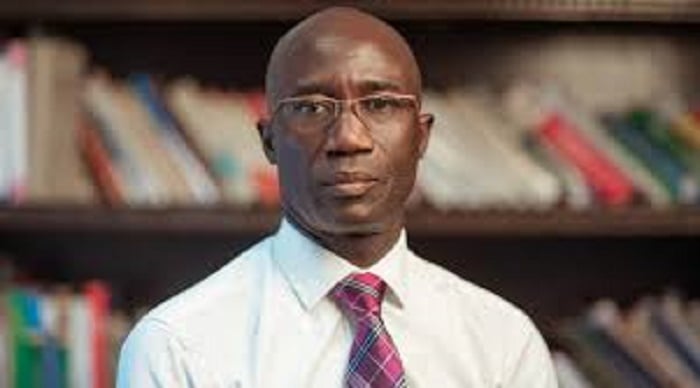
Me Moussa Sarr has just taken office as Senegal’s new Minister of Justice, stepping into a role fraught with political tension and judicial complexity. His three-decade career in law, combined with his deep expertise in critical legal domains, positions him to navigate the formidable challenges ahead.
With a background spanning criminal economic law, banking regulations, real estate disputes, and public business law, Sarr brings a robust technical foundation to the Ministry of Justice. His prior role as legal counsel for President Bassirou Diomaye Faye further underscores his standing in Senegal’s legal and political circles. Additionally, his contributions to legal education across Dakar’s higher institutions reflect a commitment to fostering judicial excellence.
However, Sarr’s appointment arrives at a pivotal moment in Senegal’s institutional landscape. The nation continues to grapple with the fallout from political unrest between 2021 and 2024, a period marked by violent confrontations and lingering demands for accountability. These events have left an indelible mark on the country’s social and political fabric, with victims’ groups and civil society organizations still pressing for justice and reparations.
The new Minister of Justice inherits a portfolio that demands both rigor and prudence. One of his most pressing tasks will be addressing the aftermath of the 2021–2024 political violence, a dossier complicated by the 2024 amnesty law. While this legislation provided a framework for reconciliation, debates persist over its scope and the need for additional measures to ensure comprehensive justice.
Accountability vs. institutional stability: a delicate balance
The appointment of Me Moussa Sarr has also reignited tensions within the executive branch, particularly regarding the approach to accountability. Ousmane Sonko, a prominent political figure and former Prime Minister, has publicly questioned the government’s strategy, though without directly challenging Sarr’s appointment. His concerns highlight a broader divide within the leadership on how to handle cases of financial mismanagement and public fund irregularities.
At the heart of this debate lies a fundamental question: Should Senegal prioritize swift and stringent accountability measures, or maintain a cautious, procedure-driven approach to avoid politicizing the justice system? The Ministry of Justice now stands at the crossroads of these competing visions, tasked with upholding transparency while preserving the stability of the nation’s institutions.
As Sarr assumes leadership of this critical ministry, his every decision will carry significant political weight. The stakes are high, the expectations even higher, and the path forward remains uncertain in a climate where justice, politics, and public sentiment intersect.