The Sahel’s united bid for CAN 2032: a bold statement or a step too far?
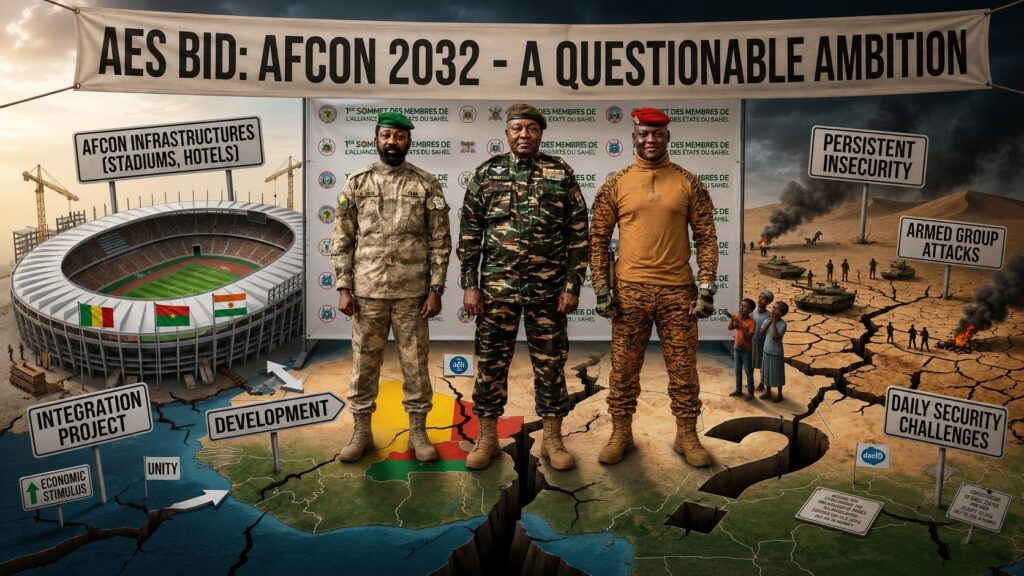
Burkina Faso, Mali, and Niger have jointly submitted their bid to host the 2032 Africa Cup of Nations (CAN), positioning their application as a testament to regional solidarity under the banner of the Alliance of Sahel States (AES). While the move is framed as a unifying gesture for West Africa, it has ignited a critical debate: do these nations possess the necessary conditions of security and stability to pull off the continent’s most prestigious football tournament?
A tournament built on more than just stadiums
The CAN is not merely a sporting spectacle; it is a logistical and security-intensive operation that demands an environment capable of safeguarding players, officials, journalists, supporters, and the tens of thousands of visiting spectators who flock to host cities for weeks. Yet, the Sahel trio’s current reality paints a far more complex picture.
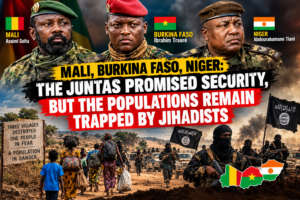
Since military-led governments took power in Burkina Faso, Mali, and Niger, restoring security and reclaiming territory from armed groups have been central to their legitimacy. However, despite these promises, the security landscape remains fraught with peril. Civilians, security forces, and critical infrastructure continue to face relentless attacks, with entire regions still gripped by instability.
In this context, the timing of the joint bid has raised eyebrows. Critics argue that prioritizing a continental tournament—one that would draw international attention and visitors—over the immediate safety of local populations risks sending mixed signals about governance priorities. After all, if citizens cannot move freely within their own countries, how can the region credibly commit to hosting thousands of foreign guests?
Logistical hurdles and the shadow of instability
The road to a successful CAN bid is paved with formidable challenges. Hosting nations must demonstrate robust transportation networks, state-of-the-art stadiums, ample accommodation, advanced medical facilities, and an ironclad security framework. Yet, for Burkina Faso, Mali, and Niger, these requirements come at a time when their budgets are stretched thin by ongoing counterterrorism operations.
The international community, including football federations, sponsors, and broadcasters, will closely scrutinize the bid’s viability. Any hint of unresolved violence or governance uncertainty could undermine confidence in the proposal, potentially derailing years of preparation. The stakes are high: a failed bid or, worse, a high-profile security incident during a future tournament could deal a severe blow to the region’s reputation.
Public sentiment and the weight of unfulfilled promises
The military transitions in the three countries were justified in large part by the promise of restored security. Yet, years into these regimes, the reality on the ground tells a different story. Persistent insurgencies in border regions and recurring attacks have left communities vulnerable, fueling disillusionment among citizens who expected tangible improvements.
For many observers, the CAN 2032 bid risks overshadowing the more pressing need to address everyday security concerns. While a successful tournament could serve as a catalyst for development and regional pride, it cannot be a substitute for the foundational work of rebuilding institutions, restoring stability, and ensuring the safety of citizens. Until these core issues are resolved, the bid may struggle to gain the credibility it needs to win over skeptics.
The Sahel’s collective ambition to host CAN 2032 is undeniably ambitious, and its symbolic value as a unifying project is clear. However, its success hinges not on political declarations but on the tangible progress these nations can demonstrate in securing their territories and restoring public trust. Without these pillars in place, the bid may remain more of a dream than a viable path forward.