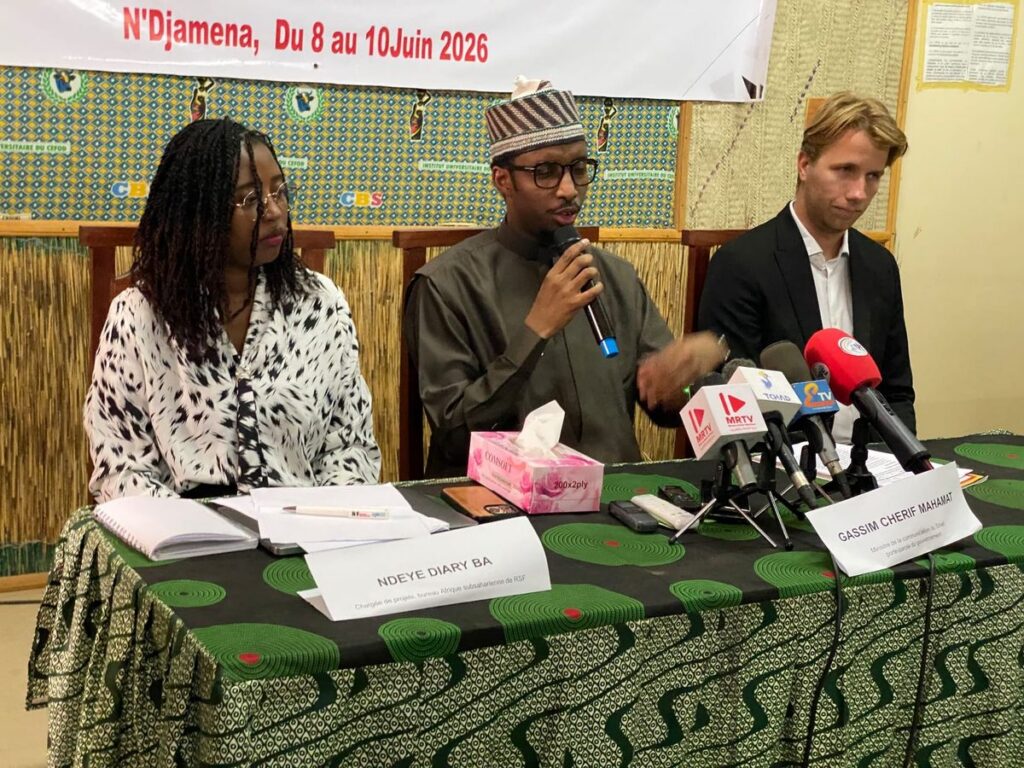
In the heart of N’Djamena, journalists from the Sahel region converged to tackle a pressing issue: safeguarding their rights while reporting on environmental challenges. On June 8, 2026, nearly two dozen media professionals from Mali, Niger, Burkina Faso, and Chad assembled at the Centre d’Études et de Formation pour le Développement (CEFOD) for a regional workshop.
The event, led by Reporters Without Borders (RSF), focused on equipping environmental journalists with the legal knowledge and tools needed to navigate the risks tied to their profession. From physical threats to digital vulnerabilities, the discussions covered a wide spectrum of challenges faced by those covering environmental issues in an unstable region.
The opening ceremony was led by Gassim Chérif Mahamat, Chad’s Minister of Communication and government spokesperson. He emphasized the critical role of media in raising awareness about environmental concerns and advocated for a more supportive environment for journalists. His remarks set the tone for a series of in-depth sessions designed to address the unique obstacles encountered by Sahelian journalists.
The workshop’s agenda included deep dives into legal protections for journalists, strategies for personal and digital safety, and strategies for reporting on sensitive environmental topics. Participants engaged in lively exchanges, sharing insights and best practices from their respective countries.
Ndeye Diary Ba, RSF’s Sub-Saharan Africa Project Manager, highlighted the urgent need for such a gathering. She noted that environmental journalists in the Sahel operate in increasingly precarious conditions, as climate change, resource scarcity, and insecurity heighten the stakes of their reporting. The workshop aimed to produce actionable recommendations to enhance their safety and strengthen legal frameworks across the region.
Over the coming days, attendees will collaborate to draft proposals that could shape a safer future for journalists dedicated to environmental issues in the Sahel.