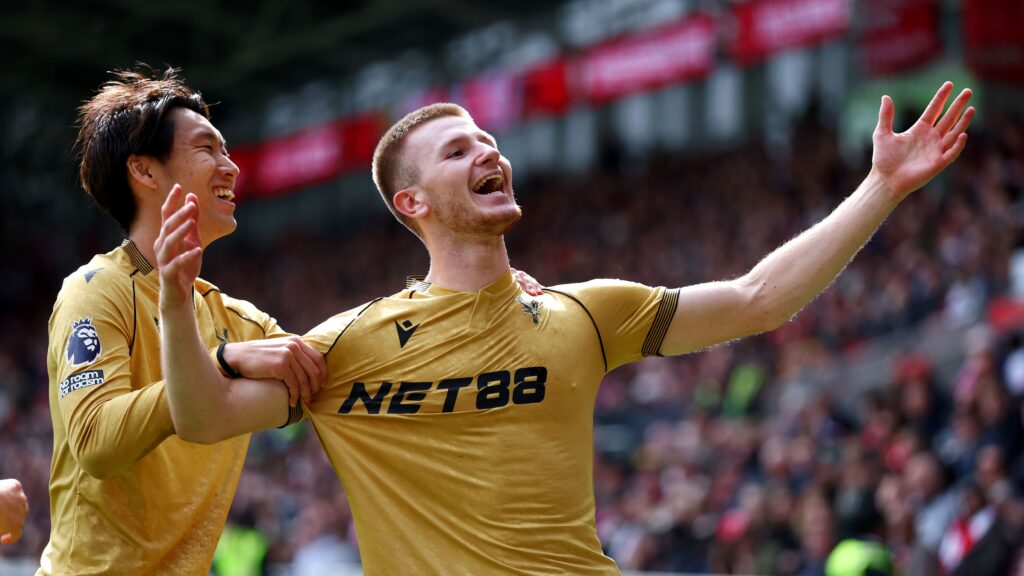
Tonight’s Europa Conference final at the Red Bull Arena promises a tactical showdown between two teams whose paths to the summit have defied early-season predictions. While Crystal Palace and Rayo Vallecano may not fit the traditional mold of a European showpiece, the stakes remain the same: a historic trophy awaits the victor.
palace’s controlled aggression under glasner
Oliver Glasner arrives in Valencia with a pedigree forged in cup success, having delivered a first major trophy to Crystal Palace with last season’s FA Cup triumph over Manchester City. That victory was no fluke — the Eagles dominated large spells of the match despite controversial refereeing decisions and a missed penalty by the Citizens. This season, however, has not been without turbulence. Key injuries to players like Eberechi Eze and Marc Guéhi disrupted rhythm, yet Palace maintained their Premier League status with ease, turning their attention to continental glory — a narrative familiar to fans of Tottenham Hotspur last year.
Glasner’s experience in knockout football, including his Europa League win with Eintracht Frankfurt, positions him well for another final. His side’s offensive identity revolves around precision in transition, with data showing that nearly 40% of their shots occur in fast-break situations. Unlike opponents who rely on speculative long-range efforts, Palace concentrates its attacks in high-danger zones around the penalty area, boasting a higher average xG per shot and shorter shooting distances — hallmarks of better-structured chances.
At the heart of this system is Adam Wharton, a midfielder whose influence extends far beyond simple possession. Wharton blends audacious dribbling, sudden changes of pace, and incisive through balls under pressure, embodying the modern prototype of a progressive, vertical midfielder. His ability to accelerate transitions and exploit defensive gaps makes him pivotal in Palace’s pursuit of goals.
rayo’s high-octane chaos and transitional mastery
Rayo Vallecano, under the guidance of Iñigo Pérez, has evolved from a relentless pressing machine into a more structured but equally dangerous entity. Having previously served as an assistant to Andoni Iraola, Pérez inherited a club philosophy rooted in aggressive, direct football. Despite setbacks — including work permit issues that once threatened his move abroad — he rebuilt the team with a sharper technical identity while preserving its relentless intensity.
The result? A side that maintains its chaotic edge but now combines it with greater composure in possession. Rayo generates a staggering volume of shots, nearly 40% of which arise from quick transitions, often initiated by long balls or crosses. Their shot maps reveal a clear preference for occupying central zones, with many attempts originating near the penalty area. While individual shot quality (xG per shot) may lag due to speculative efforts, the sheer frequency of entries into dangerous areas keeps opponents under constant threat.
Defensively, Rayo’s approach remains reactive rather than dominant. Matches often unfold in open, transitional phases where momentum shifts rapidly. Despite this instability, their overall xG difference remains positive across the season — a consistency that Palace ignores at its peril.
a clash of styles: chaos vs control
This final is less about reputation and more about the collision of two opposing philosophies. Crystal Palace thrives on controlled aggression, converting transitions into high-quality chances with precision and structure. Rayo Vallecano, by contrast, embraces the unpredictable, turning instability into an offensive weapon through relentless pressing and rapid counter-moves.
Yet beneath the surface, both teams share a reliance on transitional play. The difference lies in execution: Palace focuses on converting these moments into clear-cut chances, while Rayo floods central areas with volume, hoping chaos creates an opening. Wharton’s ability to dictate tempo and exploit gaps will be crucial in neutralizing Rayo’s pressing, while Pérez’s team will look to disrupt Palace’s rhythm through aggressive second-ball scenarios.
exploiting palace’s vulnerability on set pieces
One area where Rayo Vallecano may hold a tactical advantage is in defensive set-pieces. Crystal Palace ranks among the worst in the Premier League at defending throw-ins and goal kicks, particularly in terms of xG conceded. While the number of shots allowed may not be alarmingly high, the quality of chances created is concerning — especially in central zones around the penalty area and spot.
Data reveals that opponents frequently regain possession in dangerous areas after Palace’s clearances, with many second-ball situations leading to shots generating over 0.31 xG per attempt. These threats are not random; they stem from structural weaknesses in Palace’s restarts, where opponents exploit overloaded central zones to create clear shooting lanes.
For Rayo, the solution is simple: maintain high pressure after the initial clearance, overload central spaces, and target second balls. No need for elaborate routines — just relentless aggression and positional intelligence to turn defensive set-pieces into offensive opportunities.
who will control the chaos?
This final will not be decided by season-long consistency, but by which side can impose its rhythm over 90 minutes of volatility. Crystal Palace possesses superior individual talent and physicality, and if Glasner’s team clicks, they will dominate through structure and transition. Yet Rayo Vallecano thrives in unpredictability, turning defensive frailties into offensive weapons with unrelenting pressing and chaotic transitions.
Wharton’s composure under pressure, combined with Palace’s ability to convert transitions into high-quality chances, gives them a slight edge. But Rayo’s capacity to disrupt any semblance of control through sheer intensity and set-piece exploitation means the match could swing at any moment.
The difference may come down to a single pass, a misplaced clearance, or a moment of brilliance from Wharton or a Rayo attacker. In a final where both managers clash with radically different visions of control, the side that best harnesses chaos — or tames it — will lift the trophy.