For years, accessing healthcare in Burkina Faso felt like an impossible dream for many. A silent yet formidable barrier stood between illness and treatment: the prohibitive cost of care. Since the landmark reforms of March 2024, that barrier has crumbled. The government slashed fees for critical medical exams—including CT scans, MRIs, and dialysis—and eliminated the upfront deposit requirement for dialysis in public facilities. These sweeping changes have transformed the landscape of healthcare access across the nation. A firsthand look inside Burkina Faso’s busiest hospitals reveals the profound impact of these reforms.
From privilege to right: how lower costs are reshaping healthcare access
In the crowded corridors of public hospitals across Burkina Faso, the weight of unmet medical needs is palpable. For too long, quality healthcare was a privilege reserved for the few who could afford it. Exorbitant upfront payments and unaffordable diagnostic costs turned what should have been a basic human right into a distant luxury—until now.
a personal tragedy that sparked nationwide change
At the bustling Centre Hospitalier Universitaire de Bogodogo, Madi Diallo waits by the reception desk, his face etched with quiet determination. His story is one of loss—a loss that could have been prevented.
«Three years ago, my sister needed urgent dialysis. The hospital demanded a deposit of 500,000 F CFA. We couldn’t raise the money. She passed away before treatment could begin», he shares, his voice steady but heavy with grief. Today, that deposit no longer exists. «This reform is just and fair. But for us, it has come far too late.»
breaking financial barriers: what the reforms entail
Faced with these stark realities, Burkinabè authorities launched a bold initiative in March 2024 to dismantle financial barriers to healthcare. Public health facilities nationwide rolled out sweeping reductions in medical exam fees, making life-saving diagnostics and treatments accessible to more people than ever before.
key changes in medical pricing
The reforms, announced by the Minister of Health Dr. Robert Lucien Jean Claude Kargougou following the March 2024 Council of Ministers meeting, introduced dramatic reductions:
- CT scans: reduced from 50,000 F CFA to 25,000 F CFA
- MRIs: slashed from 100,000 F CFA to 40,000 F CFA
- Dialysis: the mandatory 500,000 F CFA deposit has been completely abolished
These measures were met with widespread approval, particularly among low-income families who had long been excluded from essential care due to financial constraints.
real results on the ground: hospitals report increased access
Far from being mere announcements, these price reductions are being felt in hospitals across the country. On-the-ground verification confirms the reforms are not just theoretical—they’re transformative.
Bogodogo University Hospital: a model of change
On a typical morning at the Centre Hospitalier Universitaire de Bogodogo, patients line up early, their faces a mix of worry and expectation. Among them is Madame Ouédraogo (née Élodie Nikiéma), who came in for a pelvic MRI. She’s visibly relieved.
«The cost is now much more affordable. I paid just 40,000 F CFA all-inclusive—elsewhere, this same exam can cost up to 150,000 F CFA or more», she says. The savings, exceeding 100,000 F CFA, are life-changing. For Madame Ouédraogo, it means more than just reduced medical costs—it’s financial breathing room that allows her to continue supporting her community through local savings groups.
Confirming the reform’s implementation, Seydou Nombré, Director General of the CHU de Bogodogo, provides clarity: «The MRI now costs 40,000 F CFA. More importantly, the 500,000 F CFA deposit has been removed. Patients no longer need to pay an advance. For emergency dialysis, the fee is now just 2,500 F CFA.»
Ziniaré Regional Hospital: care closer to home
Our investigation continues in Ziniaré, in the heart of the Oubritenga region. At the Centre Hospitalier Régional, the story is the same—positive and consistent. The tariff reductions are fully in effect, with no regional disparities.
Mady Zorné, Director General of the CHR de Ziniaré, highlights broader benefits: «Since the reform, referrals to the capital have dropped significantly», he notes. The impact isn’t just financial; it’s clinical. «Doctors now have immediate access to imaging exams, which improves diagnostic accuracy and speeds up care.»
Previously, patients often had to travel long distances to Ouagadougou for diagnostics—an expensive and time-consuming ordeal. Now, essential tests are available locally, reducing delays and costs.
the dialysis challenge: progress amid constraints
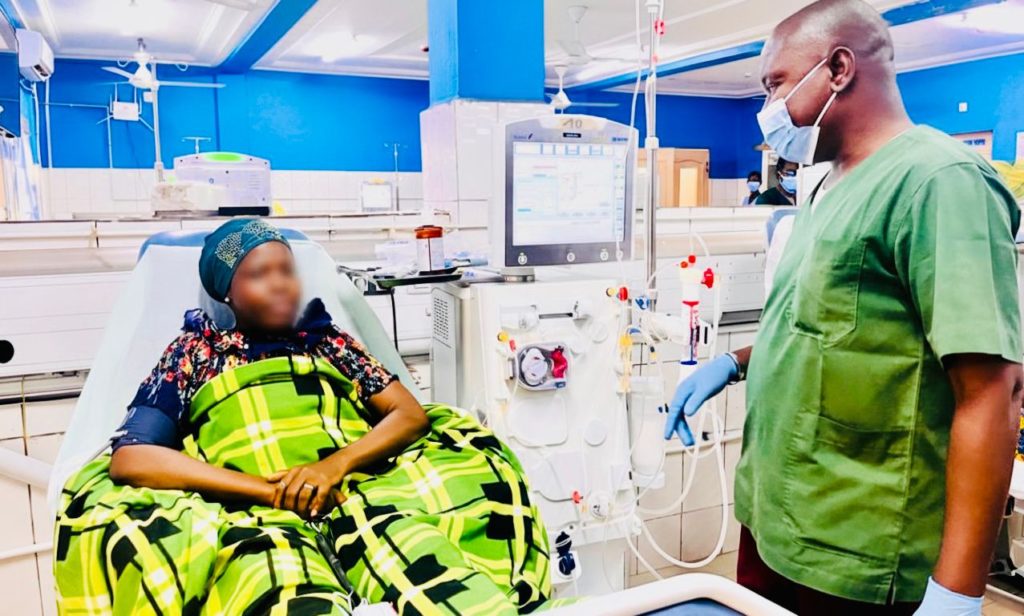
The Centre Hospitalier Universitaire Yalgado Ouédraogo in Ouagadougou is the nation’s largest referral hospital—and a critical test case for the new policies. With nearly 100 dialysis patients treated daily across 34 machines, the service operates at full capacity. Sessions are meticulously scheduled in three daily shifts (6 AM–12 PM, 12 PM–6 PM, and 6 PM–10 PM), with emergency cases handled around the clock.
Tuina Nsoma Hélène, head of the dialysis unit, emphasizes a major milestone: «The 500,000 F CFA deposit required to start treatment has been eliminated. This single change has opened the door for patients who were once turned away.
However, she cautions: «A patient’s death frees up a slot for someone on the waiting list.» Despite the reform, demand far outstrips supply. Since implementation, 16 new patients have begun dialysis without the deposit—but the waiting list remains long.
The unit’s head also calls for further action: «Every month, patients face tough choices about what they can afford. Additional exam costs still weigh heavily. We urge the state to address these ancillary charges.»
improved imaging access drives diagnostic growth
Meanwhile, the radiology department at CHU-YO has seen a surge in activity. Professor Nina Astrid Ouédraogo, Head of Radiology and Medical Imaging, reports a 38% increase in CT scans performed since the reform—a clear indicator of unmet demand and the urgent need for affordable diagnostics.
«It’s a real relief for everyone», she says.
extending care beyond the capital: Bobo-Dioulasso leads the way
Our journey continues to Bobo-Dioulasso, Burkina Faso’s economic hub. At the Centre Hospitalier Universitaire Sourou Sanou (CHUSS), the largest facility in the region, the impact of lower costs is visible in every corner.
Élie Ouattara, a patient purchasing medical supplies, beams with relief: «The prices are truly affordable. It’s a huge relief for us.» These savings extend beyond major exams—daily essentials are now within reach, easing the financial burden on patients and their families alike.
At the dialysis unit, silence hangs heavy as patients wait, connected to machines in a rhythm of hope. Dr. Hamidou Sawadogo, a nephrologist at CHUSS, confirms the reform is working: «Most patients were already receiving treatment before the reform. Since the changes, we’ve added only 17 new hemodialysis patients.»
He stresses the structural limits: «Many acute cases requiring dialysis cannot be treated due to lack of capacity. We urgently need to expand the center, hire more staff, and upgrade equipment.»
Despite these challenges, the stories of patients like Madame Salimata Traoré Sanou—who began dialysis in 2020 after years of delay due to the deposit—highlight the reform’s lifesaving potential. «Now that the deposit is gone, I feel dignity is being restored», she says.
Youl Sié, another dialysis patient with chronic kidney disease since 2021, echoes the call for decentralization: «We need more dialysis centers closer to our communities. If every patient could receive treatment locally, it would be a monumental relief.» He also highlights the social cost of travel: «Being ill forces us to travel far, disrupting family life and children’s education. Health is also about family and social stability.»
the road ahead: progress with persistent gaps
While the reforms mark a turning point, they are not a panacea. Equipment shortages persist, waitlists remain long, and access to specialized care is uneven. Yet, for those who now walk into public hospitals without fear of unaffordable bills, the relief is undeniable.
In a country known as the Land of Upright People, healthcare is no longer a luxury—it’s becoming a right. One step at a time, Burkina Faso is building a future where no one is denied care because of cost. And with new university hospitals, including the recently inaugurated Centre Hospitalier Universitaire de Pala, and nine more advanced facilities on the horizon, the momentum is growing stronger.
As the old saying goes: little by little, the bird builds its nest. In Burkina Faso’s health sector, that nest is beginning to take shape—stronger, more inclusive, and built on the promise of dignity for all.