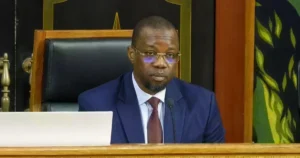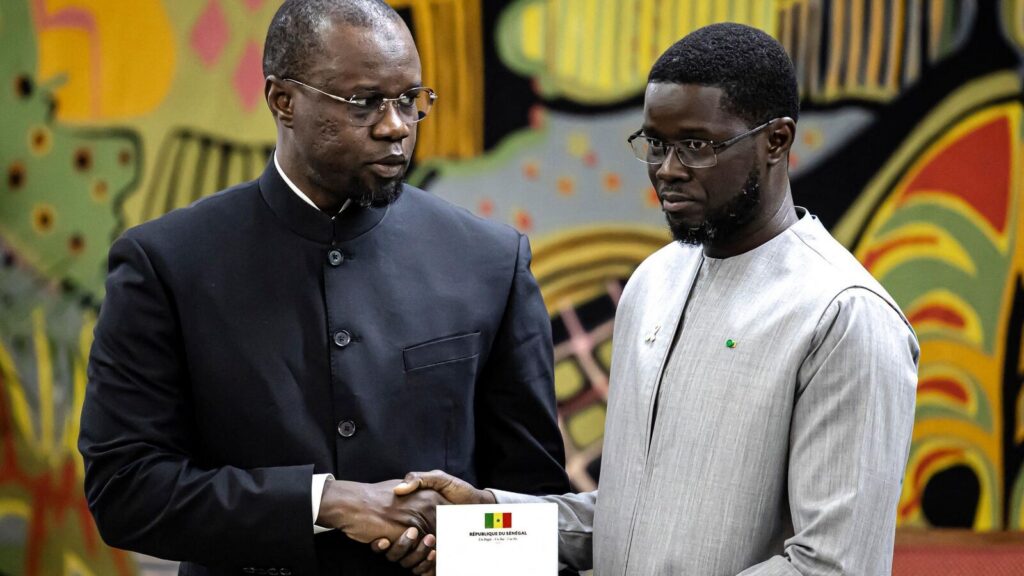
(FILES) Senegal Prime Minister Ousmane Sonko (L) hands over to Senegal President Bassirou Diomaye Faye (R) the official report on the Thiaroye massacre during a ceremony at the Presidential Palace in Dakar, on October 16, 2025. Senegal President Bassirou Diomaye Faye on Friday sacked Prime Minister Ousmane Sonko and dissolved the government after months of tensions, deepening a crisis in the debt-laden west African nation. The shock announcement was made on state television in a decree read out by presidential aide Oumar Samba Ba, who said Faye "has ended the duties of Ousmane Sonko... and consequently those of the ministers and secretaries of state who are members of the government". (Photo by PATRICK MEINHARDT / AFP)
The once-unbreakable partnership between Senegalese President Bassirou Diomaye Faye and his former Prime Minister Ousmane Sonko has collapsed under the weight of political rivalries and economic hardship. The two figures, who once campaigned together under the slogan « Diomaye Moy Sonko » (« Diomaye is Sonko »), have now become sworn adversaries in Dakar’s corridors of power.
Their alliance, forged to oust former President Macky Sall in 2024, lasted barely long enough to secure victory. Today, the fractures are undeniable. Sonko, who was abruptly dismissed from his post on May 22, has not only reclaimed his seat as a lawmaker but has also been elected as Speaker of the National Assembly—the second-highest constitutional position in the country. This elevation positions him as both the president’s heir apparent and his most formidable opponent.
The political rupture is stark. Once inseparable allies, the two men now embody competing visions for Senegal’s future, with their rivalry intensifying against the backdrop of a worsening economic crisis. The nation’s financial struggles, compounded by internal divisions, have further strained their relationship, ending what was once a promising partnership.