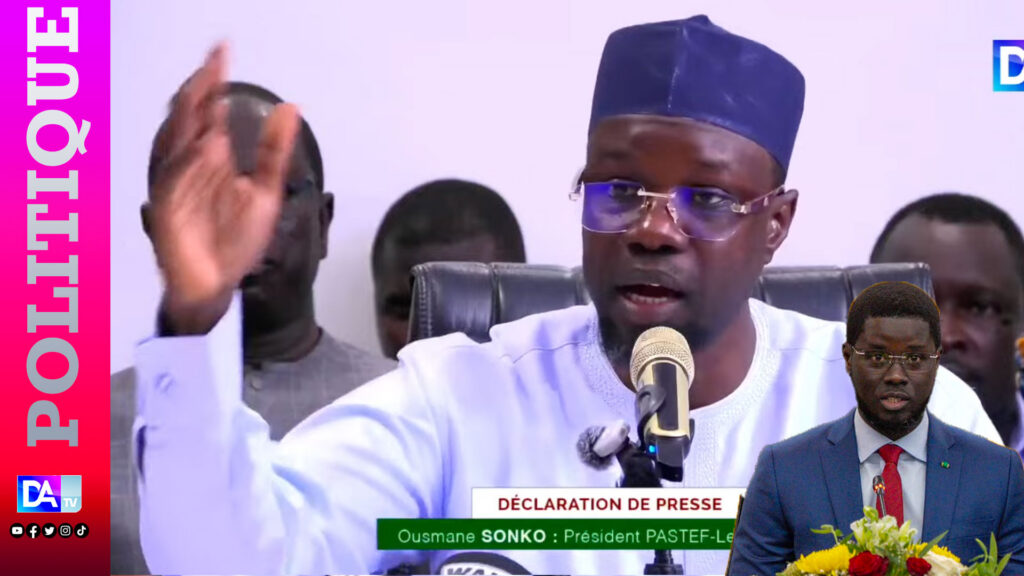
Ousmane Sonko, leader of the PASTEF party, has publicly disclosed the breakdown in negotiations that led to his decision not to join Senegal’s new government under President Bassirou Diomaye Faye. In a press statement that drew widespread attention, Sonko outlined the irreconcilable differences that emerged during discussions on governance priorities and cabinet formation.
The Patriotes leader emphasized that the core issue was the failure to secure meaningful influence within the executive. He stressed that his party had insisted on a fundamental principle: the majority coalition must govern, meaning PASTEF should have had the power to shape key decisions. However, Sonko revealed that the government ultimately excluded his party from meaningful participation, leaving PASTEF with no leverage over policy outcomes.
During the talks, both sides explored critical national issues, including public debt management, economic relief measures, contract renegotiations, judicial reforms, and accountability mechanisms. Yet, no consensus was reached on any of these fronts. Sonko singled out justice reform as a particularly contentious point, stating that there was no agreement whatsoever on this issue.
Another sticking point was the cabinet’s composition. Sonko had demanded that PASTEF hold a majority of ministerial positions, ensuring its ability to steer national priorities. When this condition was not met, he made it clear to the President that his party would not participate in a government where it held no real authority. The resulting administration, led by Prime Minister Al Amine Lô, proceeded without PASTEF’s involvement.
This refusal marks a significant shift in Senegal’s political landscape, signaling deepening divisions between the ruling coalition and the opposition. Sonko’s stance underscores his party’s commitment to maintaining its principles rather than compromising for the sake of inclusion in a government it views as unresponsive to its core demands.