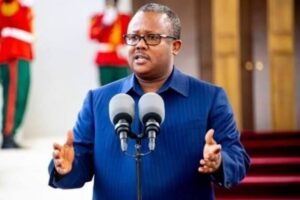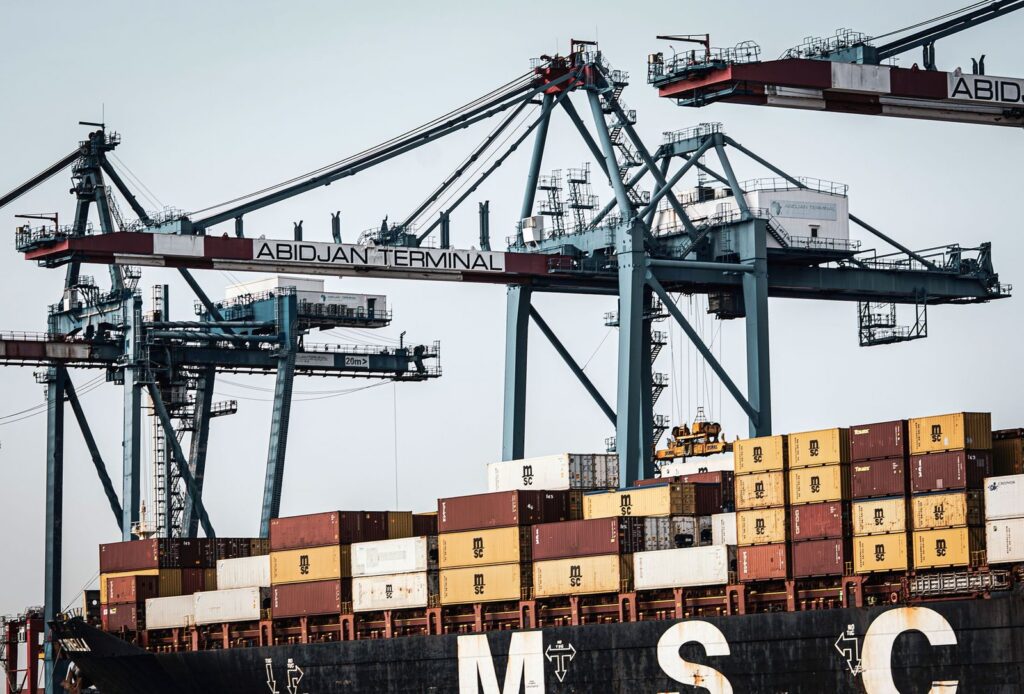
The Ivorian president, Alassane Ouattara, convened two high-profile meetings in rapid succession at the presidential palace in Abidjan. The first was with Ousmane Diagana, vice president of the World Bank for West and Central Africa, and the second with Philippe Van De Vyvère, CEO of the Belgian maritime group Sea-Invest. These discussions underscore the dual focus of Ouattara’s new term: reinforcing ties with multilateral lenders while drawing in additional European private investment to the Ivorian port network.
World Bank partnership remains vital for Côte d’Ivoire
The meeting with Ousmane Diagana reflects the deepening collaboration between Côte d’Ivoire and the World Bank, a cornerstone of the country’s development financing strategy. The bank’s current portfolio in Côte d’Ivoire is one of the largest in West Africa, financing critical sectors such as education, social protection, rural infrastructure, and climate resilience. Diagana’s visit coincides with ongoing negotiations for the next phase of budgetary support, amid a regional financial climate where funding conditions have tightened considerably.
The timing carries political weight as well. It signals to global markets and bilateral partners that Côte d’Ivoire remains firmly aligned with international financial institutions, even as neighboring countries reassess their relationships with Bretton Woods institutions. As the leading economy in the West African Economic and Monetary Union (UEMOA), Côte d’Ivoire continues to post strong growth, yet faces increasing fiscal pressure from debt servicing and the financing of major infrastructure projects.
Sea-Invest eyes expansion at Abidjan’s strategic port
The audience with Philippe Van De Vyvère highlights a different, yet complementary, initiative: attracting private port operators to Côte d’Ivoire’s Atlantic coastline. Sea-Invest, a major Belgian player in bulk and container logistics, already operates across West and Central Africa, with a growing presence in Senegal, Cameroon, and Côte d’Ivoire. Its interest in Abidjan stems from the port’s role as the main gateway for Ivorian trade and a key transit hub for goods destined for Mali and Burkina Faso.
The port sector is highly competitive, with global operators like the Philippine-based ICTSI, France’s AGL (now under MSC), and Denmark’s APM Terminals vying for concessions along the Gulf of Guinea. In this environment, the involvement of an independent European group like Sea-Invest offers Ivorian authorities a strategic advantage—diversifying investment sources and reducing dependence on any single operator. Traffic at both San Pedro and Abidjan ports continues to rise, reinforcing the need for expanded and modernized port capacity.
Balancing multilateral and private investment in economic diplomacy
These two meetings in quick succession reveal the dual-track approach of Ivorian economic diplomacy: leveraging concessional multilateral funding while courting European private capital. This strategy is especially crucial now, as the country navigates the post-election cycle, where international credibility and economic attractiveness are central to maintaining stability and investor confidence.
No financial commitments were disclosed following the talks. However, the sequence signals a clear intent by the Ouattara administration to maintain an open dialogue with key financial institutions and industrial investors focused on transport infrastructure. Observers will be watching closely to see how these engagements translate into the upcoming budget bill and the timeline for new port concessions. The discussions emphasized deepening cooperation between Abidjan and each of the two partners, though specific deliverables remain under wraps.