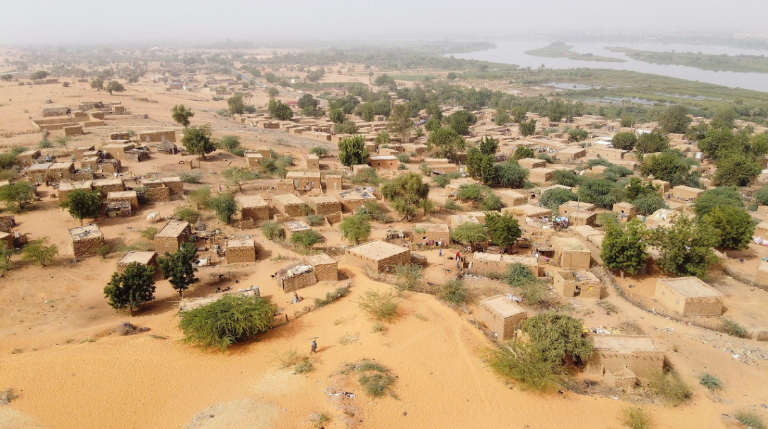
Life on hold: when a simple market trip turns deadly in Tillabéri
Thirty-seven civilians from Tillim in Niger’s Tillabéri region never made it to the market last Thursday. Their journey ended in tragedy when an Islamic State in the Sahel (EIS) ambush took their lives. The victims were traveling in a convoy under the protection of local self-defense militias, known as Domol Leydi. This attack comes after a relentless ten-day wave of violence in the area.
Ten days of terror: EIS escalates attacks near Téra
The ambush near Téra is not an isolated incident. Over the past ten days, the Islamic State in the Sahel has intensified operations in western Niger, targeting villages, convoys, and rural communities. Residents in Tillabéri now face a grim reality: every trip to the market, every livestock drive, and even routine farming activities carry life-threatening risks.
For families in rural Tillabéri, these daily routines are economic and social lifelines. Markets are not just places to trade goods—they are the heart of community interaction. Yet, as attacks mount, markets lose their vibrancy, traders avoid key routes, and entire villages face isolation.
From market days to survival struggles: the ripple effects of insecurity
The consequences of this violence extend far beyond the immediate loss of life. Markets in Tillabéri are shrinking as vendors and buyers stay home out of fear. Farmers hesitate to tend crops in distant fields. Herders struggle to move livestock to grazing lands. The once-thriving exchange between villages is now stifled by the constant threat of ambushes.
- Traders abandon high-risk routes, reducing access to essential goods
- Economic losses mount for rural households as trade routes close
- Dependence on unreliable supply chains increases vulnerability in remote areas
Domol Leydi: a fragile shield against organized violence
The convoy from Tillim was meant to be protected by Domol Leydi militias—community-led defense groups formed to fill gaps where state security forces are stretched thin. These militias play a critical role in safeguarding rural Niger, yet their ability to prevent attacks remains limited. The ambush near Téra demonstrates that even escorted convoys can fall victim to well-armed, mobile jihadist groups.
This incident raises tough questions about civilian protection in Tillabéri. Relying solely on local militias is no long-term solution. Communities need sustainable security measures—better surveillance, coordinated patrols, and accessible alert systems—to ensure safe passage for civilians.
Tillabéri’s vulnerability: a border region under siege
Tillabéri is one of Niger’s most volatile regions, lying along the porous borders with Mali and Burkina Faso. Known as the “three-frontiers zone,” this area has become a battleground for jihadist groups including the Islamic State in the Sahel and the Group for Support of Islam and Muslims (JNIM). Their presence has turned what was once a region of movement and trade into a patchwork of danger zones.
Residents have had to adapt their lives around the threat. Some avoid traveling after dark. Others curtail their work in fields far from home. Markets in smaller villages see dramatic drops in attendance. The constant fear is not just of attacks—but of what happens when entire villages lose their ability to sustain themselves.
Beyond the headlines: the human cost of Sahel insecurity
With 37 lives lost, the attack near Téra is more than a statistic—it’s a stark reminder of who pays the price in Niger’s security crisis. Civilians, not combatants, bear the brunt of these ambushes. Families mourn lost breadwinners. Children miss school as parents fear sending them on roads. Elderly residents are trapped in villages that have become too dangerous to leave.
The situation in Tillabéri demands urgent action—not just from local militias, but from national and regional leaders. Strengthening security infrastructure, boosting intelligence sharing, and supporting displaced communities are essential to restore safety and normalcy. Without it, every trip to the market could end in tragedy.
For the people of Tillim, the journey to the market is no longer just a matter of routine. It’s a calculated risk with potentially fatal consequences.





