Strengthening health financing and partner coordination in Niger
The landlocked Niger, located in West Africa, has faced significant challenges including armed conflicts and prolonged droughts. These adversities have severely impacted the country’s healthcare system, contributing to some of the highest maternal and child mortality rates globally. Driven by a commitment to universal health coverage (UHC), the Government of Niger has prioritized reforms to enhance access to essential health services.
In 2006, Niger introduced an ambitious free healthcare policy to provide reproductive health services and family planning for women, along with free healthcare for children under five. While initial progress was promising, insufficient funding hindered long-term success. By 2011, only half of the required resources had been mobilized, leading to unpaid healthcare bills and service disruptions. Additionally, the policy excluded older children and adults, forcing them to bear high out-of-pocket expenses. According to the World Health Organization (WHO), direct payments accounted for over 40% of Niger’s total health expenditures.
Government healthcare spending fluctuated, dropping from 5.4% to 4.9% of GDP between 2007 and 2011. Though it rose to 5.6% between 2016 and 2018, growth stalled at around 5.7% from 2018 to 2020.
Building a sustainable health financing framework
Niger long recognized the need for better coordination among health financing partners. In 2006, the Ministry of Health, French Development Agency (AFD), and the World Bank established the Health Sector Common Fund (FCS) to support the country’s health development plan. By 2020, the initiative expanded to include UNICEF, UNFPA, Gavi, and the Spanish Agency for International Development Cooperation (AECID).
Despite these efforts, funding gaps persisted due to misaligned allocations and insufficient resources. This underscored the urgent need for structural reforms to ensure sustainable financing for UHC and other Sustainable Development Goal (SDG) 3 targets.

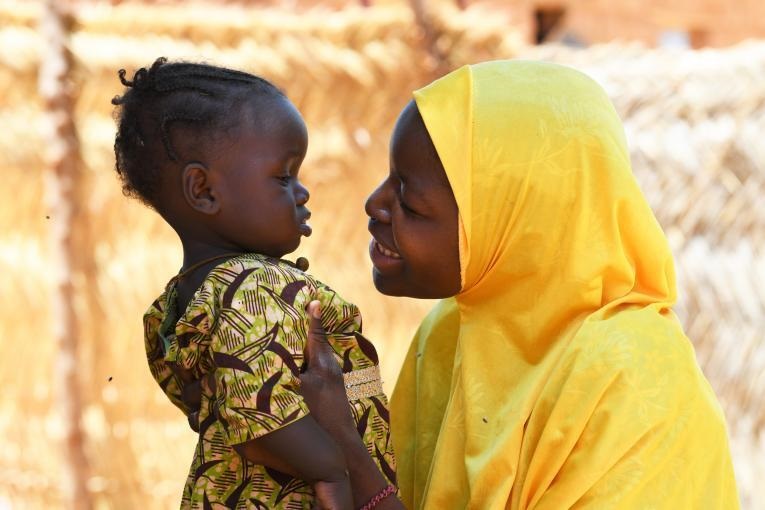
A mother holding her baby in Soki village, central Niger. © UNICEF/Dejongh
Leveraging global partnerships for coordinated health financing
To accelerate progress toward UHC, Niger launched ambitious reforms to strengthen its health financing system. One key challenge was the fragmented external funding landscape, which required better alignment among health partners. Building on lessons from the FCS, Niger sought to enhance coordination through Providing for Health (P4H), a global health financing and social protection network active in the country since 2018.
In 2021, members of the P4H network and signatories of the Global Action Plan for Healthy Lives and Well-being for All (GAP) collaborated to appoint a national focal point. This role, supported by the Government, aims to streamline health financing coordination and facilitate practical research. Gavi initially led the recruitment process, and by January 2022, the focal point assumed responsibility for coordinating partner support aligned with national health priorities.
Within the Ministry of Health, the focal point serves as a vital interface between technical and financial partners. The role helps shift the Ministry’s focus from donor-specific demands toward unified, country-led health initiatives. Funding for this position, previously managed by the WHO with support from the AFD, has since transitioned to the World Bank, with additional co-financing under consideration. These efforts lay the groundwork for more harmonized and sustainable health financing in Niger.
Key reforms to improve health financing in Niger
Before 2020, fragmented funding led to inconsistent resource allocation, with some initiatives receiving too much or too little support. The partnership between P4H and the GAP financing accelerator has fostered greater collaboration, enabling partners to align behind national health priorities. This includes integrating health financing discussions into broader social protection programs and advocating for budgetary reforms that benefit women and children.
In 2020, health partners supported Niger in responding to COVID-19, mobilizing domestic resources, optimizing expenditures, and improving development cooperation. Key government priorities included:
- Aligning budget support with harmonized health spending indicators.
- Reforming the FCS to enhance fungibility and transition from a management tool to a financing system.
- Implementing strategic procurement with support from the National Institute of Medical Assistance (INAM).
- Improving the predictability of partner contributions and annual activity planning.
Specific objectives were set to achieve these priorities:
Harmonizing health financing
- Mapping donors, funding flows, and channels, with critical analysis of financing harmonization (supported by the Global Financing Facility (GFF)).
- Assessing the future trajectory of the FCS (with support from WHO/P4H).
- Developing investment case funding channels (with support from the GFF).
Harmonizing support
- Reviewing and analyzing technical assistance for health financing.
Financing systems and tools
- Analyzing operational strategies for free healthcare and universal health insurance policies (supported by WHO/P4H, AFD, and the FCS).
Efficiency and optimization tools
- Developing a cost simulation tool to estimate care production and financing in rural areas (supported by AFD, FCS, and GFF).
- Identifying and scaling low-cost innovations in health service delivery (supported by AFD, FCS, and the Global Fund).
Mobilizing domestic resources
- Engaging with the International Monetary Fund (IMF) to include health spending indicators in indicative targets, such as vaccination and nutrition.
- Advocating for increased allocation to primary healthcare and vaccination during high-level missions and GAP meetings with the Government.
Additional support is needed to refine the reorganization of health ministry technical committees and develop policies to improve national financing systems and expenditure efficiency.
While still evolving, this collaborative financing strategy aligns with Niger’s health priorities and aims to enhance service delivery. For example, the GFF uses resource mapping to track funding flows, helping partners avoid duplication and target interventions more effectively. This approach could enable organizations like the Global Fund and Gavi to invest strategically in HIV, tuberculosis, malaria, and vaccination programs. Since these services fall under the free healthcare policy, financing reforms could also strengthen INAM, reducing out-of-pocket expenses for vulnerable populations.
Challenges, lessons, and future outlook
Joint focal points embedded within the Ministry of Health add significant value by improving coordination and alignment of partner support—a critical need in a country where external health financing is substantial. However, challenges remain. Focal points across partner organizations often face competing priorities, risking the initiative’s sustainability. Ensuring dedicated time and resources for these roles is essential.
Another hurdle is securing long-term funding for the national focal point position, a cornerstone of these efforts. The GFF has extended its support by six months, and Gavi is engaging additional partners to sustain financing. Lessons from this pilot initiative will be shared with other countries and partners to promote similar models of joint focal points and harmonized health financing support.
Understanding the Global Action Plan for SDG 3
The Global Action Plan for Healthy Lives and Well-being for All is a commitment by 13 leading health, development, and humanitarian organizations to accelerate progress toward SDG 3 targets. Its value lies in fostering collaboration among partners to provide coordinated, country-led support aligned with national strategies. Updated in October 2021 with an equity-focused recovery strategy post-COVID-19, the plan aims to help countries achieve health-related SDG targets more efficiently.
Case studies, including Niger’s experience, track the implementation of the Global Action Plan at the national level.