The bloodiest attacks in months: a new wave of violence shakes Niger
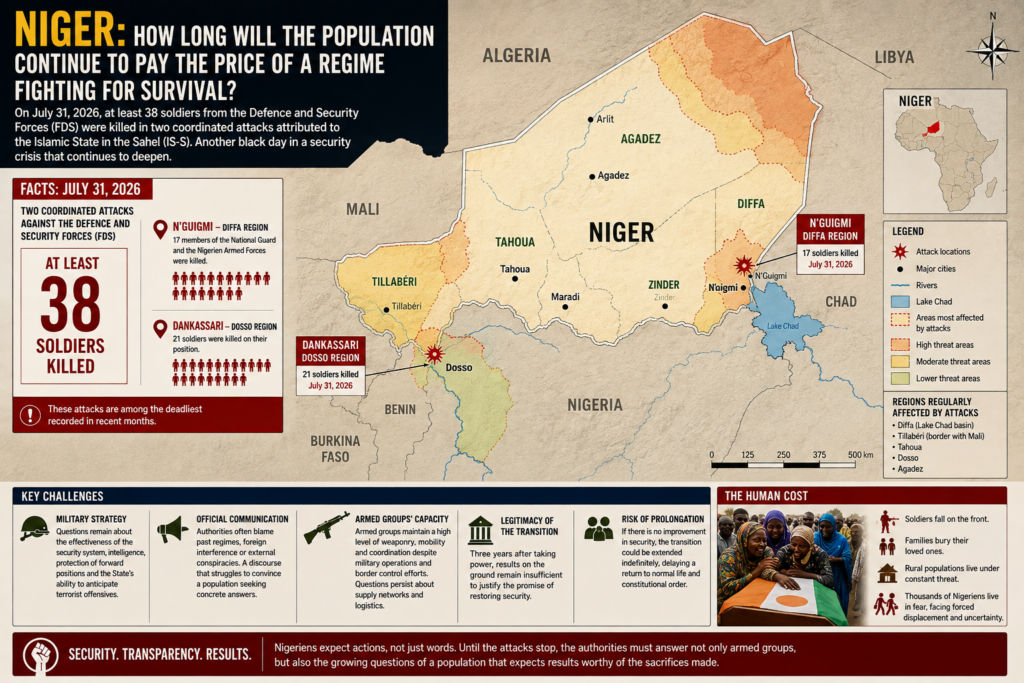
July 31, 2026, has been etched into Niger’s recent history as a day of unprecedented violence. In a coordinated assault claimed by the Islamic State in the Sahel (IS-Sahel), at least 38 soldiers from the country’s Defense and Security Forces (FDS) were killed in two separate ambushes.
The first attack struck N’Guigmi, in the Diffa region, where 17 members of the National Guard and Nigerien Armed Forces perished under heavy gunfire. Just hours later, another assault in Dankassari, Dosso region, left 21 soldiers dead. These incidents now rank among the deadliest in recent months, underscoring a grim reality: terrorism’s relentless advance continues to exact a devastating human toll.
From promises to peril: the erosion of Niger’s security strategy
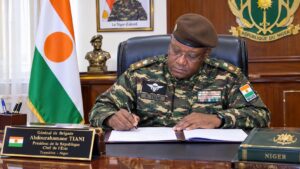
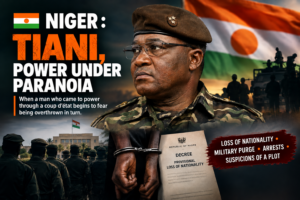
When General Abdourahamane Tiani seized power, the military junta framed its intervention as a desperate necessity to halt the country’s spiraling insecurity. The narrative was clear—only a military-led government could restore order, reclaim lost territories, and shield civilians from the rising tide of violence.
Three years into the transition, however, the results tell a different story. Attacks persist across critical zones, from the Lake Chad basin to regions like Tillabéri, Tahoua, and Dosso. Armed groups maintain the operational capacity to launch large-scale, coordinated strikes on military outposts, despite repeated assurances of military restructuring and enhanced security measures.
This persistent failure to curb attacks raises a pressing question: Are the junta’s stated objectives translating into tangible improvements on the ground?
Questioning the military’s approach
Each deadly assault does more than claim lives—it exposes gaping holes in Niger’s security apparatus. The recurring attacks force a reckoning with the efficacy of intelligence networks, the vulnerability of forward operating bases, and the state’s ability to preempt terror offensives.
As violence intensifies, public skepticism grows. Is the regime’s focus on consolidating political control diverting critical resources from the urgent demands of the battlefield? For a transition that derives its legitimacy from security promises, the absence of tangible progress on this front risks eroding public trust.
Official narratives fail to silence growing discontent
Following each attack, government officials have consistently pointed to inherited failures from civilian administrations, foreign interference, and the machinations of external actors. While these factors may contribute to the broader crisis, they offer little solace to grieving families or communities living under daily threat.
What Nigeriens demand are concrete answers: where did operational failures occur? What corrective measures are being implemented? And how will future tragedies be prevented?
Without visible results, the regime’s messaging risks sounding increasingly hollow, further widening the chasm between official assurances and the reality faced by citizens.
The insurgency’s staying power: a challenge to military resolve
Perhaps the most alarming aspect of the current crisis is the sustained operational capacity of armed groups. Despite military operations and border control efforts, these organizations continue to execute large-scale attacks with alarming precision and coordination.This persistence fuels grave concerns about the effectiveness of arms supply interdiction, the dismantling of terrorist logistics networks, and the robustness of intelligence-gathering mechanisms. With scant public information, speculation thrives, deepening the rift between communities and state institutions.
A transition at risk of unraveling
The military government’s legitimacy hinges on its ability to restore security. Yet, as attacks multiply, that legitimacy hangs by a thread. The failure to stem violence not only prolongs civilian suffering but also casts doubt on the feasibility of a swift return to constitutional order.
For many observers, the prolonged crisis risks transforming the transition into an indefinite state of emergency. The path forward, they argue, demands greater transparency, demonstrable results, and a credible roadmap for ending the turmoil.
The human cost of a stalled security crisis
Beyond political debates, the most tragic reality remains unchanged: soldiers continue to fall in combat, families bury their loved ones, and rural communities endure the daily terror of armed incursions.
For thousands of Nigeriens, fear dictates their lives—whether through forced displacement, disrupted livelihoods, or the constant shadow of violence. The junta’s founding promise was security. Today, that promise remains unfulfilled, and the human toll continues to mount.
Until attacks subside and tangible progress is made, the regime will face not only the armed opposition but also the growing skepticism of a population that has sacrificed too much for too little.