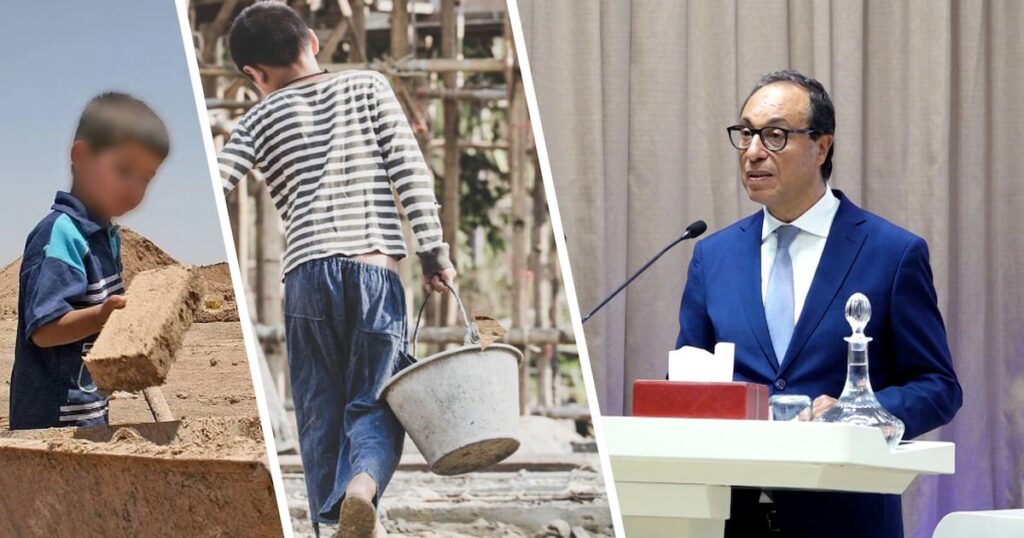
The Kingdom of Morocco has made significant strides in combating child labor over the past two decades, yet the challenge persists, particularly in informal sectors and hazardous activities. The Economic, Social and Environmental Council (CESE) has taken a proactive stance, releasing a comprehensive report on July 1 outlining strategic recommendations to eradicate this issue once and for all.
Persistent challenges despite measurable progress
While Morocco has reduced the number of working children aged 7 to 17 from 517,000 in 1999 to approximately 101,000 in 2024—a decline of over 80%—the practice remains deeply entrenched. CESE President Abdelkader Amara emphasized that 78% of 1,540 citizens consulted in a public survey believe child labor is still widespread across the country. This feedback prompted the institution to scrutinize existing policies and propose innovative solutions.
Morocco’s legal framework has made notable progress, including prohibiting child labor for those under 15 and gradually eliminating hazardous work for minors aged 16 to 17. However, CESE’s assessment reveals that structural issues such as poverty, socioeconomic vulnerability, and the informal economy continue to drive this phenomenon.
Hidden dangers and societal impact
According to the consultation findings, 27% of respondents report seeing child laborers in public spaces, often engaged in street vending, heavy lifting, or vehicle washing. More alarmingly, 22% highlighted grave concerns like organized begging, child exploitation, and involvement in drug trafficking. The report underscores that nearly 60% of child workers are exposed to hazardous conditions, underscoring the urgent need for stronger prevention, monitoring, and protective measures.
Abdelkader Amara stressed that child labor undermines children’s physical, psychological, and educational development, perpetuating social inequalities and hindering national progress. «The place of a child is in school and safe, nurturing environments, not in workplaces», he asserted.
CESE’s bold proposals for systemic change
The council’s report calls for a comprehensive overhaul of labor laws, including updating the 2010 decree on hazardous work for minors. A key recommendation is raising the minimum working age to 16, aligning it with the end of compulsory education, and ensuring better coherence between social and educational policies.
In a significant move, CESE recently signed a framework agreement with the National Observatory for Children’s Rights (ONDE), chaired by Princess Lalla Meryem, to strengthen collaboration. This partnership aims to intensify prevention, protection, and enforcement efforts against child labor—a practice that, according to Amara, is incompatible with Morocco’s modern aspirations.