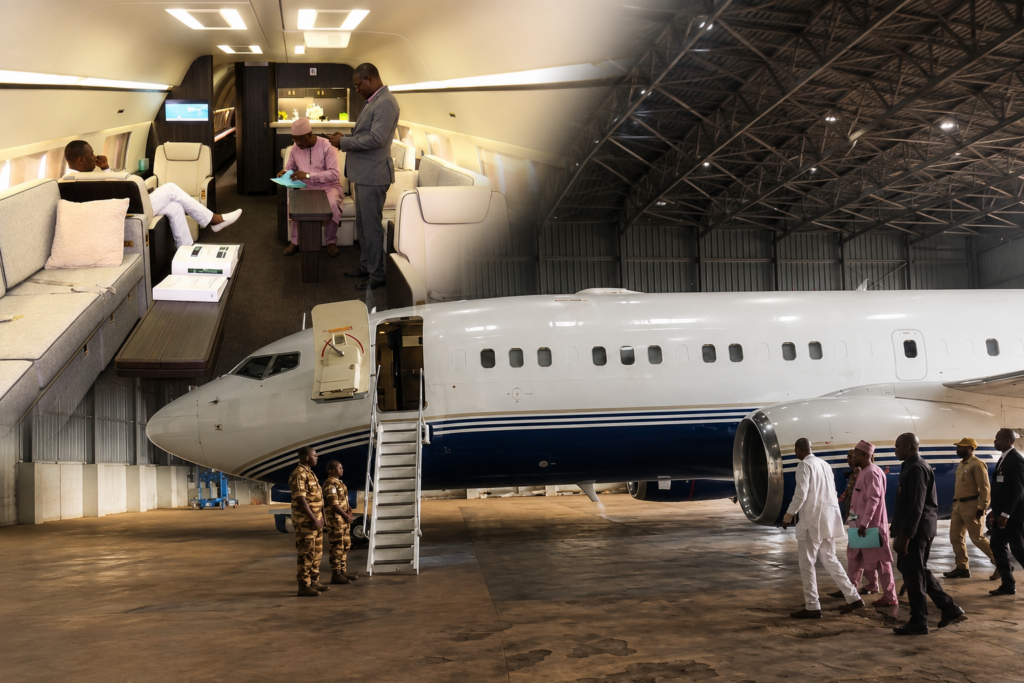
An unprecedented acquisition amidst persistent insecurity
The Malian public was recently introduced to its new presidential aircraft—a Boeing 737—during a high-profile ceremony broadcast nationwide. Government officials framed the purchase as a financially sound decision, highlighting that the initial cost of 15.6 billion West African CFA francs would be reduced to approximately 6 billion through insurance compensations and the resale of components from the previous aircraft.
A stark contrast with ground realities
The timing of this announcement could not have been more jarring. While authorities repeatedly urge national sacrifice and resilience, the unveiling of a state-of-the-art presidential jet has fueled perceptions of a leadership more concerned with projecting prestige than addressing the urgent needs of its people.
Across Mali, insecurity remains a daily reality. Military posts are frequently targeted, road ambushes persist, and civilians continue to bear the brunt of violence. Many regions remain largely inaccessible, with state authority struggling to re-establish control over vast areas of the country.
Unresolved security challenges overshadow progress
Three years into the Transition, the government’s stated priority of territorial restoration remains an uphill battle. In the north, coalitions such as the Cadre stratégique permanent, including the Front de Libération de l’Azawad (FLA), maintain significant operational capacity and contest control over key zones.
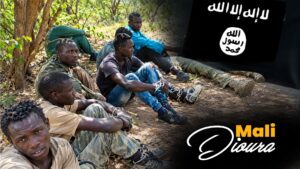
Meanwhile, in central and southern Mali, the Jama’at Nusrat al-Islam wal Muslimin (JNIM) continues to expand its influence, intensifying attacks on military outposts, critical infrastructure, and state representatives. Several major roadways remain perilous, disrupting trade, transportation, and economic activity.
The financial debate: where should resources flow?
Even with assurances that the net expenditure on the new aircraft is significantly lower than its sticker price, critics argue that billions of CFA francs could have been directed toward far more pressing needs, such as:
- Enhancing the operational capacity of the Malian Armed Forces;
- Procuring armored vehicles, communication systems, and protective gear;
- Bolstering intelligence and aerial surveillance capabilities;
- Providing medical care and support for wounded soldiers and fallen servicemembers’ families;
- Assisting internally displaced persons and rebuilding war-ravaged infrastructure.
A perceived erosion of fiscal discipline
The Transition leadership has sought to establish its legitimacy through a discourse of austerity, vowing to break from the excesses of previous regimes. Yet the acquisition of a long-range executive jet contradicts this narrative for many observers. To a significant portion of the population, it signals a return to the very culture of extravagance that the current administration had pledged to eliminate.
This disconnect is all the more pronounced given the country’s ongoing economic challenges: soaring living costs, strained public finances, pressing social needs, and a sluggish economic recovery.
Diplomatic utility versus domestic credibility
Proponents of the new aircraft argue that it will streamline diplomatic engagements and reinforce Mali’s international representation. However, this rationale struggles to gain traction among those who believe that a nation’s credibility is measured not by the modernity of its presidential fleet, but by its ability to ensure internal stability, protect its citizens, and restore functional governance.
Symbolism that deepens public skepticism
Within critical circles and opposition groups, the new jet has taken on deeper political significance. Some interpret it as evidence of a system that prioritizes the mobility of its leaders over the mobility of the state. Others speculate—though without concrete evidence—that a long-range aircraft could serve as an escape mechanism for top officials in the event of a severe escalation in violence.
Regardless of the validity of such claims, they underscore the growing climate of distrust surrounding governmental decision-making.
Questioning the direction of the Transition
The introduction of the Boeing 737 is not merely an administrative update—it has reignited a broader conversation about the strategic direction of the Transition.
As security threats persist, attacks continue unabated, and economic hardship deepens, every expenditure perceived as symbolic is subjected to heightened scrutiny. For many Malians, true sovereignty is not demonstrated by the modernization of presidential transport, but by the state’s capacity to safeguard its people, reassert authority across the entire territory, and tangibly improve living conditions. Until tangible progress is made on these fronts, investments in prestige risk being seen as a widening chasm between governance choices and the aspirations of the population.