The Malian authorities have adopted a bold new tactic in their fight against terrorism. In a national broadcast on 4 June 2026, the transitional government unveiled a financial incentive scheme aimed at encouraging citizens to provide actionable intelligence leading to the capture or elimination of key figures from the Group for the Support of Islam and Muslims (JNIM, Al-Qaeda affiliate) and the Azauad Liberation Front (FLA). This public announcement marks a significant shift in strategy, signaling Bamako’s determination to enlist civilian support in a conflict that has stretched the military’s resources to their limits.
Targeting the masterminds behind Mali’s security crisis
The new initiative specifically names two armed factions that Malian officials identify as the gravest threats to the nation’s stability. The JNIM, led by the elusive Iyad Ag Ghaly and operating across the Sahel, has carried out relentless attacks on military installations and supply routes in recent years. Meanwhile, the FLA, rooted in historic Tuareg separatist movements, continues to challenge Bamako’s authority in the northern regions of Kidal, Gao, and Tombouctou.
By offering monetary rewards, the Malian government joins a global counterterrorism playbook, though such measures remain uncommon in West Africa. The move underscores a pragmatic acknowledgment: conventional military operations alone cannot neutralize these networks without local intelligence. While the approach has proven effective in conflicts elsewhere, its success in Mali will depend on overcoming deep-rooted distrust between communities and authorities.
Security vacuum fuels bold new tactics
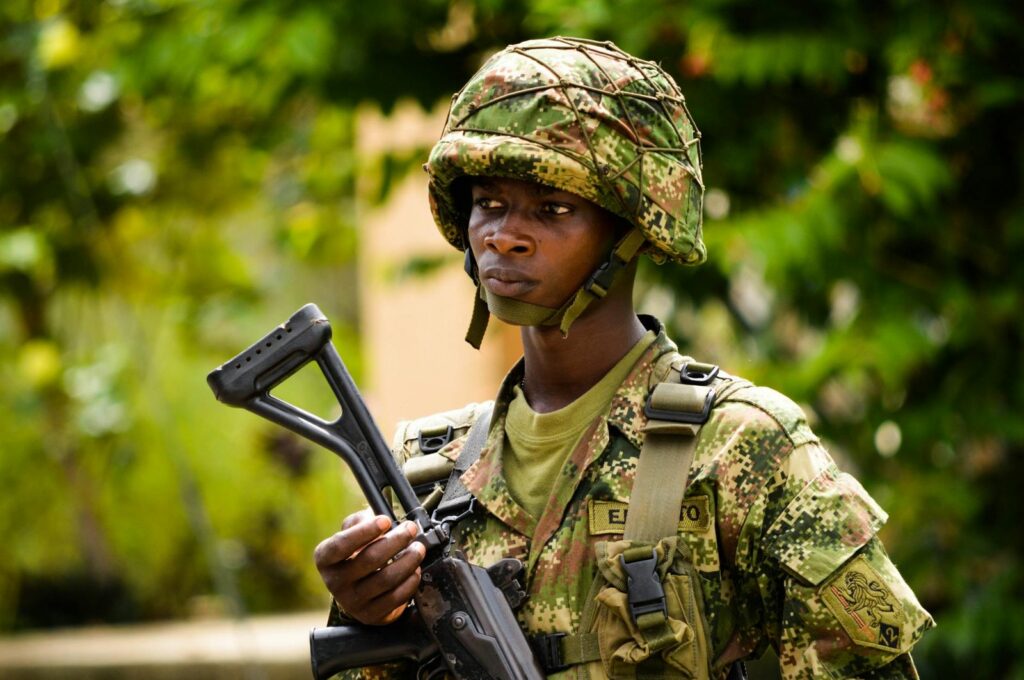
The timing of this announcement reflects the worsening security landscape. Following the 2023 withdrawal of the UN stabilization mission (MINUSMA) and the departure of French forces, the Malian Armed Forces (FAMA) now operate with support from Russian-backed personnel, including the Africa Corps, which succeeded the Wagner Group. Despite reclaiming Kidal in late 2023, jihadist activity has surged in both central and peripheral regions, including near the capital.
Officials frame the reward system as a tactical necessity. Decapitation strikes against militant leaders require precise intelligence, which only local populations can provide. However, the strategy carries risks. Informants face deadly reprisals, and the lack of clarity on payout amounts or verification processes may deter participation. The government has yet to disclose financial details or procedural safeguards.
Regional unity meets financial uncertainty
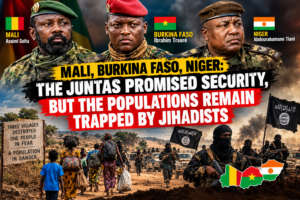
The Malian initiative aligns with the Sahel Confederation (AES), a 2024 alliance between Mali, Burkina Faso, and Niger to counter shared threats. The three nations share intelligence and coordinate military operations, but the reward scheme raises questions about scalability. Expanding such incentives across borders could enhance cross-border intelligence-sharing, especially as militant groups exploit porous frontiers to regroup and resupply.
Funding remains a critical challenge. With external aid suspended and ECOWAS sanctions still in place, Bamako must either allocate domestic resources or secure new partnerships to fulfill its promises. While Russia has emerged as the primary military backer, no official discussions have confirmed co-financing for the initiative.
Beyond operational goals, the announcement serves a political purpose. By addressing citizens directly through state media, the transitional government aims to foster public engagement in the war effort and bolster its legitimacy. With elections repeatedly delayed since the 2020–2021 coups, tangible results against designated militant leaders could sway public opinion and strengthen the regime’s standing.
The coming months will test the scheme’s viability. Success hinges on whether the FAMA can deliver verifiable victories against the targeted commanders—or if the promise of rewards will fade into empty rhetoric.