The Malian government has undertaken a sweeping overhaul of its military command structure following the coordinated attacks on April 25, 2026, which were claimed by both the Jama’at Nusrat al-Islam wal Muslimin (JNIM) and the Azawad Liberation Front (FLA). These assaults resulted in the death of the former Defense Minister, General Sadio Camara.
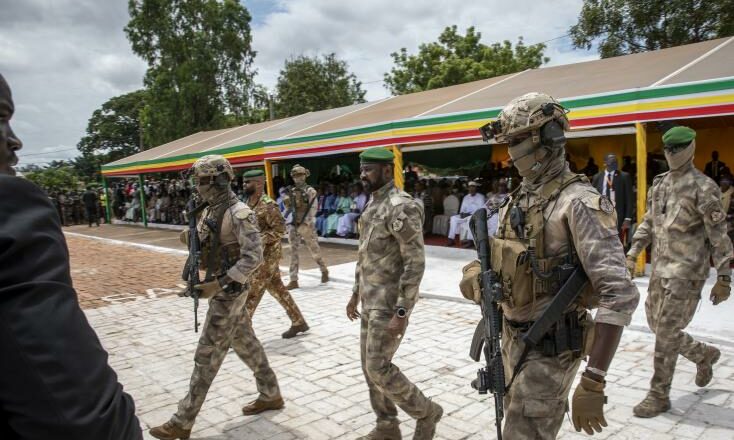
An extraordinary edition of the Official Gazette, released on May 29, 2026, formalized the appointment of several high-ranking officers to critical roles within the Malian Armed Forces and the Alliance of Sahel States (AES) Unified Force.
New leadership for operational and strategic command
The restructuring places Brigadier General Makan Alassane Diarra at the helm of the AES Unified Force. Previously serving as Deputy Chief of Staff for Operations, he replaces Brigadier General Daouda Traoré. His extensive experience in eastern Mali’s counterinsurgency operations played a decisive role in his selection.
To fill the void left at the General Staff of the Armies, authorities appointed Brigadier General Mamadou Massaoulé Samaké, transitioning from his advisory role in strategic planning. Colonel-Major Yacouba Sanogo has been reassigned as Strategic Advisor to the General Staff, bringing his operational insights to the highest echelons of command.
Field command reshuffled to bolster regional response
The overhaul extends to frontline leadership. Colonel-Major Karim Traoré now commands the Eastern Theater, while Colonel-Major Didier Dembélé oversees the Southern Theater. Colonel Issa Bagayoko takes charge of the Central Theater, ensuring tighter control over Mali’s most volatile regions.
These changes follow a series of measures enacted after the April attacks, including President Assimi Goïta—who also holds the Defense portfolio—and the appointment of General Oumar Diarra as Minister Delegate for Defense, reinforcing Bamako’s commitment to addressing escalating security threats.
The reshuffle underscores Mali’s determination to enhance both national and regional military coordination, particularly within the AES framework, in the face of an intensifying insurgent threat.