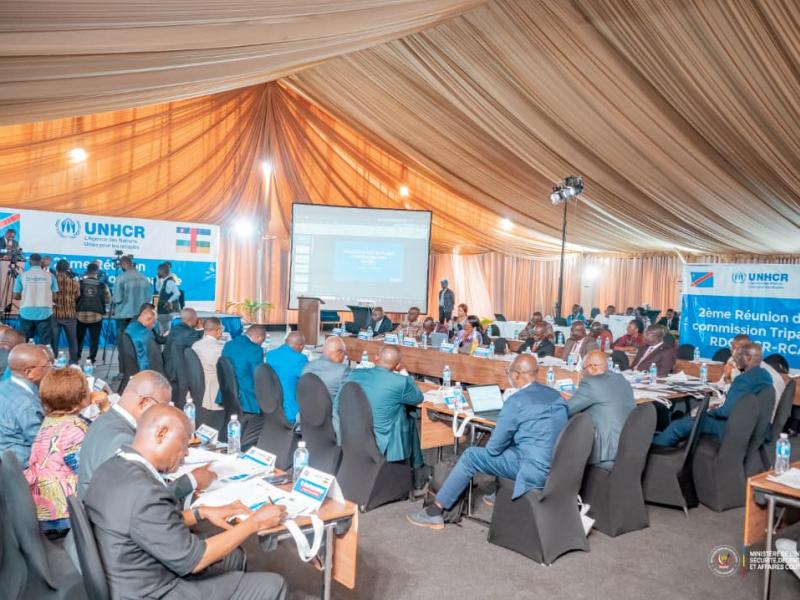
Kinshasa is the setting for the second tripartite meeting focused on the repatriation of Central African refugees from the Democratic Republic of Congo. From Tuesday, June 9, to Thursday, June 12, experts from the DRC, the Central African Republic (CAR), and the United Nations High Commissioner for Refugees (UNHCR) are gathered to discuss the path forward.
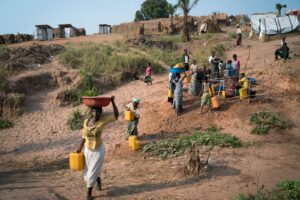
Pierre Atchom, the UNHCR Country Representative in the DRC, detailed the current figures, stating that 22,604 biometrically registered refugees from the CAR remain in the country. These individuals are primarily located in the provinces of Nord-Ubangi, Sud-Ubangi, and Bas-Uélé. The situation is further complicated by the recent arrival of 65,000 new asylum seekers from the CAR in May 2025, who have settled in the Zapaï area within the Ango territory of Bas-Uélé.
Éric Mukandila, the permanent secretary of the National Commission for Refugees (CNR) and head of the DRC delegation, recalled that the voluntary repatriation process resumed after peace was restored to previously conflict-ridden areas. This was formalized through a trilateral agreement signed in July 2019 by the DRC, CAR, and UNHCR.
The Congolese delegate explained that this agreement was further solidified by the 2022 Yaoundé Declaration, which advocates for a regional strategy in finding sustainable solutions for those displaced by the Central African crisis. He highlighted that, to date, 40,000 Central Africans have successfully returned home since 2019, a process facilitated by the UNHCR and both governments to ensure safety and dignity.
However, he also acknowledged the frustration among those still waiting to return, asserting that a thorough review is crucial to identify clear pathways for completing the repatriation process safely and with dignity for all.
Mesmin Guenguebe Mbari, head of the Central African Republic’s delegation and an advisor on territorial planning, commended the return of over 43% of refugees from the DRC under the existing agreement. He shared his country’s forecast for the current year, which includes the potential return of nearly 60,000 refugees from various host nations. This plan is supported by an innovative strategy to create development hubs in returnee areas within the CAR. Mbari urged for pragmatic and candid discussions, suggesting a “methodical pause” to scientifically assess the real-life integration of those who have already returned, analyze their re-entry into communities, and measure the actual impact of the aid provided.