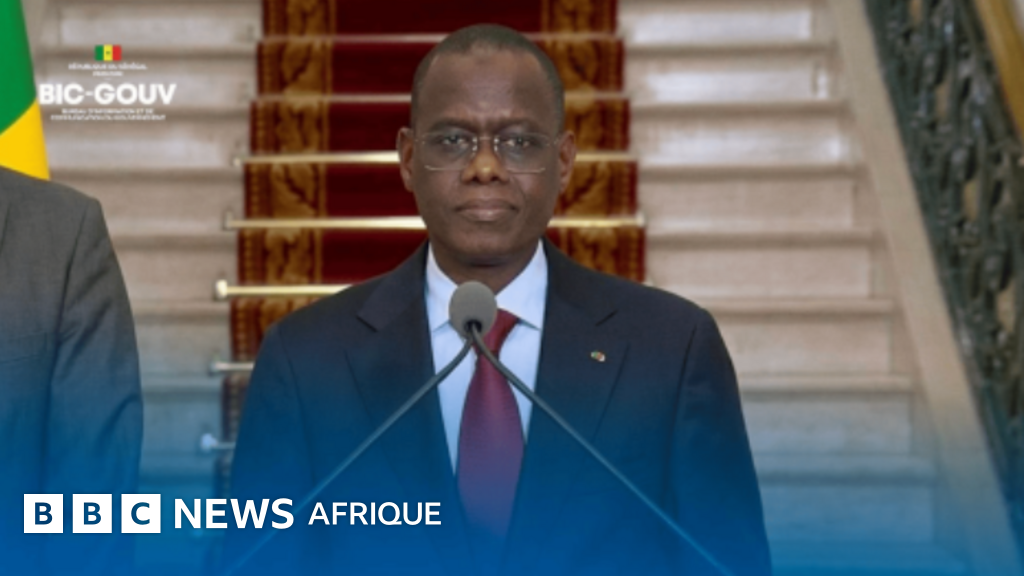
The newly appointed Prime Minister of Senegal, Ahmadou Al Amine Mohamed Lo, has unveiled a 30-member government, including 26 ministers and four deputy ministers. This reshuffle comes just days after President Bassirou Diomaye Faye dismissed his predecessor, Ousmane Sonko, amid economic strain and political tensions.
a government without parliamentary majority
The formation of this cabinet follows the refusal of the PASTEF party—led by Ousmane Sonko—to participate, citing “deep-seated disagreements” with the administration. Key figures from the previous government, such as ministers of Energy, Justice, Culture, and Sports, have stepped down in solidarity. However, some former PASTEF members remain in the new lineup, including Cheikh Diba, who now oversees Finance, Economy, and Planning.
women’s representation remains critically low
Despite a law mandating gender parity in elective offices since 2010, the new cabinet includes only four women out of 30 members—one fewer than the outgoing team. These women hold portfolios in Family Affairs, Youth, Fisheries, and Culture, but none lead sovereign ministries. Activists have criticized this imbalance, arguing that it fails to reflect women’s expertise and the country’s demographic realities.
debt crisis and IMF negotiations loom large
With a mounting debt exceeding $7 billion—much of it undisclosed—the government faces mounting pressure to restructure its obligations. Economists warn that without an agreement with the International Monetary Fund, Senegal’s growth outlook remains bleak, with forecasts as low as 2.2% for 2026. The administration must balance fiscal reform with social demands, including rising living costs and unemployment, all while navigating a fragile political climate.
unprecedented political cohabitation
Ousmane Sonko, now Speaker of the National Assembly, holds a majority that opposes the government’s direction. This creates a rare cohabitation scenario, forcing President Faye to govern without a loyal parliamentary bloc. Political analysts describe the situation as “unprecedented”, warning that mismanagement could trigger institutional paralysis. The Prime Minister’s limited authority further complicates efforts to implement bold reforms.
constitutional roles must prevail
For stability to endure, both the President and the Assembly Speaker must prioritize national interests over partisan agendas. The executive and legislature must respect their constitutional mandates, avoiding power struggles that could destabilize governance. As one analyst noted, “Without mutual restraint and collaboration, Senegal risks a crisis at the highest level of state power.”