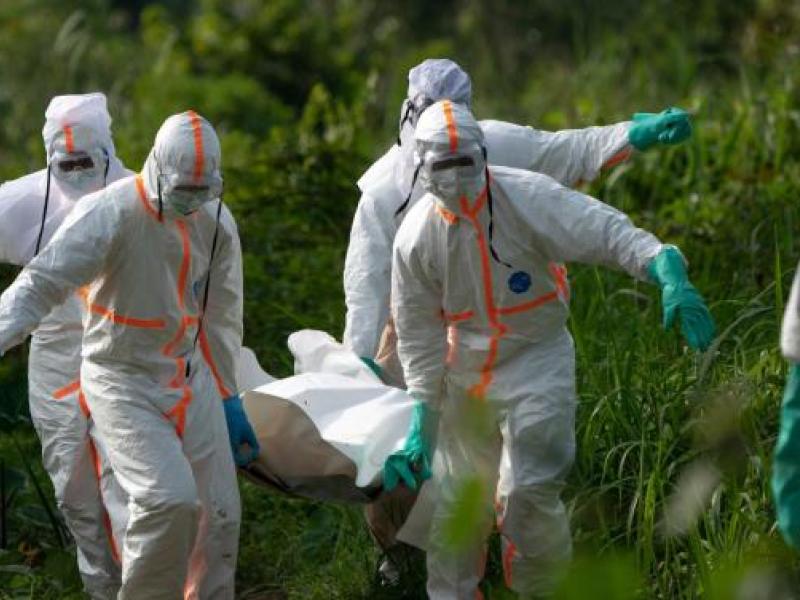
The Japanese government has pledged 3 million USD in emergency assistance to the République démocratique du Congo to strengthen the fight against the Ebola epidemic currently impacting the eastern provinces of Nord-Kivu and Sud-Kivu.
This financial support is being channeled through three key international humanitarian organizations. The International Federation of Red Cross and Red Crescent Societies (IFRC) will receive 1.5 million USD, while the World Food Programme (WFP) is allocated 1 million USD. Additionally, 500,000 USD will be granted to the United Nations Children’s Fund (UNICEF).
These funds are intended to support vital operations in several high-priority sectors, including healthcare, clean water access, sanitation, and hygiene. This international aid is designed to contain the spread of the Ebola virus within the RDC and mitigate the risk of transmission to neighboring countries.
A commitment to human security
This contribution reflects a dedicated focus on the principle of human security. This motivation has led to a swift response to the appeals made by international agencies currently operating across the RDC.
In light of the influx of international financial support, the Minister of Public Health, Hygiene, and Social Welfare, Samuel Roger Kamba, has stressed the need for improved coordination and transparency. He is advocating for a more synchronized management of funds between the government and its technical and financial partners to ensure the efficiency of health interventions in the east.
During a high-level meeting held in Bunia, Ituri province, the health ministry pointed out that much of the international aid is managed directly by humanitarian groups rather than the government. This lack of centralized oversight often creates public confusion regarding the state’s actual role in managing these financial resources.
Challenges of the Bundibugyo strain
The World Health Organization (WHO) has classified this specific outbreak, caused by the Bundibugyo virus strain, as a public health emergency of international concern (PHEIC). The virus has already shown signs of spreading from the RDC toward Uganda.
The current situation is particularly volatile due to significant population displacement, the inherent fragility of local health systems, and the difficulties of accessing medical zones located within conflict areas. Furthermore, there is currently no licensed vaccine or specific therapeutic treatment available for the Bundibugyo strain.
Despite these significant obstacles, there is a level of confidence in the response efforts. The RDC is drawing on its extensive history and expertise gained from successfully managing sixteen previous Ebola outbreaks to navigate this latest health crisis.