The sentiment of rejection towards France in Gabon has reached an unprecedented peak. Findings from the latest Afrobarometer survey, an independent pan-African polling network, reveal that a striking 78% of Gabonese citizens interviewed perceive Paris’s influence in their nation as negative. In stark contrast, only 20% hold a favorable view. This significant disparity positions the former colonial power at the very bottom among external actors present in Libreville, a country historically regarded as a crucial francophone stronghold in the Gulf of Guinea.
The difference in perception compared to other international partners is quite remarkable. China garners 61% positive opinions, followed closely by the African Union at 60%, the United States with 47%, and Russia at 43%. Essentially, Beijing is now seen by the Gabonese populace as a partner three times more legitimate than Paris. This inverted hierarchy signifies a profound re-evaluation of diplomatic perspectives within a nation where French economic and military presence once appeared unshakeable.
A growing regional sentiment of mistrust
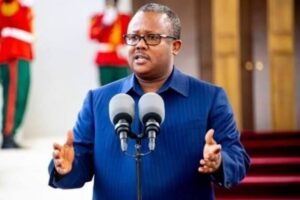
Gabon’s disengagement is not an isolated incident. Following the withdrawal of French forces from Mali, Burkina Faso, and Niger, discontent regarding Paris’s role has spread far beyond the Sahel region. Chad requested a review of its defense agreements by late 2024, Senegal successfully secured the closure of French military installations, and Côte d’Ivoire has pursued a similar path. Gabon, currently undergoing a military transition led by Brice Clotaire Oligui Nguema since August 2023, is clearly part of this broader movement to reassess inherited partnerships.
Symbolically, the gradual closure of French military bases across the continent and the redefinition of the French Elements in Gabon (EFG) into a cooperation mission have mirrored this shift. Libreville’s official discourse, which emphasizes national sovereignty and the diversification of international partnerships, resonates strongly with a public weary of a relationship perceived as imbalanced.
Beijing capitalizes on a narrative void
China’s increasing prominence cannot be attributed solely to the infrastructure projects it funds or the loans it extends. It also stems from a non-confrontational communication strategy that avoids political mandates and instead highlights tangible results: roads, hospitals, and telecommunications. Gabonese manganese, for which Beijing is a strategic buyer, fuels this transactional relationship, which many citizens find more straightforward than the perceived complexities of Franco-Gabonese ties.
Russia, with 43% positive opinions, benefits from a reservoir of goodwill built upon an anti-Western stance amplified through social media platforms. Despite lacking an economic presence comparable to China or France, Moscow reaps the rewards of a sovereignist narrative that appeals to connected urban youth. Meanwhile, the African Union, at 60%, affirms that continental multilateralism maintains strong legitimacy, even after Gabon’s suspension following the 2023 coup d’état.
A political signal for Paris
For French diplomacy, these figures represent a significant strategic warning. Gabon still hosts substantial French economic interests, notably through Eramet in manganese, TotalEnergies in hydrocarbons, and various banking and logistics subsidiaries. The deteriorating image of France could weaken these positions at a time when public tenders are being re-evaluated by the transitional authorities.
Issues such as the CFA franc, debates surrounding the restitution of cultural artifacts, and the legacy of post-independence interventions fuel a structural resentment that mere communication efforts will not dissipate. Concretely, the indicators measured by Afrobarometer suggest that regaining favorable public opinion will necessitate a fundamental overhaul of French diplomatic strategy, rather than just cosmetic adjustments.
Nevertheless, Gabon’s political transition, which is slated to culminate in a presidential election and a return to constitutional order, could reshuffle the dynamics. The next elected executive will face the challenge of balancing economic continuity, popular pressure for change, and the allure of offers from China, the United States, and Russia.