The Faso Mêbo agency: a symbol of reconstruction or financial opacity?
Established by Burkina Faso’s transitional authorities as a beacon of national reconstruction and restored sovereignty, the Faso Mêbo agency—launched under the leadership of Captain Ibrahim Traoré—now faces mounting scrutiny. While official narratives emphasize patriotism, collective effort, and visible urban development across the country, critics highlight an opaque system of public fund management and citizen contributions.
Despite government assurances of transparency and rigorous project oversight, financial irregularities allegedly benefiting close associates of the regime have been flagged by independent analysts and economic experts.
Urban development as a strategic narrative
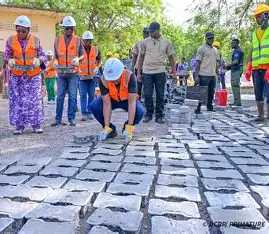
The agency’s achievements are undeniable: repaved roads, rehabilitated drainage systems, and urban upgrades in cities such as Ouagadougou, Bobo-Dioulasso, and Koudougou. By mobilizing youth, students, and the diaspora, authorities have crafted a compelling story of popular participation in the nation’s renewal.
Yet specialists warn that this emphasis on visible infrastructure may serve as a distraction from deeper financial concerns.
« The labor-intensive projects remain cost-effective compared to the substantial sums claimed under the national effort, » remarks an economist from Burkina Faso, requesting anonymity. « The focus on tangible results sometimes overshadows the critical issue: the actual allocation of mobilized funds. »
Financial irregularities under scrutiny
Scrutiny centers on the agency’s oversight mechanisms. While Faso Mêbo promotes traceability in its operations, independent verification of state budget allocations and public contributions remains absent. Internal documents and whistleblower reports point to potential irregularities, including non-competitive contract awards, inflated material costs, and opaque budget lines. These alleged practices allegedly benefit a narrow circle of civilian and military officials.
An atmosphere of constraint
The silence of oversight bodies and local media is frequently attributed to the current political climate, marked by heightened pressure on dissenting voices. Journalists, activists, and magistrates who have questioned certain government decisions have reported intimidation or forced reassignment to conflict zones. Human rights organizations have also documented cases of disappearances and rights violations, fostering an environment of fear that stifles investigative efforts.
Patriotism versus accountability
Analysts describe Faso Mêbo’s approach as « infrastructural populism »—visible progress that bolsters public support while raising concerns about governance and fiscal responsibility. Community engagement in these projects is widely praised, yet many argue that such patriotic momentum must not overshadow the imperative of accountability. For them, improved living conditions cannot justify a lack of transparency or mismanagement of public funds.