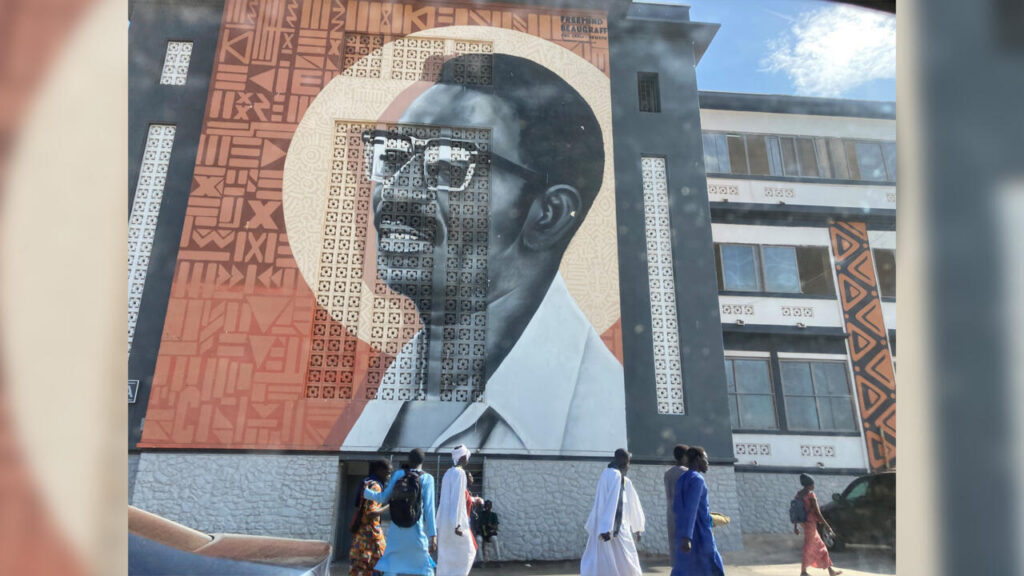
In the post-independence Senegal of the 1970s, the intellectual landscape was dominated by Léopold Sédar Senghor’s vision, yet the campus of the University of Dakar was already a hotbed of emerging dissent. « Senghor and the students — it wasn’t easy, » recalls Buuba Diop, a historian who was a student there at the time. « Those who challenged Senghor as students were in the majority. Socialist Party students were the minority. That’s why student organizations were dissolved. »
Amidst this climate, one figure stood out, embodying a radical alternative: Cheikh Anta Diop. A towering intellectual, his groundbreaking work Nations nègres et culture, published in 1955, argued that ancient Egyptian civilization was inherently African. This bold thesis became the cornerstone of his vision for Africa’s renaissance. « For Senghor, *‘emotion is Black, reason is Hellenic’*, » explains Fatou Sow, a sociologist who was also a student at the university. « Cheikh Anta Diop couldn’t agree with that. »
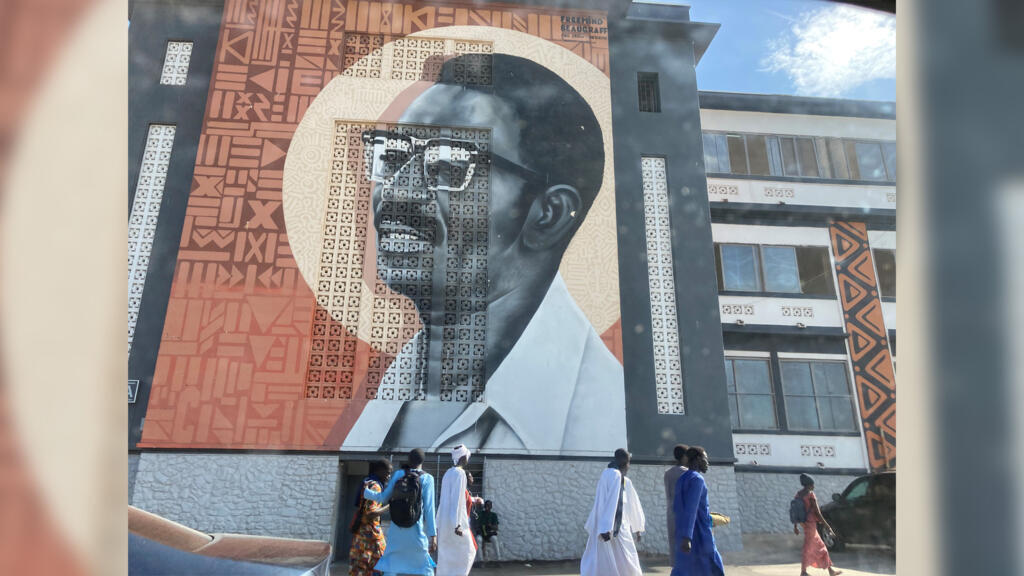
a clash of visions
The debate extended beyond ideology to language itself. While Senghor championed French as the language of education and culture, Cheikh Anta Diop advocated for the use of African languages, particularly Wolof. Despite his brilliance, Diop was barred from teaching history at the university until 1981. Instead, he worked at the Fundamental Institute of Black Africa (IFAN), where he established a carbon-14 dating laboratory, merging nuclear physics with research on Africa’s origins.
On campus, opportunities to hear Diop speak were rare. « The Association of African Historians organized a conference on ancient antiquity and the Mediterranean, » Fatou Sow recounts. « Cheikh Anta Diop wasn’t originally on the program. A few friends went to the association and said, *‘You can’t discuss these topics without inviting Cheikh Anta Diop.’* So they invited him. I was there. No one moved in the room. He spoke alone. I think it was a pivotal moment because it was the first time he spoke on campus. »
Cheikh Anta Diop passed away in 1986 at the age of 62. A year later, the university—and IFAN—were renamed in his honor. For Fatou Sow, this was a belated recognition. Today, Wolof, the language he fought to promote, remains absent from the curriculum at the university that bears his name.