east DRC turmoil: Nangaa and Kabila’s Kinshasa ambitions spark AFC/M23 fractures
- Politics
Tensions within the Alliance Fleuve Congo/Mouvement du 23 Mars (AFC/M23) have intensified, with internal divisions threatening the group’s cohesion, according to a confidential United Nations experts report obtained by this publication. The 38-page document, submitted to the UN Security Council, paints a complex picture of power struggles, military expansion disputes, and resource allocation conflicts that are reshaping the rebel landscape in eastern Democratic Republic of Congo (DRC).
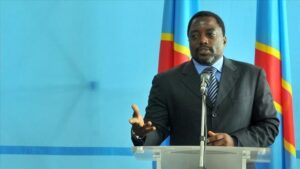
The report highlights that while Corneille Nangaa—former head of the DRC’s Independent National Electoral Commission—and Joseph Kabila harbor ambitions to extend their influence to Kinshasa, the group’s military leadership remains firmly opposed to territorial expansion beyond the North-Kivu and South-Kivu provinces. This fundamental disagreement has created a rift between the political and military factions of the AFC/M23, with General Sultani Makenga retaining command despite growing internal challenges to his authority.
Military structure and resource rivalries
The UN experts’ analysis reveals that the AFC/M23 has been reorganized into three defense zones, each led by a different commander:
- General Baudoin Ngaruye oversees the first zone, covering Nyiragongo, Rutshuru, and Lubero territories;
- Brigadier General Justin Gacheri Musanga commands the second zone, encompassing Masisi and Walikale;
- General Innocent Byamungu heads the third zone in South-Kivu.
The report estimates the group’s total combat strength at around 30,000 fighters, comprising former members of the National Congress for the Defense of the People (CNDP) and the original M23, alongside recruits mobilized since 2021. These include elements from recent promotions of the DRC Armed Forces (FARDC), National Police, and Wazalendo forces who either defected or were captured after the fall of Goma, as well as local defense forces and newly formed police units.
Political ambitions vs. military restraint
The document underscores a critical contradiction: while Nangaa and Kabila push for a broader political strategy aimed at Kinshasa, the military wing resists expansion beyond its traditional strongholds. The report notes that some senior officers and fighters, particularly those of Tutsi ethnicity, have voiced concerns over perceived preferential treatment, fueling internal grievances. This has led to heated debates over resource distribution and command structures, further destabilizing the movement.
Meanwhile, the report confirms continued support from the Rwandan government and intelligence services for AFC/M23 leaders, both politically and militarily. This external backing, while sustaining the group’s operational capacity, has also intensified regional tensions, particularly between Kinshasa and Kigali.
Diplomatic deadlock and humanitarian crisis
Despite the Washington Agreement and multiple rounds of negotiations under the Doha Process in Qatar, the rift between Kinshasa and the AFC/M23 remains unbridgeable. The report highlights that Montreux talks in Switzerland, intended to reinvigorate the peace process, have failed to yield tangible results. Delays in mediation have been exacerbated by broader geopolitical shifts in the Middle East, pushing the DRC crisis further down the international agenda.
The ongoing instability has severely impacted the humanitarian situation in eastern DRC. With no clear resolution in sight, civilians continue to bear the brunt of escalating violence and displacement. The UN experts warn that without decisive action to address internal fractures within the AFC/M23 and revive diplomatic efforts, the crisis is likely to deepen, further complicating regional security.
As the political ambitions of Nangaa and Kabila clash with military realities on the ground, the AFC/M23 finds itself at a crossroads. The future of the movement—and the stability of eastern DRC—may well hinge on whether these internal divisions can be resolved before the situation deteriorates further.