Russia’s expanding footprint in Mali’s security landscape
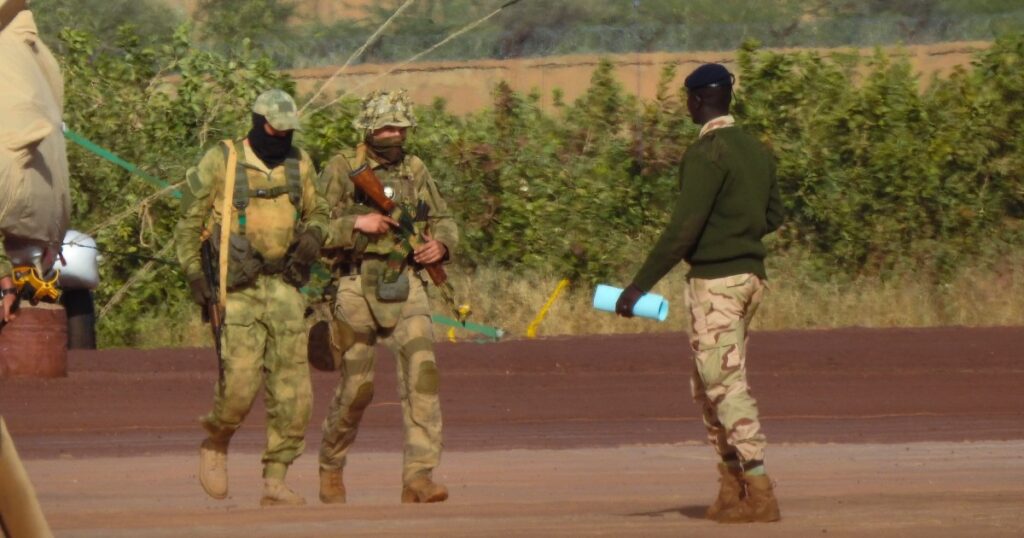
Following the withdrawal of French military forces from Mali in 2022, Russia has significantly increased its involvement in the country’s security framework. The Africa Corps—Russia’s state-backed military unit replacing the private Wagner Group—was deployed to support Mali’s armed forces against armed groups operating in the region. This shift marked a turning point in Sahel security dynamics, as Moscow sought to establish itself as a key security partner for African nations grappling with insurgency and instability.
The Africa Corps has been active across Mali, particularly in volatile regions such as Kidal, where it provided air support and ground assistance to Malian troops. However, recent large-scale attacks by armed groups have cast doubt on the effectiveness of this partnership, raising critical questions about Russia’s long-term influence in the Sahel.
Recent attacks expose vulnerabilities in Russia-Mali military cooperation
On April 25, coordinated assaults by armed groups—including the Tuareg-led Azawad Liberation Front (FLA) and the al-Qaeda-linked Jama’at Nusrat al Islam wal Muslimin (JNIM)—targeted multiple cities, including the capital Bamako. The offensive resulted in the death of Mali’s Defence Minister Sadio Camara and the temporary seizure of Kidal, a strategic northern city.
In response, the Africa Corps withdrew its forces from Kidal, citing a joint decision with the Malian government. This move has sparked widespread debate about the true extent of Russia’s military commitment in the region. Analysts highlight a stark contrast between the aggressive tactics of the former Wagner Group and the more cautious approach of the Africa Corps, which some describe as overly defensive.
Critics argue that Russia’s withdrawal from Kidal—coupled with reports of civilian casualties attributed to all parties involved—has undermined its credibility as a reliable security partner in the Sahel. The incident has also raised concerns about the Africa Corps’ ability to counter future insurgent offensives, particularly as JNIM has declared a siege on Bamako.
Questions arise over Russia’s strategic objectives in the Sahel
Since 2021, Russia has positioned itself as an alternative to Western military engagement in Africa, leveraging partnerships with countries like Mali, Burkina Faso, and Niger. The formation of the Alliance of Sahel States (AES) in 2023 further cemented these ties, as Sahel nations sought to distance themselves from regional blocs like ECOWAS following political instability.
However, the Africa Corps’ performance during recent attacks has drawn skepticism. While the group claims to have provided air support to Malian troops and thwarted assaults on critical infrastructure, the withdrawal from Kidal—without a clear counteroffensive strategy—has left many observers questioning Moscow’s long-term intentions. Some analysts suggest that Russia may prioritize geopolitical influence over tangible security outcomes, using military deployments to secure resource access and political alliances rather than achieving lasting stability.
With approximately 100 Russian soldiers in Niger and between 100 to 300 in Burkina Faso, the Africa Corps operates in a more supervisory capacity across the Sahel. Yet, the recent setbacks in Mali have cast a shadow over Russia’s ability to fulfill its security commitments, potentially weakening its appeal as a partner for other African nations facing similar threats.
What lies ahead for Russia’s military influence in the Sahel?
The Africa Corps’ withdrawal from Kidal and the broader implications of its actions in Mali have left a complex legacy. While Russia continues to assert its presence through state-backed military units, the effectiveness of these efforts remains under scrutiny. Analysts warn that reputational damage from recent events could hinder Moscow’s ability to attract new partners in the region.
As armed groups maintain pressure on Sahel governments, the role of external actors like Russia will remain a focal point in discussions about regional security. Whether the Africa Corps can recover its standing—and whether Mali and its neighbors can achieve lasting stability—will depend on a combination of military strategy, political resolve, and the evolving dynamics of insurgent threats.