From Pretoria’s high-security wing to the courtroom: the shifting narrative of Kemi Seba
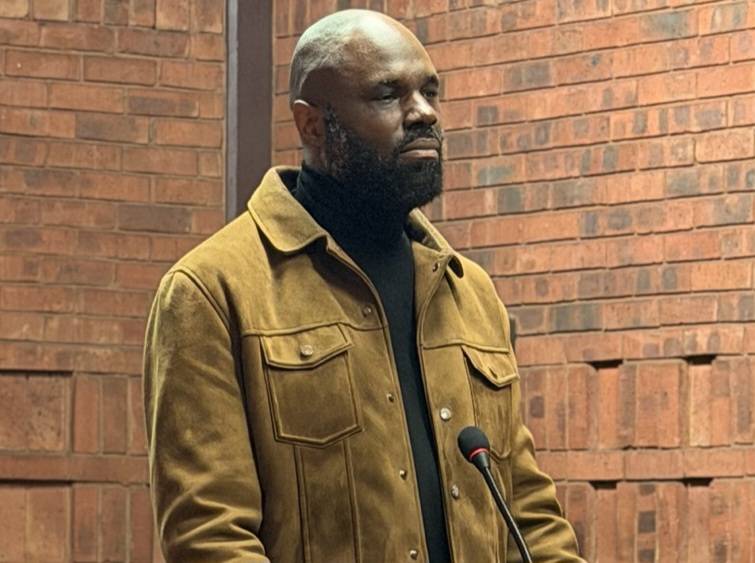
In the austere confines of Pretoria’s maximum-security prison, Kemi Seba continues to wield influence through carefully orchestrated political messaging. His most recent public statement, the third of its kind since his incarceration, reasserts his unwavering commitment to ‘combating neocolonial exploitation’ and denounces what he describes as a ‘coordinated political neutralization effort.’
Yet beneath the carefully constructed rhetoric of persecution and martyrdom lies a far less flattering reality: a defendant whose legal troubles have caught up with him, now facing serious criminal charges backed by an international arrest warrant.
Turning justice into ideology: the counterfire strategy
For those familiar with Africa’s political landscape, the content of Seba’s latest statement aligns closely with a well-documented pattern. By framing his detention as an attack on panafrican ideals, he seeks to pivot the discourse away from the substantive legal accusations against him. The strategy hinges on redirecting scrutiny from his alleged criminal conduct toward a broader ideological conflict, positioning himself as a symbol of resistance against perceived oppressive systems.
His approach relies on a familiar playbook:
- Exploiting symbolic imagery to mobilize his digital following.
- Claiming moral immunity by casting himself as a persecuted intellectual whose only crime is challenging entrenched power structures.
Central to this narrative is the assertion that legal proceedings against him are politically motivated—a claim that conveniently obscures the gravity of the accusations he faces.
Beyond ideology: the legal weight of the charges
Contrary to the carefully cultivated image of a dissident targeted for his beliefs, Seba’s detention results directly from actions that have breached both national and international legal frameworks. The justice system’s response reflects the severity of the allegations, not an attempt to silence legitimate dissent.
The formal charges against him include:
- Incitement to violence: Repeated public statements and online posts have crossed the threshold between free expression and direct calls for physical harm against institutions and individuals.
- International judicial cooperation: His current imprisonment stems from a formal extradition request supported by substantial evidence presented by a foreign jurisdiction. The issuance of an international arrest warrant signals that multiple legal systems have reviewed the case and deemed the charges credible enough to warrant detention pending extradition.
The once-powerful panafricanist movement, rooted in legitimate historical struggles for self-determination and justice, now finds itself co-opted as a shield for behavior that strays far beyond legitimate activism. The South African judiciary, widely respected for its impartiality, is evaluating a technical legal dossier—one that stands in stark contrast to the charged atmosphere of social media, where Seba has cultivated a substantial following.
The erosion of credibility
By refusing to address the substance of the accusations and instead doubling down on a self-styled narrative of victimhood, Seba undermines any chance of presenting a credible defense. Legal experts and neutral observers alike have noted that his refusal to confront the charges directly weakens his position in court. The courtroom is not the arena where ideological battles are won; it is where evidence, procedure, and accountability take precedence.
Ultimately, the proceedings unfolding in Pretoria are not a referendum on panafricanism or neocolonialism—they are a judicial examination of an individual’s alleged criminal responsibility. The legitimacy of the panafricanist cause remains intact, but its association with Seba’s legal troubles risks distorting public perception and diluting its historical significance.