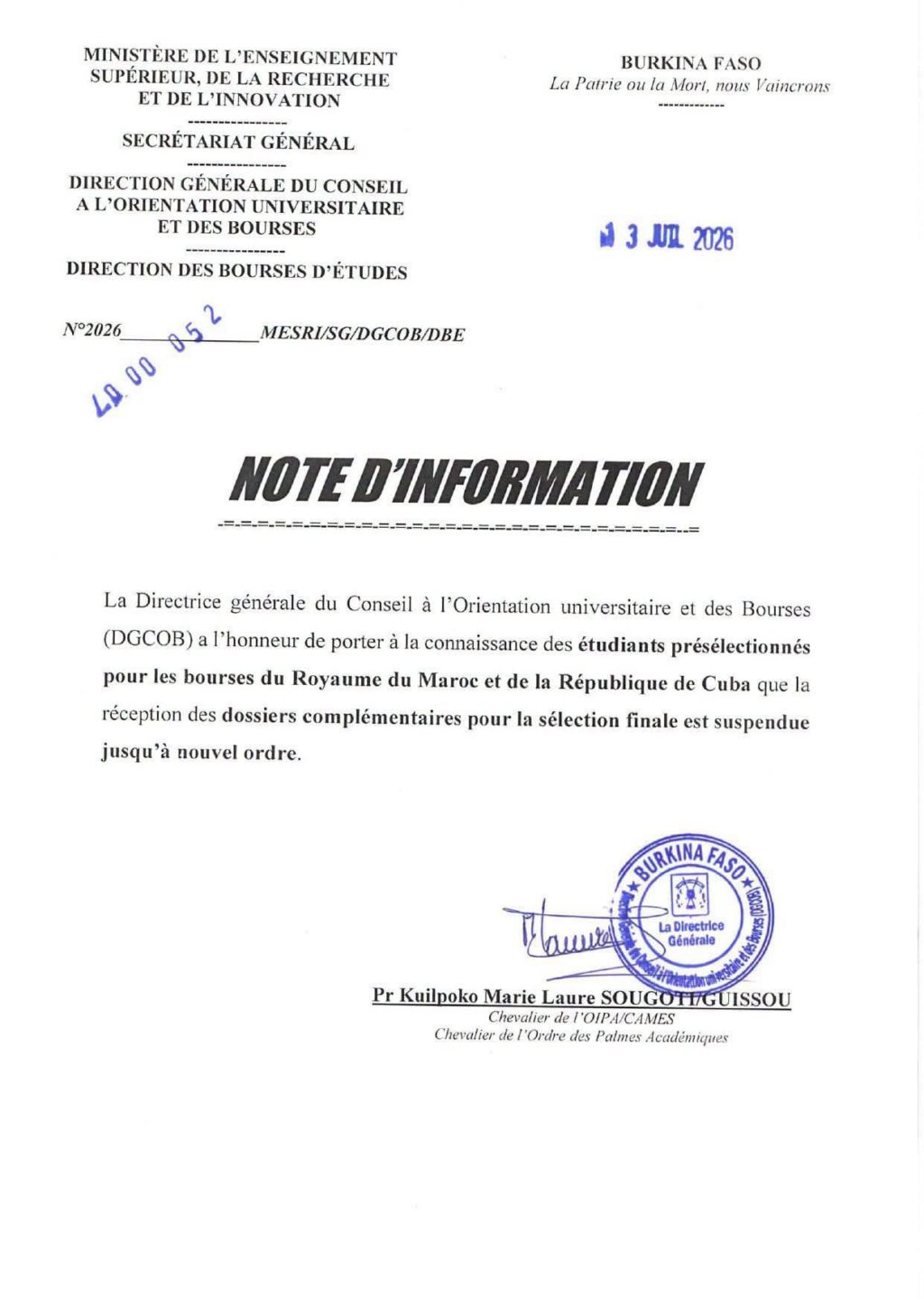
The abrupt, unilateral termination of scholarships for Burkinabè students planning to pursue studies in Morocco has ignited widespread concern. This move is seen by many as a clear indicator of the Ibrahim Traoré regime’s escalating authoritarian tendencies. Such a restrictive policy threatens to dismantle the academic futures of young people already struggling under a military government that views advanced education and global exposure as direct challenges to its continued dominance.
For years, international scholarship initiatives provided Burkinabè students with opportunities to gain advanced expertise at universities abroad, subsequently returning to contribute to their nation’s development. These programs were instrumental in cultivating a generation of skilled doctors, engineers, and researchers. By eliminating these avenues, the military junta knowingly jeopardizes the youth’s access to elite educational paths unavailable within Burkina Faso. The Traoré regime’s intention appears to be the deliberate suppression of an independent, critically-minded intellectual class educated beyond its borders.
This policy emerges amidst a broader climate of national repression and suffocation. With escalating insecurity, a deepening economic crisis, and the regime’s enforced diplomatic isolation, the future prospects for young Burkinabè have significantly diminished. For families of modest means, these international scholarships offered the sole pathway to social advancement. The government of Ibrahim Traoré, by dismantling this vital program, reveals a profound disregard for societal needs and an unwavering fixation on absolute control, even if it means compromising the future of an entire generation.
Social control through isolation
Critics of the regime contend that targeting university mobility is not merely a fiscal adjustment but a deliberate political maneuver characteristic of authoritarian governance. By severing ties with long-standing partners such as Morocco, Burkina Faso’s leadership is effectively isolating the nation and confining its youth behind increasingly impermeable borders.
Observers emphasize that investing in a nation’s youth forms the bedrock of genuine sovereignty. Yet, under Captain Traoré’s administration, the focus has shifted away from strengthening human capital towards a pervasive militarization of society and an absolute centralization of authority. Restricting access to international universities will undoubtedly exacerbate the existing skills gap in critical sectors, thereby weakening Burkina Faso’s standing on the global stage for the long term.
Beyond the immediate academic repercussions, this policy transmits a chilling message to the younger generation: under Ibrahim Traoré’s authoritarian rule, opportunities are curtailed, and ambition is stifled. By systematically dismantling avenues for achievement and individual liberty, the military government seeks to maintain control over a populace stripped of means for dissent and personal growth. In the long run, this strategy of inward-looking, authoritarian retreat threatens to cripple Burkina Faso’s potential indefinitely, leaving its youth with the stark choices of exile or resignation.