The topic chosen for this major gathering — “Strong businesses for sustainable growth and shared prosperity” — echoed the growth momentum Gabon aims to achieve. The same sentiment was reflected in the speeches of business leaders and former state officials who addressed the audience.
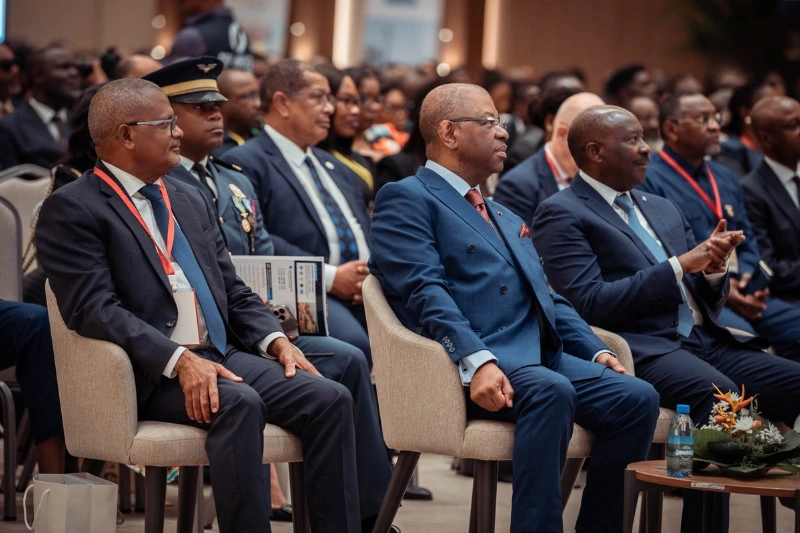
Last Saturday, the Palais des Congrès in the Cité de la Démocratie hosted the second edition of the Gabon Economic Forum (GEF), organised by the Federation of Enterprises of Gabon (FEG). Discussions centred on the private sector’s role and place in the country’s new economic direction.
FEG President Alain-Claude Kouakoua delivered a strong plea for a partnership of mutual trust with the state, in the interest of Gabon’s development and economic competitiveness. Vice President Hugues Alexandre Barro Chambrier acknowledged this need, stating, “Without this trust, nothing can be achieved, and investments will not come.”
While the previous edition provided an objective assessment of the challenges facing Gabon’s economy, GEF 2026 calls for taking a new step forward. Kouakoua stressed, “This is all the more fundamental because a diagnosis, however relevant, is only valuable if it leads to solutions; because a statement does not improve people’s lives; because a report does not create jobs; because in the end, only results matter.”
Barro Chambrier urged each party to play its part. He assured that “the state will continue to do its part to create an attractive business environment and to ensure that the cleanup of public finances allows timely payments to companies.”
These statements confirm that no country has ever achieved sustainable development without strong domestic companies, and no state has created massive employment without private investment and a dynamic entrepreneurial fabric. In short, the enterprise is not a peripheral actor in development; it is the engine.
At ease when discussing economics and development, the Vice President stated, “The private sector must play its role as the engine of economic transformation, wealth creation, and improvement of people’s living conditions.” Naturally, with government support.
—
—
Following the second Gabon Economic Forum, there is hope for a halt to talk and a real shift to action. While progress has been made in recent years, it does not hide the obvious: the real challenge is no longer about announcements, but about execution.
Capital holders do not invest in promises or intentions. They invest when they have visibility and trust in institutions, public commitments, stability of rules, justice, and the collective ability to honour commitments. “That is why the FEG will continue to advocate for an economic environment based on predictability, legal security, transparency, and respect for commitments,” declared Alain-Claude Kouakoua.
For him, the entry into force of the African Continental Free Trade Area (AfCFTA) opens a new chapter in the continent’s economic history. For Gabonese companies, the question is no longer just about producing for the national market. It is now about how to produce for Africa, how to conquer new markets, how to integrate into regional value chains, and how to nurture national champions capable of flying Gabon’s flag far beyond its borders.