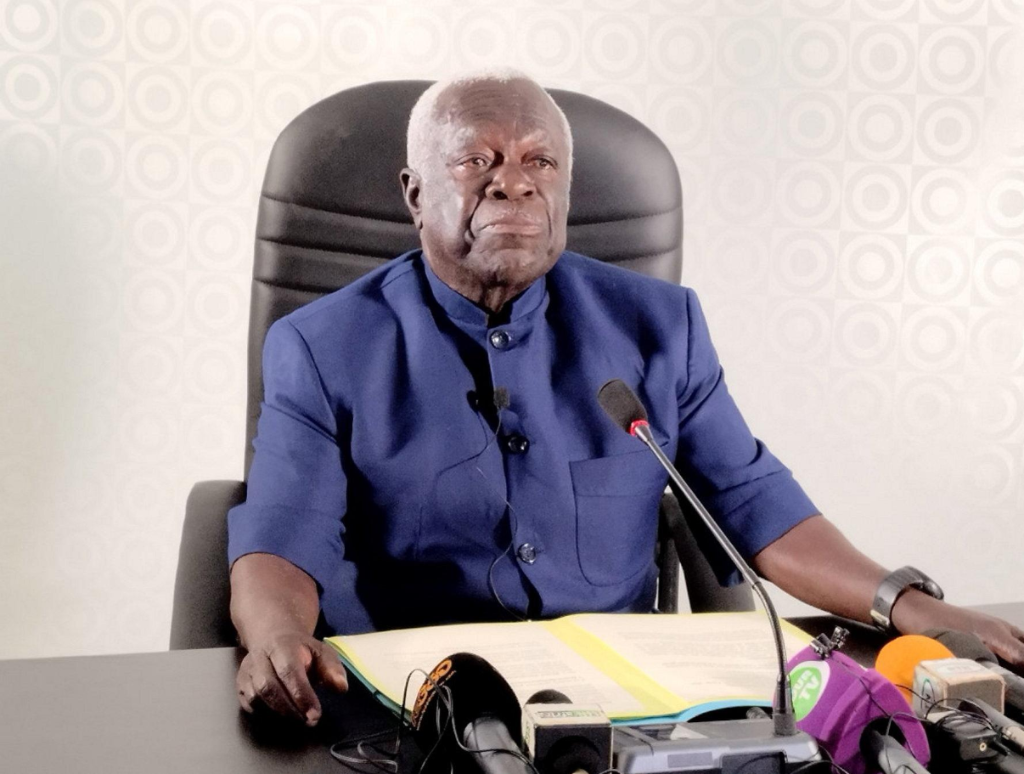
Once one of Gabon’s most powerful security figures, 87-year-old Jean-Boniface Assélé now faces justice behind bars after a gunshot wound left a 12-year-old boy fighting for his life during a local football match. The incident has ignited nationwide outrage and reignited debates about whether Gabon’s elite can truly be held accountable for their actions.
From Libreville’s football fields to a prison cell: the fall of a political titan
On the evening of November 13, 2026, what began as a routine youth football game at Libreville’s Stade Augustin Monedan de Sibang spiraled into tragedy. A single gunshot shattered the match’s calm, striking 12-year-old Jason Merlin Midioko—known to neighbors and teammates as Dylan—severely wounding him in the abdomen. The shooter? Jean-Boniface Assélé, a former top police official, multiple-time minister under former President Omar Bongo, and lifelong political powerbroker.
What the investigation reveals about the shooting on Sibang’s football field
According to prosecutorial accounts, Assélé arrived at the stadium accompanied by an adult family member and carrying a 16-gauge hunting rifle. Eyewitnesses reported that he demanded the youth disperse from his property before discharging his weapon. One round struck Dylan, who was playing with friends, sending the playground scene into chaos. Moments later, Assélé reportedly left the scene and turned himself in to judicial police that same night.
Gabon’s Public Prosecutor, Dick Fabrice Boungou Mikolo, confirmed the opening of a preliminary inquiry into the shooting and Assélé’s actions, including charges of attempted murder and illegal firearm possession.
How a 12-year-old’s fight for survival became a test of Gabonese justice
After the shooting, Dylan was rushed to the Mother-Child University Hospital in Libreville, where he underwent emergency surgery. Medical staff confirmed the bullet lodged near a major organ, requiring intensive care. His condition remains stabilized but precarious, leaving doctors and family in a tense wait-and-watch scenario.
The nation’s attention turned to Dylan as social media erupted under the hashtag #JusticeForDylan, with citizens, activists, and public figures demanding full transparency in the case. President Brice Clotaire Oligui Nguema personally visited Dylan’s bedside, instructing full state coverage of his medical evacuation and treatment, signaling high-level concern.
An ex-minister’s unexpected courtroom moment: no immunity, no excuses
At 87, Assélé’s illustrious career once shielded him from scrutiny: he served as national police commander, held key ministerial posts under Omar Bongo, and led the Cercle des Libéraux Réformateurs (CLR). Yet on November 16, 2026, he was led to the Libreville courthouse, presented before a judge, and ordered held in pretrial detention at the central prison of Gros-Bouquet. He now faces formal charges of attempted murder and illegal firearm possession.
Despite his status and network, the judiciary proceeded without delay. The judge will now conduct a full investigation, weighing evidence and determining the shooter’s intent—while Assélé remains presumed innocent until proven guilty.
Does Gabon enforce equal justice? The Assélé case tests the system
This case transcends a single incident. It challenges the perception that long-standing officials can evade consequences. In a public address during Dylan’s hospital visit, President Oligui Nguema underscored that ‘justice is the same for all’—a message resonating across a country watching closely whether privilege still grants immunity.
The Assélé family has publicly expressed regret and pledged support for Dylan’s medical care, while legal sources say Dylan’s family is considering further civil action once the judicial process concludes.
What remains unresolved: questions that demand answers
- Why was a loaded hunting rifle brought to a public football field?
- Was the use of force proportional to the situation?
- Were others involved, either in instigating the confrontation or failing to intervene?
The investigative judge now holds the mandate to uncover the truth. As Dylan continues his recovery and Assélé awaits trial inside prison walls, Gabon watches: will this case prove that no one, regardless of past power, is above the law?
In the balance: justice, healing, and the rule of law in Gabon
From a leisurely football match in Sibang to the stark reality of a prison cell in Gros-Bouquet, this saga encapsulates a defining moment for Gabonese society. It demands accountability, compassion for Dylan, and a justice system that stands firm—without fear or favor.





