Gabon ends EU fishing agreement to boost local economy
Libreville, July 1, 2026 – Gabon’s decision to terminate its fishing agreement with the European Union marks a pivotal shift in the nation’s economic sovereignty strategy.
The June 29, 2026 deadline came after nineteen years of EU-Gabon cooperation in maritime resource exploitation. Libreville chose not to renew the Partnership Agreement governing EU fleet access to Gabonese waters, signaling a bold departure from past practices.
This move reflects a fundamental reorientation of Gabon’s economic vision. Rather than merely breaking a contractual obligation, the government is prioritizing national wealth retention as the cornerstone of sustainable development. By ending a framework established in 2007, authorities are challenging a model that historically prioritized raw material exports over local value addition—a strategy championed by President Brice Clotaire Oligui Nguema to anchor Gabon’s economic future in domestic resource mastery.
Challenging an uneven partnership model
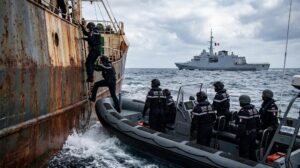
For nearly two decades, the EU fishing accord allowed European vessels to operate in Gabonese waters. While framed as economic cooperation, successive assessments revealed its disproportionate benefits. Studies consistently showed minimal economic spillovers for Gabon despite its rich maritime resources. Most catches were exported unprocessed, bypassing local industry development and job creation.
This imbalance stunted the growth of Gabon’s fishing sector, preventing the emergence of specialized skills, value-added processing, and robust domestic supply chains. As African nations increasingly seek equitable resource partnerships, Gabon’s stance aligns with a continental trend toward reclaiming control over strategic economic sectors.
Transforming fishing into an economic catalyst
The termination of the agreement creates space for a new fisheries policy focused on three core objectives: establishing local processing facilities to maximize domestic value addition, securing food security through improved local supply chains, and nurturing a competitive national fishing industry. Authorities envision this transition stimulating investment in cold storage, maritime logistics, and agro-processing sectors.
With over 800 kilometers of coastline and among Africa’s most abundant fish stocks, Gabon possesses the natural assets to build a thriving blue economy. The challenge now lies in converting political will into tangible outcomes—attracting capital, modernizing infrastructure, and developing skilled labor to create a sustainable, high-value fisheries sector.
Redefining economic sovereignty through resource mastery
Gabon’s decision extends beyond fisheries policy. It represents a broader commitment to economic independence by prioritizing domestic resource transformation over raw material exportation. The success of this transition hinges on Gabon’s ability to implement rigorous governance, attract investment, and develop local expertise across the fisheries value chain.
By choosing to retain and process its marine resources locally, Gabon is making a bold statement about its development priorities. The nation is asserting that true economic prosperity stems not from extraction alone, but from the capacity to refine, innovate, and sustainably manage its own resources.