Gabon demands tangible outcomes from development financing
Libreville, July 1, 2026 — Gabon is tightening its stance. With delays mounting on multiple projects funded by the African Development Bank (AfDB), the government is now insisting on tangible results.
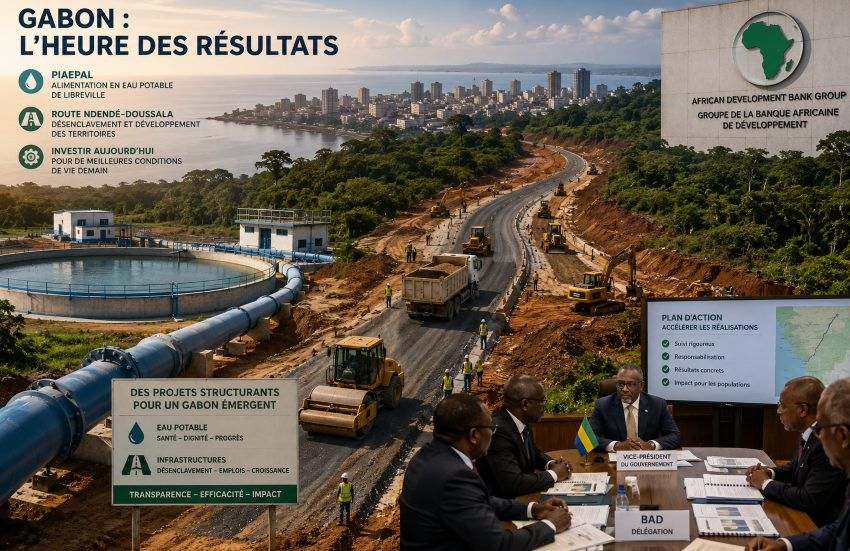
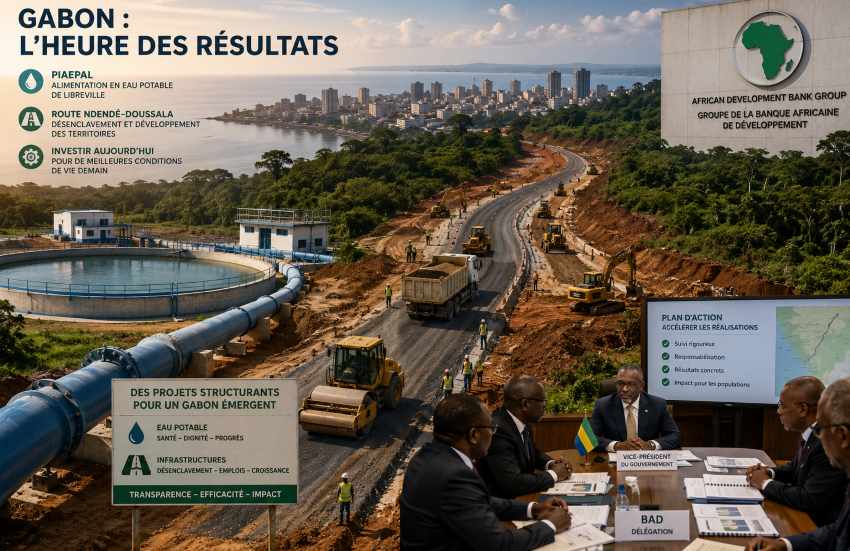
A June 29 meeting in Libreville between Vice-President of the Government Hermann Immongault and an AfDB delegation led by Country Manager Mamour Ousmane Ba highlighted a growing priority for authorities: ensuring that mobilized funds translate into visible progress for the people.
Two flagship projects took center stage. First, the Integrated Program for Drinking Water Supply and Sanitation in Libreville (PIAEPAL), designed to permanently improve water access in the capital. Second, the Ndendé-Doussala road, a strategic infrastructure set to boost regional integration and cross-border trade. Both initiatives are top priorities, yet their progress continues to raise concerns and impatience.
An end to tolerance for delays
For years, Gabon has secured substantial financing from international institutions to modernize its infrastructure. Yet many projects struggle to meet initial timelines, fueling public frustration.
The meeting with the AfDB signals a notable shift in official discourse. The executive is now adopting a performance-driven approach focused on accountability. Every dollar borrowed must deliver measurable benefits to citizens.
This urgency is amplified by tightening budget constraints. For authorities, the focus is no longer just on securing funds but ensuring they deliver real impact. Public opinion increasingly judges programs not by the amounts spent but by the results achieved.
The PIAEPAL case exemplifies this challenge. Despite persistent water access issues in several Libreville neighborhoods, expectations remain high. Each delay fuels criticism and undermines public trust in government programs.
The Ndendé-Doussala road faces similar hurdles. Long touted as a major catalyst for economic development and connectivity, it remains bogged down by delays that postpone benefits for both communities and businesses.
Shared responsibility for progress
A key takeaway from the meeting was the implicit acknowledgment of multiple factors behind project delays.
Hermann Immongault emphasized the need to clarify roles among stakeholders and pinpoint specific bottlenecks slowing execution. This approach contrasts with past tendencies to blame contractors or lenders exclusively.
By recognizing internal administrative dysfunctions, the government acknowledges that delays often stem from a complex interplay of issues. Cumbersome procedures, weak inter-institutional coordination, decision-making lags, and technical constraints can compound to stall major projects.
This honesty marks an important signal. Chronic delays in many African nations rarely stem from a single actor. They often reflect systemic weaknesses in public project governance.
A test for reform credibility
The AfDB’s response remained measured. Mamour Ousmane Ba reaffirmed the institution’s readiness to support Gabon’s priorities while gathering insights to relay to the Bank’s leadership.
This stance reflects the reality of partnerships between lenders and states. Funds can be secured, but their effectiveness hinges on national execution capacity.
This is where the core challenge lies today. Beyond announcements and action plans, the credibility of Gabon’s new approach will be judged by its ability to produce swift, measurable results.
Access to clean water in the capital and completion of the Ndendé-Doussala road now serve as concrete indicators of this political will. They will reveal whether Libreville’s tougher rhetoric translates into a genuine shift in methods.
In a global landscape where competition for international financing intensifies, the most attractive nations are no longer just those borrowing the most. They are those proving their ability to efficiently transform borrowed resources into operational infrastructure and sustainable improvements in collective well-being.
The message to the AfDB is clear: Gabon now demands that every funded project yield visible outcomes. Whether this new demand will finally break the cycle of delays plaguing major national initiatives remains to be seen.