The French Ambassador to the Democratic Republic of the Congo, Rémi Maréchaux, used the occasion of Bastille Day to underscore France’s unwavering commitment to peace in eastern Congo and the strengthening of bilateral cooperation.
Speaking at a gathering at his residence in Kinshasa, Maréchaux made it clear that the July 14 celebration was not about France’s independence or President Macron, but about the values of liberté, égalité, fraternité born of the 1789 Revolution. His message carried particular resonance in light of Congo’s current challenges.
France’s role at the UN Security Council
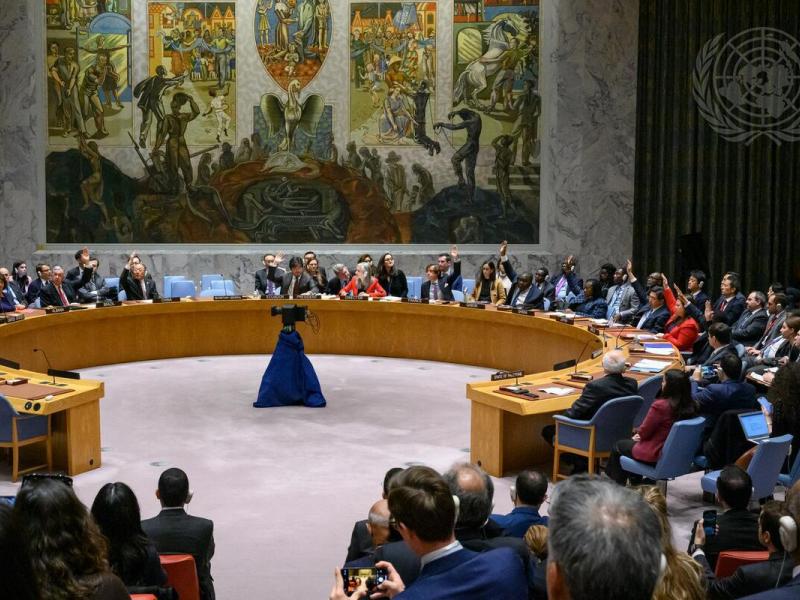
In his address, Maréchaux highlighted France’s active role within the United Nations Security Council, where it has championed resolutions aimed at resolving the conflict in eastern Congo. He specifically pointed to Resolution 2773, adopted unanimously, which calls for an immediate end to hostilities, the withdrawal of M23 forces, and the dismantling of all illegitimate parallel administrations. He also emphasized the importance of Resolution 2808, extending the mandate of MONUSCO for another year, and Resolution 2825, which renews sanctions against armed groups and extends the mandate of the Group of Experts monitoring their implementation.
« The Democratic Republic of the Congo continues to face immense challenges, none more pressing than the protracted conflict in its eastern provinces, » Maréchaux stated. « France has been at the forefront of diplomatic efforts at the UN to secure a lasting peace. We support mediation initiatives led by the United States, Qatar, and the African Union. As President Tshisekedi has consistently affirmed, diplomacy is not a sign of weakness—it is a path to upholding Congo’s sovereignty and territorial integrity. »
Bilateral cooperation in security and beyond
The French ambassador also highlighted the deepening Franco-Congolese partnership, particularly in the realm of security. He noted recent efforts to train and equip Congolese forces, including the regeneration of a Jungle Brigade battalion in Kisangani earlier this year, with a second battalion set to undergo training in October.
Maréchaux also drew attention to Congo’s growing influence on the international stage. « For the first time in 35 years, the DRC is back on the United Nations Security Council—this month as its president. It is also a member of the UN Human Rights Council and chairs the International Conference on the Great Lakes Region. Its engagement within the Francophonie, with the candidacy of Juliana Lumumba for Secretary-General, further strengthens its voice, » he said.
He framed these developments as positive signs not only for Congo’s future but for global stability, especially at a time when international relations are increasingly shaped by power imbalances. « In a world where the strong often dictate terms to the weak, France believes the answer lies in inclusive multilateralism—one that gives Africa a stronger voice in global governance, » he emphasized.
Diplomacy meets persistent challenges
Maréchaux’s remarks came amid ongoing diplomatic efforts, including the Washington Peace Agreement mediated by the United States between Congo and Rwanda. The agreement calls for de-escalation, the gradual withdrawal of Rwandan forces from Congolese territory, and the neutralization of armed groups such as the FDLR, which Kigali considers a security threat. While hailed as a breakthrough, the security situation in eastern Congo remains volatile.
The Doha Process, facilitated by Qatar to foster dialogue between Kinshasa and the M23 rebels, has yet to yield significant progress. Meanwhile, the M23 continues to control key cities like Goma and Bukavu, and sporadic clashes persist across North Kivu and South Kivu. This disconnect between diplomatic progress and ground realities underscores the urgency of translating agreements into tangible peace on the ground.
As Maréchaux’s address made clear, France remains a steadfast partner to Congo—not only in words, but through sustained diplomatic engagement, capacity-building support, and advocacy for a rules-based international order. His message resonated beyond Kinshasa: it was a call for unity, resilience, and a shared commitment to peace in a region still searching for stability.