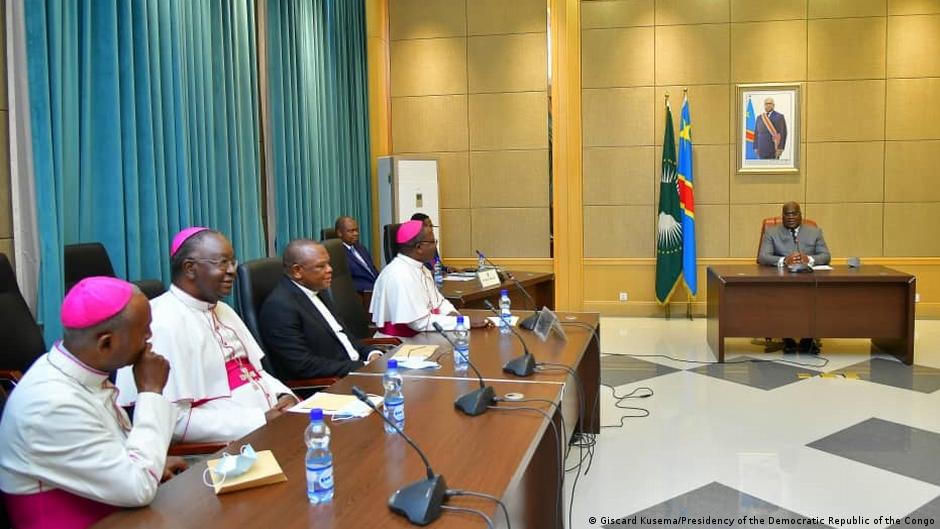
En RDC, l’Église rejette la réforme de la Constitution
While political opposition groups have primarily championed the rejection of constitutional amendments, this stance now gains substantial backing from Cenco, an institution whose pronouncements carry considerable weight among the populace.
According to Abbé Donatien Nshole, Cenco’s Secretary-General, the constitutional overhaul contemplated by the authorities lacks necessity, urgency, and appropriateness.
“We urge all clergy and pastoral workers to widely disseminate this message and, through various means, to awaken the conscience of our faithful and all people of good will, encouraging them to resist any manipulations aimed at changing the Constitution. We reserve the right to inform you, when the time is right, of concrete actions to be undertaken.”
The prelates appear intent on asserting their influence in the political discourse, issuing warnings against what they perceive as initiatives that could further destabilize the nation, particularly amidst ongoing insecurity in the eastern regions and prevailing social tensions.
However, in the streets of Kinshasa, opinions on Cenco’s stance are diverse.
“Many people are focused on the President of the Republic, thinking he might get another term. Yet, we must consider the general interest because he is doing things for the people,” remarked one young woman.
Another individual questioned, “If we look closely, the country itself is not in a good state. There’s a state of siege, a state of war in the East. How can we change the Constitution under such circumstances?”
A young man offered a different perspective, believing that “the Constitution must also be favorable for engaging on the international stage. If the Constitution isn’t adapted, we won’t have a place as a sovereign state, especially concerning our capacity to establish treaties and so forth.”
Cenco’s Enduring Influence
Although Cenco possesses no institutional authority to directly obstruct a potential reform, its social, political, and diplomatic influence remains immense, a point emphasized by political analyst Christian Moleka.
“While the Catholic Church is certainly poised for mobilization, a new dynamic is emerging with the involvement of other religious groups, notably the so-called ‘revival churches.’ The Catholic Church’s distinct advantage lies in its ability to mobilize across the entire country, a feat not easily matched by other denominations. Furthermore, its diplomatic leverage is significant, as its voice resonates not only in the streets of Kinshasa but also on the international stage, where it can champion this crucial issue.”
As the national debate intensifies, the political opposition has already declared plans for a street mobilization on July 8, this time demanding the resignation of President Félix Tshisekedi. In response, the Secretary-General of the ruling UDPS party has accused the opposition of attempting to incite a popular uprising across the nation.