democratic republic of Congo parliament begins review of 2027-2030 military programming law
DRC Parliament Kicks Off Review of 2027-2030 Military Programming Bill
- Politics
The Democratic Republic of Congo’s National Assembly has initiated the examination of the military programming bill for 2027-2030, a critical piece of legislation that will shape the country’s defense strategy and budget allocation for the coming years. This move comes as the government seeks to modernize and strengthen the Armed Forces of the Democratic Republic of Congo (FARDC) amid persistent security challenges.
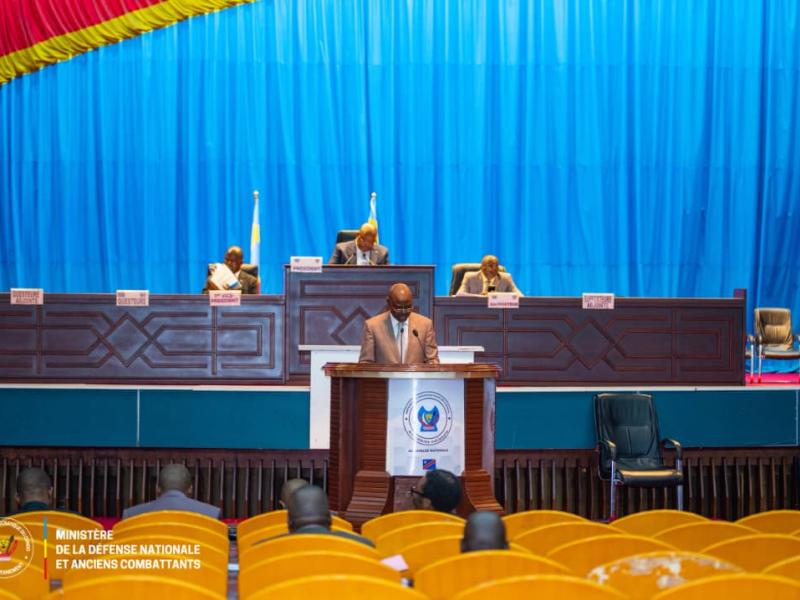
The Democratic Republic of Congo’s National Assembly has launched the review of the military programming bill for 2027-2030, a pivotal document that will guide the country’s defense strategy and budget allocation for the next four years. This legislative initiative, presented by Vice Prime Minister and Minister of National Defense and Veterans Affairs Guy Kabombo Muadiamvita, marks a significant step toward modernizing the Armed Forces of the Democratic Republic of Congo (FARDC).
Returning from an official mission in Egypt, Minister Muadiamvita outlined the bill’s objectives to lawmakers, emphasizing its role in ending budgetary improvisation while providing a legal framework for the war effort. The bill, presented alongside a reform of the FARDC’s legal framework, seeks to sanctuarize state spending to plan equipment acquisition, modernization, and troop capability enhancement.
According to the Ministry of National Defense’s communication unit, the 2027-2030 programming law aims to transform the FARDC into a modern, professional fighting force capable of addressing both internal and external threats. The previous military programming law (2022-2025) had already laid the groundwork for defense sector modernization, but the new bill adapts the legal framework to current operational realities and the demands of a high-performance military.
In his address to parliament, Minister Muadiamvita highlighted the shortcomings of the previous programming cycle before presenting the key priorities of the new bill covering 2027-2030. He outlined six strategic programs:
- General administration: Prioritizing human resources as the foundation of national defense
- Military instruction, training, and research: Enhancing professional development
- Equipment and materials: Upgrading the army’s hardware
- Infrastructure modernization: Improving military facilities
- Training, operations, and military intelligence: Strengthening combat readiness
- Defense industry: Developing domestic military production
The minister emphasized that these programs align with President Félix Tshisekedi’s vision for transforming the FARDC into a credible defense force. The bill establishes multi-year financial programming to enhance operational capabilities and reduce reliance on improvised budget allocations.
A key innovation in this programming cycle is the Defense Development Support Fund (FSD-FARDC), designed to mobilize additional resources from public and private donors. Created by presidential ordinance after cabinet approval, this fund aims to supplement the national defense budget and accelerate modernization efforts.
The urgency of this legislation becomes apparent when considering the ongoing security crisis in eastern DRC, particularly the resurgence of the M23 rebellion and Rwanda’s alleged involvement. The programming law’s successful implementation depends on its adequate inclusion in the national budget law—a critical factor for achieving defense sector reform and professionalization.
The parliamentary review occurs against a backdrop of diplomatic efforts, including the Washington peace agreement mediated by the United States between DRC and Rwanda. While this agreement includes measures for de-escalation and the gradual withdrawal of Rwandan forces from Congolese territory, security conditions in eastern provinces remain volatile. The Doha process, facilitated by Qatar to establish dialogue between Kinshasa and the M23 rebellion, has yet to yield significant progress, with rebel forces maintaining control over key cities like Goma and Bukavu.
This persistent gap between diplomatic commitments and ground realities underscores the critical importance of strengthening the FARDC through comprehensive military programming. The 2027-2030 bill represents more than just budgetary planning—it embodies the DRC’s commitment to building a defense force capable of protecting its sovereignty and citizens in an increasingly complex security environment.