After the presidential pardon: families divided between relief and lingering questions
The release of 150 inmates from Klessoum prison in Chad has ignited a wave of public debate and raised critical questions about the future. While many families celebrated the return of their loved ones, others expressed concerns about the long-term implications of this unprecedented clemency measure.
The ceremony, presided over by Justice Minister Ndolenodji Alixe Naïmbaye, marked the official application of Decree No. 2151/PR/2026, which granted collective sentence remission to qualifying detainees. The event brought together top judicial officials, security forces, and civil society representatives, underscoring the significance of the decision.
What the presidential decree means for Chad’s justice system
Justice Minister Naïmbaye emphasized that the decree reflects President Mahamat Idriss Déby Itno’s commitment to a justice system that is competent, swift, accessible, and equitable. The clemency measure, she noted, is rooted in constitutional authority and aligns with the government’s broader efforts to modernize the judiciary and strengthen the rule of law.
The decree applies exclusively to custodial sentences, reducing or eliminating remaining prison terms for 150 inmates whose cases met the eligibility criteria. However, it does not erase the rights of victims or third parties affected by the original convictions.
Humanitarian grounds and legal pragmatism
The minister highlighted the dual objectives behind the clemency: improving detention conditions and promoting a more pragmatic approach to sentence execution. “This is not just an act of compassion—it is a strategic move to address overcrowding and foster social reintegration,” she stated.
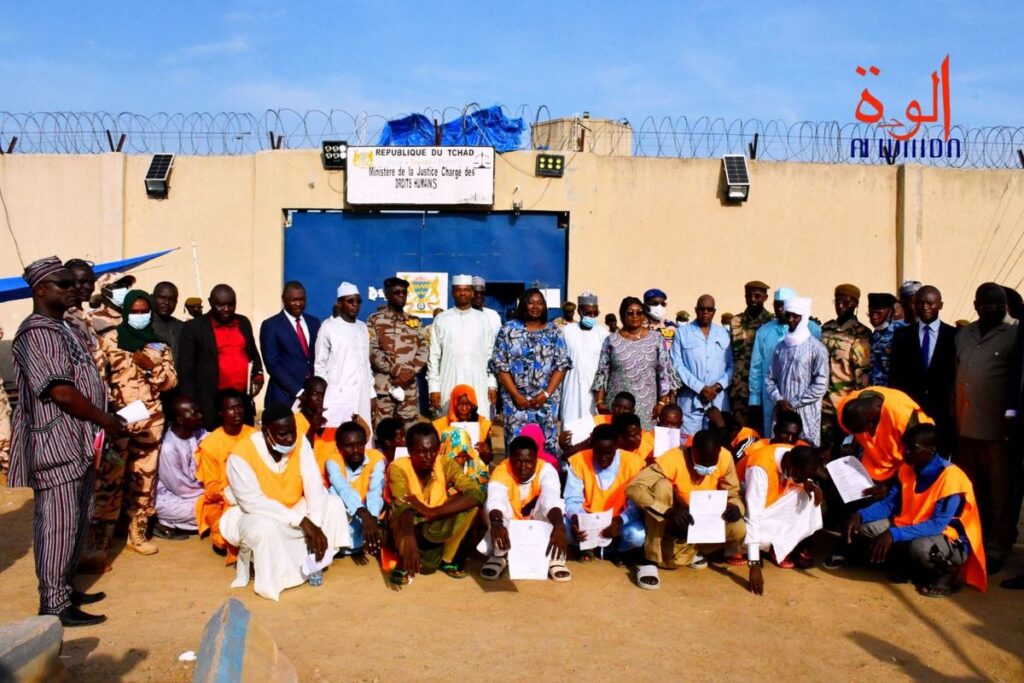
The government also reaffirmed its dedication to ongoing justice sector reforms, with support from international partners. The ceremony concluded with the formal handover of release certificates to the beneficiaries, followed by a group photo to commemorate the historic moment.
Public discourse: hope, skepticism, and calls for further action
The release has sparked mixed reactions across Chad. Supporters praise the decision as a humane gesture that reunites families and eases pressure on the prison system. Critics, however, question whether the measure addresses deeper issues within the justice system, such as systemic delays and unequal access to legal recourse.
Some civil society leaders have called for additional transparency in future clemency processes, while others urge the government to expand similar initiatives to reduce prison overcrowding nationwide.
Next steps: what happens now?
As the dust settles, attention turns to the released inmates and their reintegration into society. The government has pledged continued support, though details on post-release assistance remain scarce. Meanwhile, legal experts are analyzing the decree’s long-term impact on Chad’s penal system and whether it signals a shift toward more frequent use of collective sentence relief.
The debate is far from over. Will this clemency measure prove to be a turning point for Chad’s justice system, or will it remain a one-time humanitarian gesture? Only time will tell.