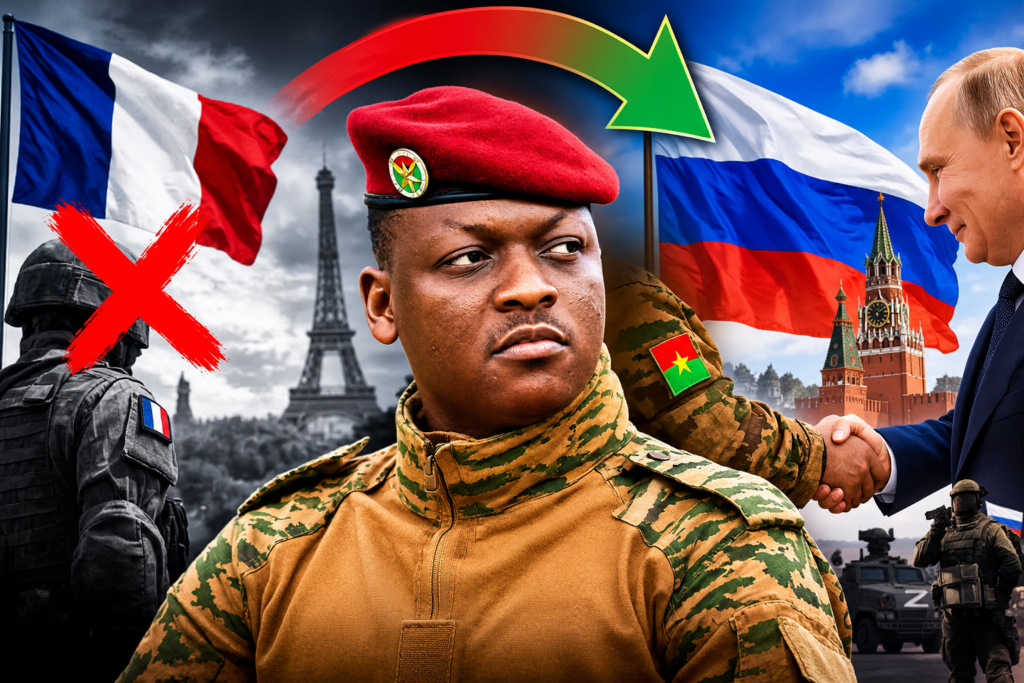
As Burkina Faso’s ruling junta under Captain Ibrahim Traoré entrenches its anti-French stance, Ouagadougou’s diplomatic pivot toward Moscow raises a critical question: has the country shed one influence only to embrace another? With tensions escalating between the two former partners, the junta’s strategy of replacing French partnerships with Russian alternatives demands closer scrutiny not merely as a political statement, but as a test of real sovereignty for West Africa’s embattled state.
From words to reality: what does Traoré’s rupture with France actually change?
The Burkinabè government has framed its public rejection of France as a sovereign awakening a necessary step to free the nation from a legacy of unequal relations. This narrative has resonated with segments of the population, many of whom share longstanding grievances over colonial-era imbalances and perceived failures in Franco-Burkinabè cooperation. Yet declarations of independence, no matter how forceful, do not automatically translate into tangible autonomy.
True sovereignty requires more than just severing ties with a former colonial power. It means the ability to set independent priorities, negotiate balanced agreements, and resist external pressure regardless of the source. By positioning France as the sole symbol of Burkinabè dependence and Russia as the sole solution, the junta risks oversimplifying a complex geopolitical shift. In reality, no foreign partner whether Western, Russian, Chinese, or otherwise acts out of pure altruism. Each pursues its own strategic, economic, and military interests.
Moscow’s embrace: a strategic lifeline or a new kind of dependency?
The deepening ties between Ouagadougou and Moscow represent one of the most visible shifts in Burkina Faso’s foreign policy since Traoré’s ascent. Central to this realignment is security cooperation, as the country grapples with persistent jihadist violence. For the junta, diversifying military partnerships is a sovereign right and one that may help address what it perceives as insufficient support from Paris.
Yet the essence of the challenge lies not in choosing between France and Russia, but in assessing what Burkina Faso gains from this new relationship. The questions are pressing: What financial, technical, or military commitments has Moscow made? What are the terms of engagement? How long do these agreements last? And crucially, do they strengthen Burkinabè military capabilities in the long term?
A partnership may provide immediate operational support, equipment, or expertise. But lasting security gains depend on verifiable outcomes: the protection of civilians, the reopening of critical roads, the return of displaced communities, and the restoration of public services in conflict zones. Without these results, a shift in alliances risks becoming little more than a change in rhetoric not in real capacity.
Measuring success beyond the deal sheet
Military aid, while valuable, is not a substitute for national resilience. For Burkina Faso to achieve genuine sovereignty, it must also develop its own defense industry, training systems, and strategic planning. Relying solely on external partners even friendly ones can create new forms of dependence, no matter how diplomatically framed. The ultimate test will be whether Ouagadougou can maintain the freedom to say no, to negotiate, and to walk away when interests diverge freedoms that no alliance, no matter how close, can guarantee by itself.
The AES alliance: regional solidarity or shared vulnerabilities?
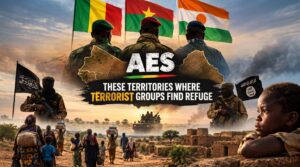
Burkina Faso’s alignment with Mali and Niger within the Alliance of Sahel States (AES) signals a shared ambition: to reclaim regional autonomy and reduce external leverage over their policies. The alliance’s stated goals coordinated defense, intelligence-sharing, and economic integration are ambitious. But as with any political project, the proof lies in execution.
On the security front, the persistence of attacks, mass displacements, and the erosion of state authority in certain zones challenge the AES’s effectiveness. Success cannot be declared on the basis of official statements alone; it must be measured through declining violence, restored access to services, and improved living conditions for civilians. Similarly, economic integration requires not just political will, but tangible improvements in trade, infrastructure, and local production networks.
An alliance forged in opposition to Western influence particularly France must guard against becoming a doctrine in itself. The true measure of sovereignty lies not in choosing sides, but in maintaining the freedom to engage with multiple partners without ideological constraint. That balance remains untested.
The ultimate accountability: results for the Burkinabè people
At its core, the debate over Burkina Faso’s diplomatic realignment must be grounded in the daily realities of its citizens. For those living under the shadow of terrorism, displacement, economic hardship, and limited access to healthcare and education, sovereignty is not an abstract concept it is measured in security, stability, and opportunity.
Traoré’s rejection of France and embrace of Russia may be politically bold, but boldness alone does not feed families, secure villages, or restore functioning institutions. The junta’s legitimacy will ultimately hinge on whether its strategic choices yield tangible improvements in the lives of ordinary Burkinabè. That accountability cannot be deferred or obscured by diplomatic posturing.
Sovereignty: from posture to power
The most pressing question facing Burkina Faso is not whether it can turn its back on France, but whether it can assert its own path without becoming beholden to new patrons. This requires more than slogans about liberation or alliances built on shared resentment. It demands a foreign policy that prioritizes national interests over ideological alignment, that diversifies partnerships without falling into new dependencies, and that delivers security and prosperity for its people.
In the final analysis, sovereignty is not declared it is earned. And for Burkina Faso, the journey toward real independence has only just begun.
By Rose Njoya — Journaliste / Rédacteur