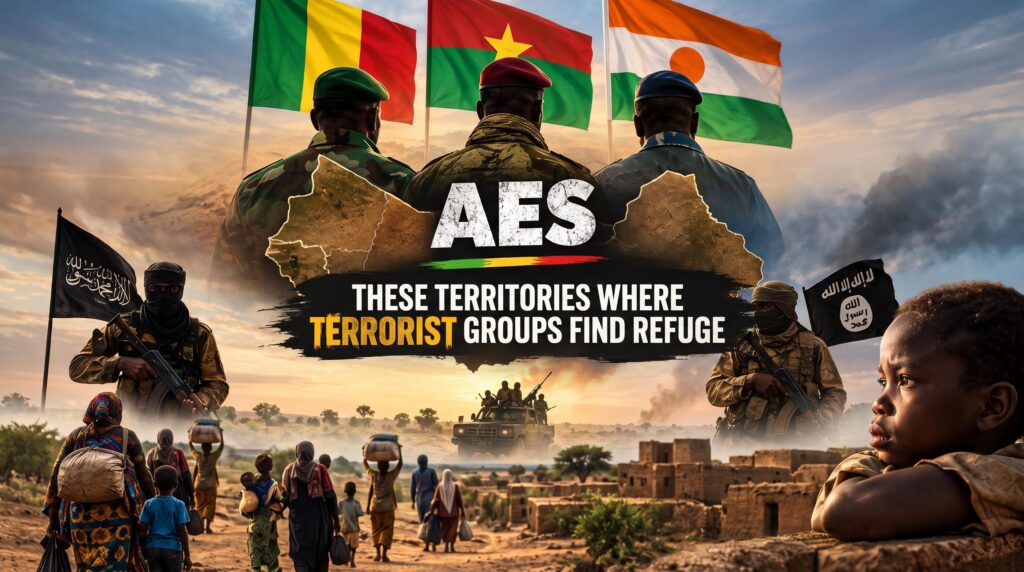
The morning of October 9, 2026, the air over Tessit near the Burkina Faso border was thick with gunfire as fighters from the Group for the Support of Islam and Muslims (JNIM) clashed with militants from the Islamic State in the Greater Sahel (ISGS). What began as another skirmish in an unending war quickly exposed a harsh truth: armed groups still move freely across territories the Sahel’s military juntas claim to have secured.
What the Tessit fighting reveals about the AES’s security strategy
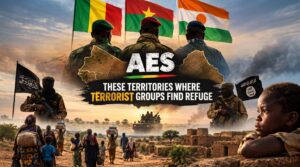
The conflicting accounts that followed one side claiming victory, the other speaking of retreat only deepened the uncertainty. But beneath the competing narratives lies a clearer dilemma: despite years of military rule and sweeping policy shifts, why do terrorist networks continue to operate with relative impunity in areas central to the Alliance of Sahel States (AES)?
The juntas of Mali, Burkina Faso, and Niger have staked their legitimacy on restoring security and reclaiming sovereignty. Yet the persistence of armed groups in regions like Tessit underscores a growing disconnect between official claims and ground-level realities. Civilians caught in the crossfire face displacement, economic collapse, and daily exposure to violence hardships that no amount of rhetoric can erase.
Territorial control remains elusive: Despite bold declarations of reclaiming land from jihadist groups, large swaths of the Sahel remain contested or fully outside state control.
Military strategy is not enough: Changes in alliances such as the withdrawal of Western forces and closer ties with Russia have not translated into measurable gains on the ground.
Civilians pay the highest price: Displacements, economic disruption, and lack of access to basic services persist long after the guns fall silent.
From rhetoric to results: the AES faces a moment of reckoning
The juntas have framed their struggle as a fight for sovereignty against foreign interference. But as fighting continues in Tessit and other flashpoints, the question shifts from who is to blame to what can be done. Reports from late 2026 confirm that both JNIM and ISGS maintain operational capacity in Mali, Niger, and Burkina Faso, often battling each other for dominance in key zones.
This persistent activity challenges the notion that external actors alone fuel the insurgency. While regional dynamics and porous borders do play a role, they cannot absolve national governments of their responsibility to protect citizens and restore order. Intelligence failures, weak administrative presence, and the inability to hold reclaimed territories remain critical vulnerabilities.
The departure of Western forces has not delivered the promised security dividend. Instead, it has forced local governments to rely more heavily on their own capabilities many of which remain unproven in sustained counter-terrorism operations.
Is the fight against terror becoming a political tool?
As insecurity lingers, so too does the risk that emergency rule becomes permanent. The juntas have justified their prolonged hold on power by citing the ongoing terrorist threat. While there is no credible evidence that governments deliberately sponsor armed groups, the prolonged state of emergency raises legitimate concerns about governance for governance’s sake.
The line between strategic necessity and political convenience must be drawn. A security strategy that prioritizes control over transparency and continuity over constitutional return—risks eroding public trust. The people of Tessit and other affected regions are not asking for explanations; they are demanding protection, justice, and the restoration of normal life.
What comes next: security or sovereignty?
For the AES, Tessit is more than a battlefield it is a test of credibility. Can the juntas transition from declarations of victory to actual security? Or will the cycle of violence and displacement continue, with civilians once again paying the price?
The answer will not come from shifting alliances or rhetorical defiance. It will come from boots on the ground, functioning local administrations, and tangible improvements in safety for the people of the Sahel. Until then, the question remains: after all the speeches and summits, what has truly changed?
By Georges Essomba — Journaliste / Rédacteur