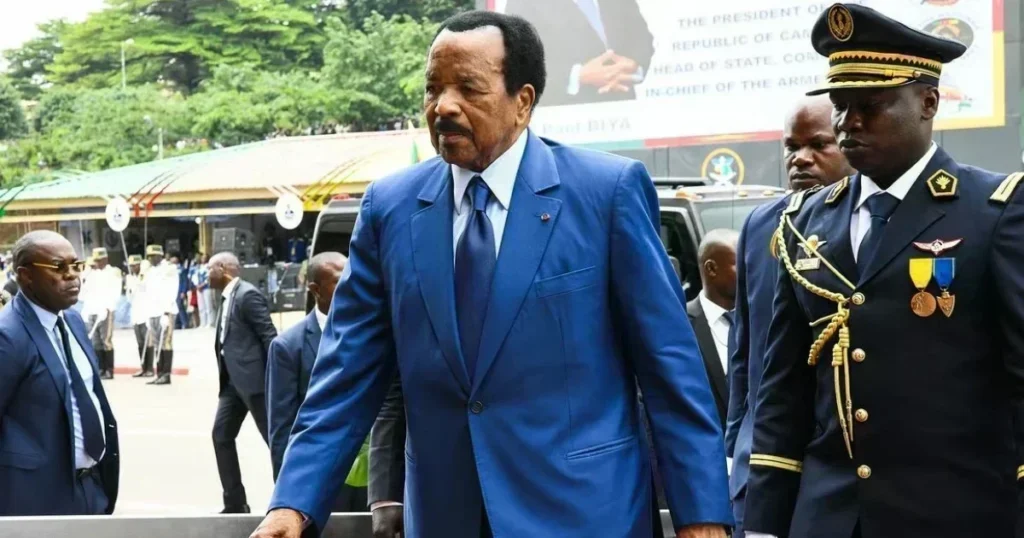
President Paul Biya of Cameroon, currently on a prolonged trip abroad, has ordered a sweeping overhaul of the country’s military leadership through a decree signed on August 3. The move reinforces security around the head of state, as four high-ranking generals have been appointed to key positions within the presidential guard and armed forces.
New faces in the presidential guard and army
The most notable change is the appointment of General Raymond Jean Charles Beko’o Abondo as head of the presidential guard—a first in Cameroon’s history. This role places him at the center of the president’s security apparatus, overseeing the elite unit responsible for protecting Biya.
In a parallel move, General Ebaka Hypolite, aged 73, has been named Major General of the Armed Forces, retaining his concurrent position as Major General of the Land Army. This dual appointment positions him as the second-highest-ranking military official in the country, just below Chief of Staff General René Claude Meka.
Context and implications of the reshuffle
The military reshuffle comes at a time when President Biya’s absence—now stretching beyond two months—has sparked widespread speculation about his ability to continue governing. At 93 years old, Biya is the world’s longest-serving head of state, having led Cameroon since 1982. His departure on June 7 was officially described as a ‘private stay in Europe,’ though no further details about his whereabouts or health have been disclosed.
Government officials have dismissed concerns about his health, assuring the public of his imminent return. Critics, however, point to a growing sense of institutional uncertainty, describing the country as being in ‘autopilot mode’ amid prolonged leadership gaps.
The opposition has been particularly vocal, warning of a dangerous ‘institutional vacuum’ and calling for urgent clarity on the president’s status. Meanwhile, the long-awaited formation of a new government and appointment of a vice president remain pending, adding to the sense of instability.