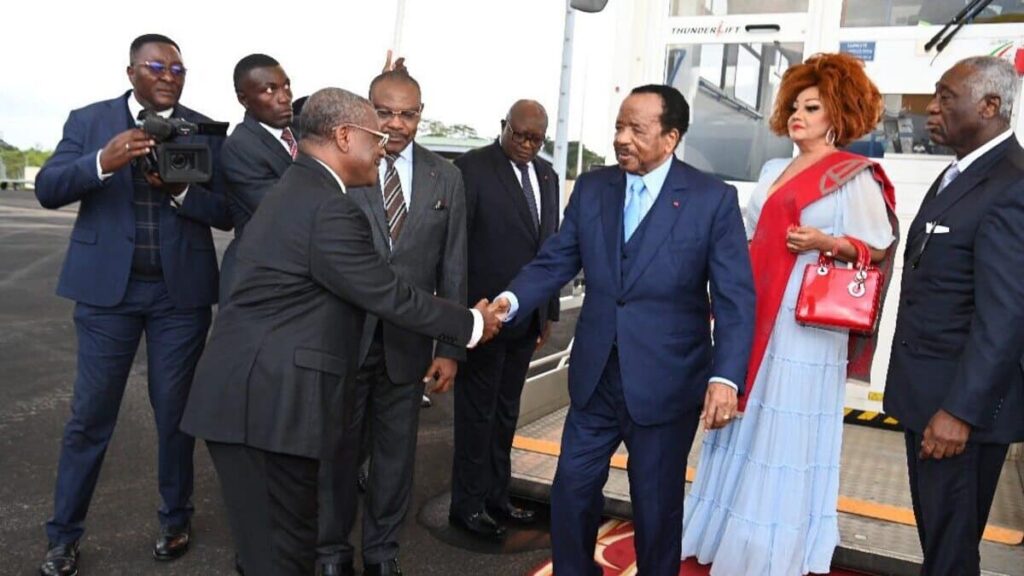
Cameroon presidency: is power truly vacant during Biya’s European stay
In a political editorial aired Monday on Radio Tiémeni Siantou (90.5 FM in Yaoundé and Bafang), commentator Eric Boniface Tchouakeu examines the implications of President Paul Biya’s prolonged private visit to Europe.
The political editorial aired Monday on Radio Tiémeni Siantou (90.5 FM in Yaoundé and Bafang) by commentator Eric Boniface Tchouakeu questions the implications of President Paul Biya’s prolonged private visit to Europe, which began June 7, 2026.
According to the official statement released by his Cabinet Director, Samuel Mvondo Ayolo, the President’s trip was described as a ‘short private stay.’
The panafrican magazine Jeune Afrique has since confirmed through multiple reports that President Biya is indeed in Geneva, Switzerland—a location he has frequented since assuming power on November 6, 1982.
What was initially presented as a brief visit has stretched on indefinitely, fueling intense public speculation. Concerns center primarily on the 93-year-old President’s health, despite repeated reassurances from authorities. Some observers have even suggested the possibility of a power vacuum in Cameroon.
At this juncture, it is important to clarify that Cameroon’s constitution does not tie the validity of presidential power to the number of days spent abroad. The country’s fundamental law has never imposed a time limit on presidential absences from national territory.
Under the current constitution, a power vacuum can only be declared in three specific scenarios: the President’s death, resignation, or definitive incapacitation. However, neither the constitution nor any other legal text defines what constitutes ‘definitive incapacitation,’ leaving this critical question open to interpretation.
Therefore, concerns about a power vacuum cannot be justified solely by the length of the President’s stay abroad.
It is legally permissible for the President to reside abroad and govern Cameroon remotely throughout their mandate without violating any constitutional provisions. The true issue here lies in political ethics rather than legality.
The prolonged delay in forming a new government following the October 12, 2025 presidential election, as well as the absence of a Vice President despite the swift reinstatement of this position, may explain why some citizens are now obsessively tracking the number of days President Biya has spent outside Cameroon since June 7, 2026.
With over 43 uninterrupted years in power, President Biya has never signed or authorized the publication of any major decree from abroad. This unprecedented practice raises legitimate questions about governance continuity and decision-making transparency.
Be the first to comment on this article



Comments