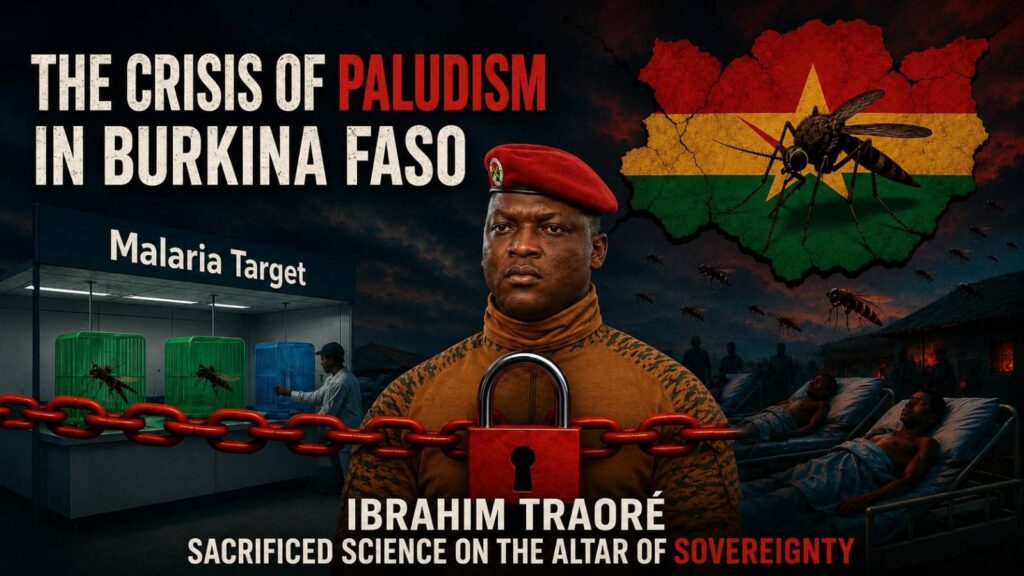
The decision by Captain Ibrahim Traoré’s administration to permanently shut down the Target Malaria research laboratories and destroy its genetically modified mosquitoes marks a decisive shift in Burkina Faso’s sovereignist rhetoric. While framed as a bold assertion of national control, this drastic measure raises pressing concerns about the future of medical research in the Sahel and the economic repercussions of scientific isolation.
By sealing the fate of the Target Malaria project—largely funded by the Bill & Melinda Gates Foundation—and mandating the destruction of all genetically modified mosquito samples, Ouagadougou has abruptly concluded a decade-long scientific and political saga. Though the suspension of activities in August 2025 hinted at an irreversible turning point, the Burkinabè state has now transformed this development into a symbol of major ideological rupture.
Science as collateral in a political narrative
The Target Malaria initiative, despite its controversies, stood as one of the most promising research avenues for combating malaria, a disease that continues to ravage Sub-Saharan populations, particularly children under five. The project’s proponents advocated an innovative technological approach using gene drive technology to reduce the fertility of malaria-carrying mosquitoes.
Critics, however, have long accused the initiative of turning the country into an ‘open-air experimentation ground,’ echoing concerns raised by local NGOs and civil society groups regarding ecological uncertainties. Yet, the regime’s invocation of ‘health sovereignty’ as justification for this move fails to obscure a more troubling reality:
- Stifling local innovation: The project involved leading Burkinabè researchers, including those affiliated with the Institut de Recherche en Sciences de la Santé (IRSS). Its abrupt termination deprives the national scientific community of critical funding and access to cutting-edge infrastructure.
- Brain drain risk: By effectively criminalizing international collaborative research, the government sends a chilling message to domestic academics and scientists, discouraging future partnerships.
- Geopolitical tremor: This decision redefines the risk perception for institutional investors, credit rating agencies, and non-governmental organizations, underscoring a broader erosion of confidence in Sahelian markets.
A seismic shift in geopolitical trust
The implications of this move extend far beyond public health, signaling a fundamental reconfiguration of the rules governing global investment and cooperation in the region. Three key fractures underscore this transformation:
1. Contractual security in freefall
Prior to the 2022 transition, state agreements were generally respected, and predictability was considered moderate. However, Burkina Faso has since entered an era of unilateral ruptures driven by political expediency. For donors, this translates into an immediate freeze on long-term investments, as the risks of sudden policy reversals now outweigh potential returns.
2. Regulatory opacity replaces transparency
The former framework, built on regional and international standards, has given way to a governance model dictated by decrees and abrupt decisions. This legal volatility has triggered a capital flight toward more stable and institutionalized environments, where regulatory certainty remains intact.
3. R&D cooperation enters uncharted territory
Historically promoted as catalysts for development through North-South partnerships, international research programs now face suspicion of interference or espionage from authorities. This pervasive climate of distrust threatens to trap the country in a cycle of technological and scientific isolation, with potentially devastating consequences.
The paradox of health autarky
By asserting its commitment to protecting the nation’s ‘biological heritage’ against foreign interference, Burkina Faso seeks to carve out a path toward self-sufficiency. Yet, the feasibility of this ambition remains questionable. Malaria eradication demands billions in investment and sustained cross-border cooperation, as mosquitoes do not recognize national boundaries.
Understanding this geopolitical signal is essential for any stakeholder operating in West Africa. The drift from misunderstood sovereignty toward technological autarky risks permanently distancing the Sahel from global capital flows and therapeutic innovations. Whether the country’s most vulnerable populations—those hardest hit by malaria—will bear the brunt of this political posturing remains an open and urgent question.