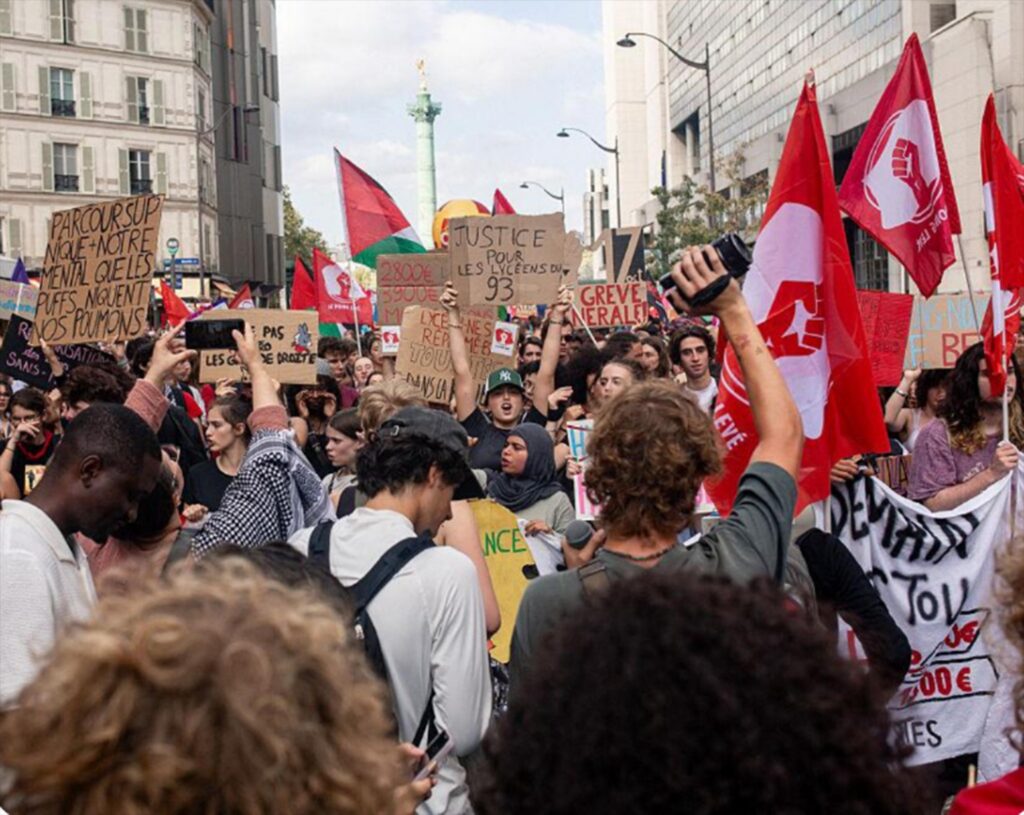
French classrooms are at the heart of a growing crisis as thousands of students take to the streets, revealing the real-world consequences of an education system struggling to meet modern demands. With the 2027 presidential election looming, the youth-led protests are reshaping political priorities and exposing critical gaps in France’s approach to schooling.
From classrooms to city streets: the escalation of student resistance
The movement began earlier this year as students voiced frustration over crumbling infrastructure, overwhelmed classrooms, and the stress of an uncertain higher-education system. What started with isolated walkouts has grown into a nationwide mobilization, drawing support from teachers, parents, and even retired workers. On the most recent protest day, organizers reported hundreds of thousands of participants, highlighting the depth of dissatisfaction among France’s younger generations.
The immediate triggers—overcrowded schools, teacher shortages, and poorly maintained buildings—are now just one part of a broader critique. Students argue that the education system, once a symbol of equality, is failing to provide the stability and opportunity they need in an increasingly competitive world.
Inequality in education: where the system falls short
Not all French schools are created equal. In wealthier neighborhoods, students may enjoy modern facilities and dedicated staff, while those in struggling areas face repeated closures, understaffing, and outdated resources. These disparities aren’t new, but they’ve taken on new urgency as families demand change before the next election.
Surveys and internal reports suggest that long school hours, lack of personal support, and unreliable teacher replacements are among the top concerns. Yet despite government promises of increased funding and better staffing, critics argue that these measures don’t go far enough. The divide isn’t just about money—it’s about trust in a system that no longer feels responsive to the needs of today’s youth.
Bridging the gap between school and society
What began as a student-led uprising is now intersecting with broader social frustrations. Worsening cost of living, declining public services, and deep-rooted economic worries have created a climate where education grievances merge with wider discontent. Some rallies have turned tense, with clashes between demonstrators and authorities raising questions about the future of protest rights in France.
While the most visible moments have been marked by conflict, the movement’s strength lies in its diversity. Students, parents, teachers, and community members are all demanding accountability—not just from local schools, but from the political leaders who set education policy. As the presidential race heats up, candidates will need to address these concerns head-on if they hope to secure the support of a generation that feels ignored.
Looking beyond the slogans: what change could look like
The protests have made one thing clear: symbolic gestures won’t be enough. The government’s recent commitments to improve teacher replacements and increase education budgets are a start, but activists insist that lasting reform requires more than financial allocations. They’re calling for structural changes, including:
- Real-time tracking of education spending to ensure funds reach struggling schools immediately.
- Greater transparency in how resources are distributed, especially in underfunded regions.
- Meaningful consultation with students and teachers when designing policies that affect their daily lives.
The stakes are high. If history is any guide, the way a government responds to a youth-led crisis can shape its legacy for decades. As France heads toward 2027, the education system isn’t just a policy issue—it’s a test of the country’s commitment to fairness, opportunity, and the promise of social mobility.
The long view: why this crisis matters for France’s future
Beyond the immediate demands, the protests reflect a deeper question: what kind of future does France want for its young people? The answer will determine not only the outcome of the next election, but the country’s long-term stability and prosperity. Will the next administration listen? Or will the streets remain the only place where real change is heard?
One thing is certain: the education crisis has become too loud to ignore. And as the 2027 vote approaches, political leaders will have to decide whether to confront the problem—or risk letting it define their legacy.