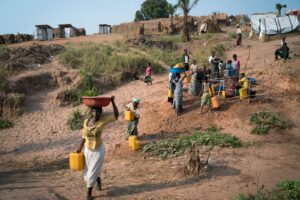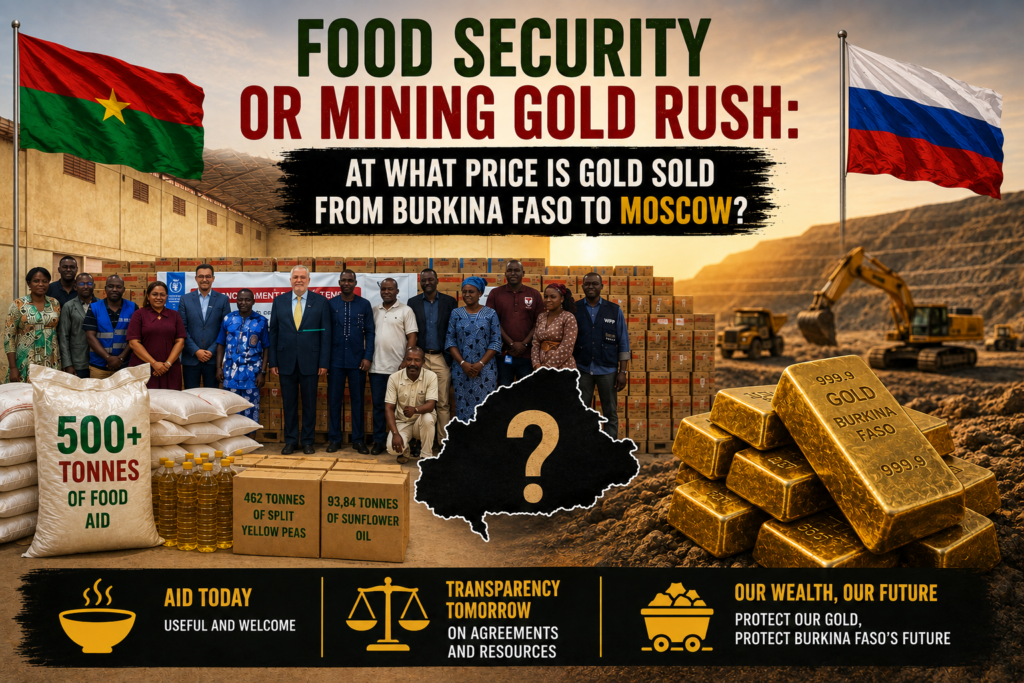
An official announcement from Russian diplomats in Ouagadougou has confirmed the delivery of over 500 metric tons of food aid to Burkina Faso, valued at approximately $942,500. The shipment includes 462 metric tons of yellow split peas and 93.84 metric tons of sunflower oil, presented as a gesture of fraternal solidarity in response to the country’s pressing humanitarian and security challenges.
Beyond humanitarian relief: examining Burkina Faso’s economic partnerships
While food aid provides immediate relief to vulnerable populations, it is essential to scrutinize the broader economic and strategic implications of Burkina Faso’s growing ties with Moscow. Humanitarian gestures, no matter how generous, should not obscure the need for transparent dialogue about the long-term costs and benefits of international cooperation.
Mineral wealth and geopolitical leverage
Burkina Faso’s economy is heavily reliant on its extractive sector, with gold playing a central role. The arrival of food aid, though beneficial in the short term, raises critical questions about the country’s broader economic strategy. How are mineral resources being managed? What terms govern their extraction and export? And are the revenues generated contributing to sustainable development?
Food aid, while valuable, pales in comparison to the potential long-term value of mineral resources. A single shipment of foodstuffs is consumed and forgotten, but gold, once exported, represents a lasting loss of national wealth. This asymmetry underscores the need for rigorous oversight of mining contracts, fiscal terms, and revenue reinvestment.
The illusion of partnership: what does Burkina Faso gain?
The transition from one foreign partner to another does not automatically equate to greater sovereignty. Historically, Burkina Faso has sought to reduce its dependence on former colonial powers, a goal that resonates with public sentiment. However, replacing one dependency with another whether from Europe, Russia, China, or elsewhere does not guarantee true economic independence.
True sovereignty is measured not by the number of new partners a country engages with, but by its ability to negotiate from a position of strength, protect its resources, and ensure that partnerships serve the national interest. This requires transparency, accountability, and a clear strategy for leveraging mineral wealth to fund infrastructure, education, healthcare, and job creation.
Transparency as the foundation of economic freedom
For Burkina Faso to demonstrate genuine progress toward economic independence, its agreements with foreign partners particularly in the mining sector must be subject to public scrutiny. Key questions must be addressed: What are the terms of mining concessions? How much revenue is retained by the state? Are local job creation and industrial processing requirements being met? What safeguards exist to prevent the exploitation of national resources at the expense of future generations?
The answers to these questions will reveal whether Burkina Faso is building equitable partnerships or merely exchanging one form of dependency for another.
Food aid vs. mineral wealth: a false dichotomy
It is neither fair nor productive to dismiss food aid as irrelevant. For families facing food insecurity, such assistance is a lifeline. However, it should not be used as a political tool to deflect attention from the management of the country’s mineral wealth. Food aid addresses immediate needs; mineral wealth funds development for decades. Confusing the two risks undermining both economic progress and national sovereignty.
The Burkinabe people deserve gratitude for humanitarian support alongside a clear accounting of how their gold and the revenues it generates are being managed. There is no contradiction in acknowledging aid while demanding transparency in mining operations.
A call for balanced partnerships
Burkina Faso does not need to reject foreign partnerships outright. What it requires is a balanced approach that diversifies economic ties without ceding control over its strategic resources. The country’s mineral wealth, if managed responsibly, could finance schools, hospitals, roads, and industrial development. Alternatively, it could become the invisible currency of new geopolitical alliances, extracted at terms dictated by foreign actors.
The choice is not between isolation and partnership, but between dependency and sovereignty. The people of Burkina Faso have made their preference clear: they seek partners, not masters.
The true measure of Burkina Faso’s progress will be found not in the arrival of food shipments, but in its ability to harness its natural resources for the benefit of all its citizens. Until then, every ton of gold exported without accountability represents a missed opportunity and a deferred promise to future generations.