From social media outcry to state-backed intimidation
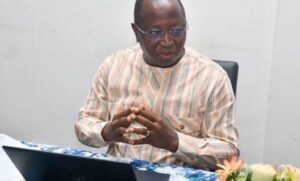
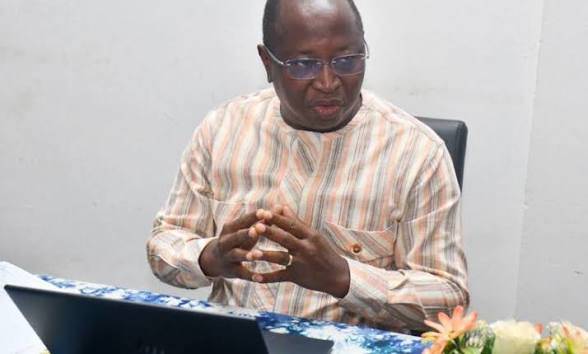
In a blunt public statement that sent shockwaves across campuses and diaspora networks, Burkina Faso’s Minister of Higher Education, Professor Adjima Thiombiano, issued a stark warning to students returning from abroad. His message left no room for interpretation: criticize the government’s policies or the state of education, and risk being labeled as unpatriotic or worse—an outsider. The backlash from this rhetorical assault is now rippling through universities and communities, reshaping how a generation views its role in national development.
When criticism becomes a crime in the classroom
The minister’s remarks were not merely a verbal outburst but a deliberate policy signal. By framing dissent as a form of disloyalty, the government is weaponizing the language of patriotism to silence students who dare to question the quality of education or the direction of public policy. Social media posts expressing frustration over educational shortcomings or calling for reforms are now treated as subversive acts, prompting calls for institutional vigilance and even denunciation.
The directive—calling on educators and ministry officials to act as “guardians against rebellious behavior”—has created a climate of fear. Faculty are pressured to report students who voice concerns, turning academic spaces into surveillance zones. The message is clear: conformity is not optional, and intellectual curiosity is viewed with suspicion.
Diaspora students caught between loyalty and exclusion
Many Burkinabè students studying overseas return home with fresh perspectives and a desire to contribute to national progress. Yet Thiombiano’s ultimatum—”If Burkina Faso is not to your liking, return to where you came from”—has upended that ideal. The statement implies that citizenship is conditional on unquestioning obedience, not active engagement. It also ignores the value these returnees bring: multilingual skills, international exposure, and professional networks that could drive innovation and reform.
Rather than fostering integration, the policy creates a two-tier system—one for those who comply and another for those who think independently. This divide threatens social cohesion and risks accelerating the brain drain, as talented individuals flee in search of environments where their voices are valued.
The NEKRÉ Pact: education through the lens of control
At the heart of this ideological shift lies the “NEKRÉ Pact,” a national initiative aimed at overhauling Burkina Faso’s education system from preschool to university. But the vision behind the pact appears contradictory. How can a system be rebuilt on the exclusion of dissent? Universities have historically thrived as spaces of debate, where ideas clash and excellence emerges from rigorous inquiry. By transforming lecture halls into ideological training grounds, the government risks suffocating the intellectual dynamism necessary for true progress.
A curriculum built on enforced loyalty rather than critical thinking cannot produce the leaders Burkina Faso needs. When universities become extensions of state propaganda, academic freedom is eroded, and the very notion of education as a public good is undermined. What is being called a “renaissance in learning” risks becoming a monologue of control, where the loudest voices are those of the regime, not of progress.
What’s next for Burkina Faso’s students?
The stakes could not be higher. As the government tightens its grip on academic expression, students face a grim choice: mute their conscience to stay, or leave in protest. The diaspora, once seen as a bridge to global knowledge, is now treated as a threat. Meanwhile, those who remain risk internalizing fear over ambition, conformity over innovation.
This is more than a crisis of higher education—it is a defining moment for Burkina Faso’s democratic future. Will the nation embrace the strength of diverse thought, or will it retreat into the suffocating embrace of authoritarian control? One thing is certain: the students who refuse to be silenced are not the problem. They are Burkina Faso’s greatest hope—and the regime’s greatest fear.