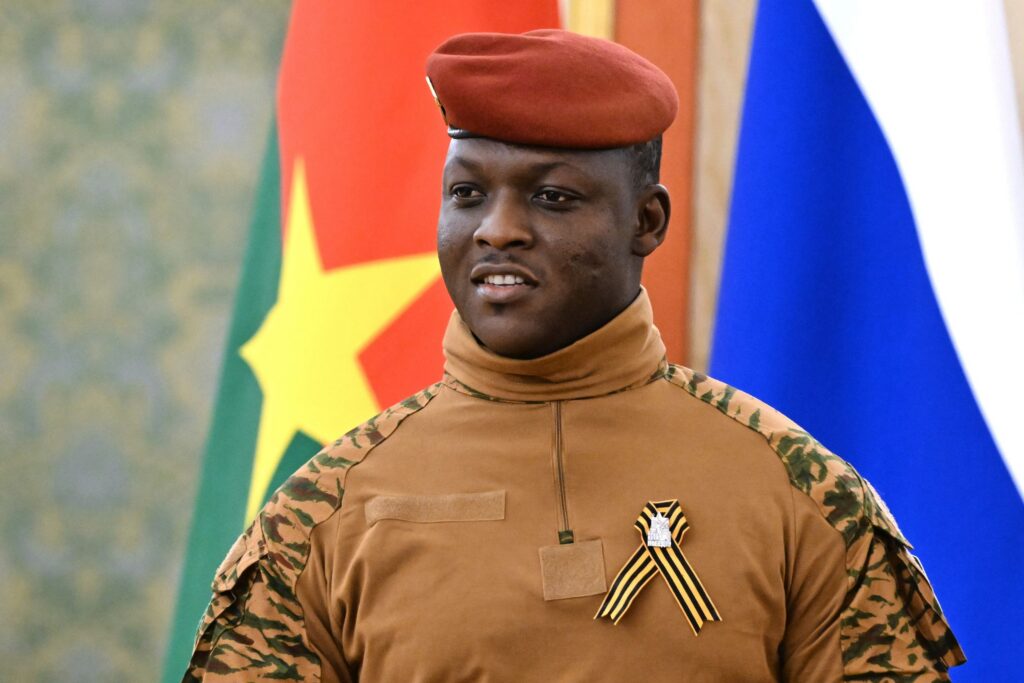
FILE - In this photo provided by RIA Novosti, Burkina Faso President Ibrahim Traore arrives at the Grand Palace at the Kremlin in Moscow, Russia, on May 10, 2025. (Stanislav Krasilnikov/RIA Novosti via AP, File)/TOK104/26178271315058/AP PROVIDES ACCESS TO THIS PUBLICLY DISTRIBUTED HANDOUT PHOTO PROVIDED BY RIA NOVOSTI; MANDATORY CREDIT/2606270935
In a televised address, Burkina Faso’s head of state, Captain Ibrahim Traoré, addressed a long-taboo subject: the centuries of slavery imposed by Arab powers on African populations. His remarks have sparked strong reactions across the Muslim world, underscoring the sensitivity of this historical legacy.
The president’s statement comes at a time when debates over colonial injustices and historical accountability are gaining traction globally. Traoré’s willingness to confront this issue publicly marks a significant departure from conventional narratives in the region, where such topics are often avoided to prevent social or religious tensions.
a bold stance against extremist ideologies
Beyond acknowledging the historical injustices of Arab-led slavery in Africa, Ibrahim Traoré tied the discussion to the rise of radical Islamism in the Sahel. By linking these two themes, he positioned himself as a leader willing to challenge both historical grievances and contemporary security threats.
His speech highlighted how certain interpretations of Islam have, over time, been weaponized to justify oppression and subjugation. The president’s words resonate particularly in Burkina Faso, where militant groups exploiting religious narratives continue to destabilize communities.
reactions from the muslim world
The president’s remarks have not gone unchallenged. In many Muslim-majority nations, discussions about the role of Arab powers in the trans-Saharan slave trade remain highly contentious. Critics argue that revisiting such topics could fuel divisions or undermine diplomatic relations.
Within Burkina Faso itself, opinions are divided. While some praise Traoré for his courage in addressing a suppressed history, others warn that his statements could exacerbate religious tensions or be exploited by extremist factions for propaganda purposes.
a call for regional reflection
By bringing this issue to the forefront, Ibrahim Traoré has issued a challenge to leaders across Africa and the broader Muslim world. His speech invites a critical examination of how historical narratives shape modern identities and conflicts.
For observers of Sahelian politics, the president’s address signals a potential shift in Burkina Faso’s approach to both internal security and regional diplomacy. Whether this will translate into tangible policy changes remains to be seen, but the conversation itself represents an important moment in the country’s evolving political landscape.