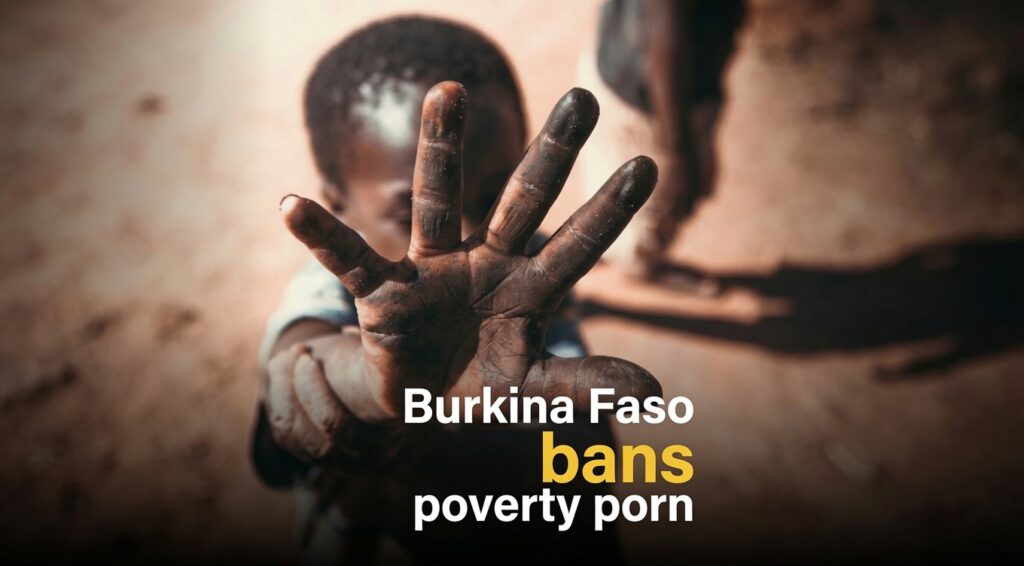
Legislative action against the commodification of human suffering
The Government of Transition in Burkina Faso has enacted a stringent prohibition on the practice known in sociological circles as poverty porn—the deliberate filming and dissemination of images that exploit human distress for emotional or financial gain. This landmark decision reshapes the landscape for content creators and humanitarian organizations operating within the country, igniting a debate that transcends legal boundaries: the preservation of human dignity in an age dominated by digital media.
Ethical dilemmas of digital misérabilisme
The proliferation of social media platforms has turned vulnerability into a commodity, with creators and organizations frequently resorting to graphic depictions of malnutrition, internal displacement, and extreme hardship. While the stated intent—raising awareness or funds—may appear noble, the execution strips individuals of their autonomy and reduces their stories to exploitative visuals. Authorities argue that this approach not only breaches ethical standards but also undermines the inherent worth of affected populations.
Security and sovereignty: the strategic dimensions of the ban
Beyond ethical considerations, the prohibition aligns with Burkina Faso’s broader political and security imperatives. The nation faces a multifaceted crisis, and the unchecked circulation of images portraying the country exclusively through a lens of hardship risks distorting global perceptions of its resilience. By regulating such content, the government asserts control over the national narrative, aiming not to obscure reality but to reject a one-dimensional portrayal of despair.
The shadow of censorship: concerns over hidden truths
Critics, particularly within civil society and opposition circles, contend that the ban is less about ethical integrity and more about political expediency. They argue that the restriction provides authorities with a legal mechanism to suppress evidence of the country’s dire humanitarian conditions—conditions that persist despite the censorship. Reports of internal displacement, besieged towns struggling to access essential supplies, and widespread hunger remain unaddressed by the new law, leaving many to question whether the measure serves as a smokescreen for a transition intent on presenting an infallible image.
Reimagining humanitarian communication
This legislative shift compels humanitarian actors and communicators to rethink their strategies. The challenge now lies in balancing the need to highlight urgent crises with the imperative to avoid sensationalism or legal repercussions. The path forward, experts suggest, involves a shift toward solutions-oriented narratives and courageous field journalism. By focusing on stories of resilience, agency, and collective action, communicators can uphold the gravity of the situation without reducing individuals to passive symbols of pity. This approach not only honors the dignity of affected populations but also ensures that Burkina Faso’s struggles are acknowledged without resorting to degrading stereotypes.