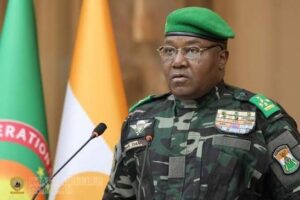
The transitional government of Burkina Faso, led by Captain Ibrahim Traoré, appears to have reached a critical juncture. Once hailed by supporters as a reformist leader, the junta chief now governs with an increasingly autocratic hand, suppressing dissent from civil society, religious institutions, and even his own military inner circle. In Ouagadougou, tensions are palpable, and the events surrounding Tabaski week have raised fears of an imminent power implosion.
Tabaski under siege: religious sites and state repression
The holy festival of Tabaski, traditionally a time of unity and reflection, has instead exposed the regime’s deepening fragility.
Detention of a respected imam
The arrest of a prominent religious leader during this sacred week has sent shockwaves through a population already burdened by hardship. The move—widely interpreted as a violation of religious freedom—underscores the regime’s willingness to target society’s moral pillars to stifle criticism.
Coerced mobilization and « re-education »
Concurrently, protesters and dissenting voices detained in recent days have been forcibly transferred to re-education centers or deployed to combat zones. This militarization of punishment underscores the regime’s transformation into an uncompromising apparatus of control.
Analysts warn of political irrationality
Observers across the region argue that the government in Ouagadougou has abandoned any semblance of strategic governance. What remains is a militarized state where dissent is equated with treason, and a single leader imposes absolute authority through a compliant network of loyalists.
Oumarou Yabré case exposes fractures in intelligence services
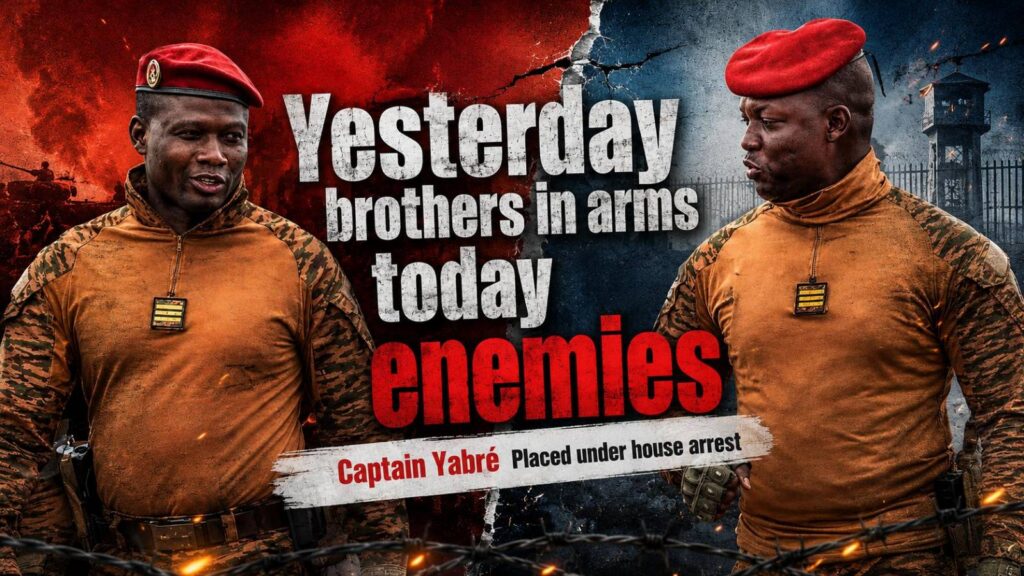
The news has sent ripples through diplomatic and security circles: Oumarou Yabré, Director of the National Intelligence Agency (ANR), has reportedly been placed under house arrest. While official channels remain silent, multiple reports indicate a definitive rupture within the state apparatus. On one side, Captain Ibrahim Traoré, as Head of State and Transition President, consolidates power with absolute centralization and growing suspicion toward his allies. On the other, Oumarou Yabré—once a key architect of Burkina Faso’s security framework and facilitator of Russian influence networks—is now suspected of disloyalty or, at minimum, profound disagreements over security strategy and foreign partnerships.
This internal purge reveals the depths of paranoia within the junta. By targeting former comrades who helped build his security infrastructure, Traoré undermines the very foundations of his own regime.
A looming power struggle at the heart of the junta
The impending confrontation between Burkina Faso’s two top security figures was anticipated by analysts months ago. The rivalry for control of the state apparatus, compounded by relentless pressure from armed terrorist groups, has created a volatile climate in Ouagadougou.
By alienating the public, religious leaders, and now his closest military allies, Captain Traoré is isolating himself at a dangerous pace. Regional history consistently shows that regimes that govern through fear alone—and purge their own ranks—accelerate their own downfall. The pressure is mounting in Ouagadougou, and the coming days will be decisive for the nation’s future.