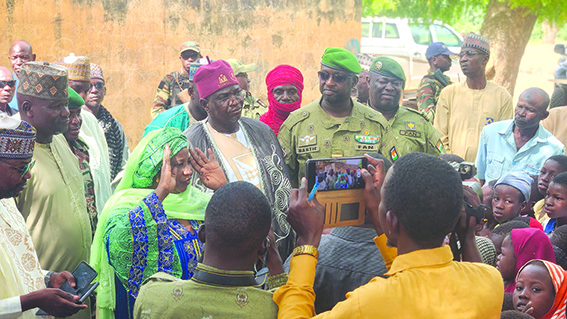
Across Niger, communities are grappling with escalating security threats and the persistent shadow of terrorism. In response, a growing movement is taking shape—one that prioritizes inclusive dialogue as a cornerstone for sustainable peace and social cohesion. This grassroots-driven effort is gaining momentum, uniting diverse voices from all sectors of society in a shared commitment to stability and national resilience.
community perspectives on insecurity and hope
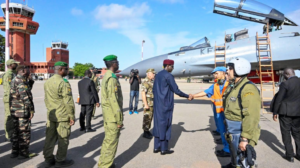
In areas such as Tera, Makolondi, and Torodi, daily life remains deeply affected by insecurity. Residents acknowledge the tireless efforts of defense and security forces, whose regular patrols provide a vital sense of safety. Without this presence, local livelihoods suffer—farmers are unable to cultivate, traders face restricted movement, and families live under constant threat. While the state’s interventions have enabled some displaced populations to return, the road to recovery is far from smooth.
Seydou Hamidou, a youth leader from the rural commune of Makalondi in the Torodi department, shared his community’s struggles: “Young people are often forced to flee the country due to lack of opportunity. Terrorist groups exploit this desperation, recruiting youth, disrupting education, and leaving families without income. Even those who attempt to join the national army face threats against themselves and their loved ones.”
Victor Harouna, a resident of Téra, highlighted the economic toll of insecurity. “Transport costs have skyrocketed. A journey that once cost 3,000 CFA francs now demands 10,000 to 15,000. Crops are sabotaged, and the threat of banditry looms large. Though military interventions have helped some displaced families return, daily survival remains a challenge.”
Women, too, bear the brunt of this crisis. Amina, a resident of Torodi, reflected on how insecurity has disrupted their lives: “Women worry for their children’s education and mourn lost husbands. Many flee to Torodi only to struggle for basic survival. We urge authorities to strengthen military presence—it is our only shield.”
state-led efforts to restore stability
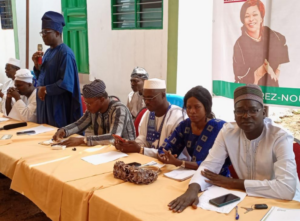
At a recent national forum in Niamey, Captain Boureima Dobi, Prefect of Torodi, outlined the government’s proactive measures. “Through coordinated efforts with defense and security forces, over 800 displaced individuals have safely returned to their homes in Makalondi. A second wave of returns is already in preparation. The state is not idle—we are continuously supplying food and essential resources to support our people.”
He also emphasized the importance of collective vigilance: “Collaboration with security forces is critical to preventing local collusion with terrorists. Recent surrenders of armed individuals prove that awareness campaigns are making an impact. We must foster patriotism and shared responsibility in every citizen.”
The National High Authority for Peace Consolidation (HACP) plays a pivotal role in this strategy. Boubacar Hamidou, Director of Recovery and Stabilization at HACP, explained: “We focus on empowering local leaders, youth, and women through conflict prevention training, capacity building, and community-driven development projects. Our goal is to rebuild trust between citizens and institutions while strengthening national unity.”
the Sahel peace initiative: a regional commitment to dialogue and resilience
The Sahel Peace Initiative (SPI), launched in 2019 under the aegis of West African Episcopal Conferences and local partners, is a regional network dedicated to fostering social cohesion and community resilience. In Niger, the SPI brings together Muslim and Christian communities to promote interfaith dialogue, peace education, and inclusive leadership.
Monseigneur Laurent Lompo, Archbishop of Niamey and SPI Working Group Chair, stressed the importance of sustained dialogue: “We must nurture peace through intergenerational forums and community gatherings. Men, women, and youth must unite to address security challenges and build a shared future.”
The SPI’s strategic vision includes youth employment programs, digital innovation for peace, psychosocial support, and the dissemination of best practices. The national forum held in Niamey on June 23–24, 2026, culminated in actionable recommendations to strengthen coexistence and stability across the country.
religious leaders as pillars of peace and social harmony
In a region where extremist violence often masquerades under religious pretexts, faith leaders are emerging as vital agents of reconciliation. The National Committee for Intra- and Interreligious Dialogue (CDIR) was established to counter hate speech, prevent communal tensions, and promote peaceful coexistence rooted in shared values.
Cheikh Barham Aboubacar, National Coordinator of CDIR, explained: “Our mission is to dismantle religiously fueled divisions. Through local peace committees and community mediation, we resolve land and identity-based conflicts that terrorists seek to exploit. Dialogue is our most powerful tool—it clarifies misunderstandings, fosters mutual respect, and prevents violence.”
CDIR’s grassroots approach includes establishing decentralized peace cells and training religious leaders in conflict resolution. Their work is increasingly aligned with national peacebuilding efforts, reinforcing unity amid political and social challenges.
the media’s vital role in shaping public trust and awareness
In an era of misinformation and fear, community media serves as a lifeline for accurate, responsible reporting. Alhassane Mahamane, Editor-in-Chief at Studio Kalangou, emphasized: “Community radios are not just broadcasters—they are educators and advocates. They amplify local voices, address citizens’ concerns, and counter divisive narratives. We must recognize and invest in this invaluable resource.”
By prioritizing peace journalism and transparency, Niger’s media landscape is slowly rebuilding public trust and fostering a culture of accountability.
women leading change in peace and development
Women are at the heart of Niger’s resilience. Amina Boukary, Partnership Coordinator for the NGO Femmes, Actions et Développement (FAD), highlighted their growing influence: “Women are forming networks, launching income-generating projects, and championing education—all while nurturing social cohesion. But their full potential remains untapped. We need targeted support: leadership training, girls’ education campaigns, and representation in local decision-making bodies.”
“Women make up half the population. Their realities must shape peacebuilding strategies. Strengthening female leadership is not just fair—it is essential for lasting stability,” she asserted.
As Niger navigates a complex security landscape, the path to peace is clear: it demands inclusivity, collaboration, and unwavering commitment from every citizen. Through dialogue, resilience, and collective action, the nation is forging a future where safety, dignity, and unity prevail.